People Still Matter More Than AI Tools In Complex Construction Projects – Nishchay Pidiha On Project Management
A project manager at the world’s largest real estate and project management firms explains why complex construction projects still depend above all on people — and how that human chain can help companies avoid costly mistakes.

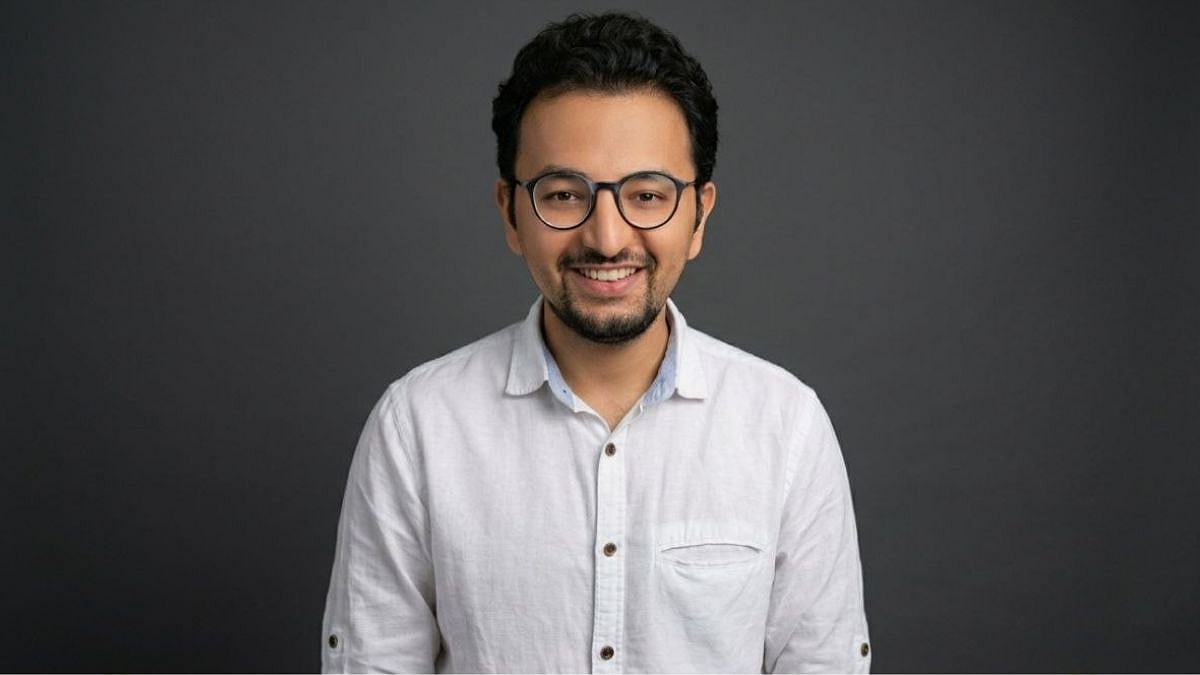
Nishchay Pidiha | File Photo
In the construction industry, the market for digital twin technologies is growing rapidly – virtual models of buildings and infrastructure that allow for the analysis of the operation of facilities, the prediction of problems, and the management of their lifecycle.
According to industry research, the digital twins market is expected to grow to $107.43 billion in 2030 at a compound annual growth rate. The technology is used for infrastructure management, predictive maintenance, and analysis of engineering systems throughout the facility's lifecycle.
However, digital twins remain tools rather than decision-makers, because real projects still depend on the people who coordinate engineers, contractors, and clients and make decisions when plans change.
Nishchay Pidiha is a project manager at CBRE/Turner & Townsend(T&T), a lifetime member of Sigma Lambda Chi (international construction honor society), who has worked on dozens of specialized projects for Tesla, Amazon Robotics, Microsoft and Exxonmobil, including the Cybercrime Forensic Lab and Xbox Thermal Chamber Lab.
His projects have allowed clients to save hundreds of thousands of dollars by reviewing engineering solutions and contracts. Today, he works on projects for Exxon Mobil, helping upgrade facilities at one of the company’s industrial sites. We talked with him about how the management of construction projects is changing due to artificial intelligence, what role digital technologies are playing now, and whether they have a future in construction.
– Nishchay, there is a lot of talk about digital twins and AI in construction today. How much are these technologies really changing the industry?
– AI and digital models are really becoming a useful tool. They allow for the analysis of data about an object faster, predict possible problems, and better understand how engineering systems behave. But it is important to understand that construction is not just about data. A project is always an interaction of people; it is a whole chain: engineers, contractors, and internal customer teams. Even the most accurate digital model cannot predict unexpected errors, on the basis of which managers make decisions to optimize the coordination of project participants. That's why technology helps, but people are still responsible for the project.
– You described this chain in your exceptional scientific paper “Evolution of AEC Project Networks: an agent-based modeling approach”. Is it possible to say that your concept is the basis that you originally laid as the foundation for your career?
– I think it is true. When we talk about a construction project, we often think of it as a sequence of stages: design, procurement, and construction. But in reality, the project is more like a network of interactions. Architects, engineers, contractors, security services, internal client teams – they all make decisions that affect each other. If one element of the chain changes, it may affect others. For example, a change in an engineering solution may change the schedule of contractors or affect procurement.
I was wondering why small changes in complex projects sometimes lead to serious consequences. In my research, I used the agent-based modeling approach, which allows to consider a project as a system of interacting participants. So yes, it helps me see not only individual tasks, but also the connections between them. This view allows me to better understand where bottlenecks can occur and how the decisions of different participants affect the overall outcome of the project.
– Among the 35 projects you managed for Microsoft were several laboratory projects. How do such spaces differ from ordinary ones, and what kinds of bottlenecks typically appear in them that you can exclusively help resolve?
– Laboratory spaces differ in that the engineering infrastructure directly affects the outcome of the work. While systems provide comfort in ordinary buildings, they become part of the technological process in laboratories. For example, the Xbox thermal chamber lab was designed to test products in specific temperature and atmospheric conditions, so the MEP (Mechanical, Electrical and Plumbing) infrastructure must cater to very accurate parameters required for the experiments. Security and access control requirements are critical at Cybercrime Forensic Lab, as the work involves digital evidence. The main bottlenecks are the coordination of engineering changes with the operational work of laboratories and the search for a balance between technical requirements and the project budget. Modernization should be planned in such a way as not to stop the work of the units and, at the same time, preserve the functionality of the facility. By the way, AI would not have been able to fully cope here, so we return to our human chain again.
– Speaking about the project budget, during your cases, you managed to save about $100,000 annually – roughly $300,000 over three years, which is a great achievement for you and the company. How is such cost reduction achieved?
– Savings in such projects are usually achieved through the revision of technical solutions and contractual terms. For example, I had a project for the forensics lab, and the business unit was the digital crime unit. We had to increase the existing square footage within the space to fit in more people in the lab. The room was designed 13 years ago, and a quarter of the area was allocated for documentation. This room was no longer required due to the new demands for an increase in the number of staff. Our client (lab users) needed desk space and workstations, and it is here that I act as a project manager to first help with the redevelopment of the premises with the help of the selected architect for the project, and then send these drawings for a competitive bidding among general contractors and select an experienced contractor to complete the work within the desired time frame specified by users of the laboratory. On this project, by performing value engineering exercises, I was able to save the client 16 weeks of procurement timeline. The 16-week deadline means a doubling of the project implementation time and, consequently, a change order in the procedure for extending deadlines. This was made possible by moving some of the existing lighting to places where it was not needed, to the ceiling area where the new workstations are located. Thanks to this, we not only significantly reduced the project implementation time but also saved $13,000 on the purchase of special lighting. And there were many such projects every year.
– You have also worked on different types of projects besides laboratories, such as the Tesla battery manufacturing site, as an intern at the beginning of your career inside the US, or infrastructure projects for Amazon Robotics. How do these projects differ from scientific laboratories, and is there a place for digital twins here, because scientific accuracy is no longer a question?
– The difference is primarily in the purpose of the infrastructure itself. In laboratories, the engineering environment must maintain very precise parameters. At the Tesla industrial site or in Amazon Robotics projects, the task is different – to support production or logistics processes. There, the scale, speed of the systems, and the stability of the infrastructure become key. For example, in Amazon's robotic logistics centers, stable power supply, proper space configuration, and reliable operation of engineering networks are important because the effectiveness of automated operations depends on them.
At the same time, digital models and digital twin elements can be useful in such projects, but their roles are slightly different. While they help model accurate testing conditions in laboratories, they are more often used in industrial facilities to analyze engineering systems, predict different types of MEP-FP (Mechanical, Electrical, Plumbing, Fire protection) infrastructural clashes, for instance, a sprinkler systems pipe clashing with existing structural beams etc, or plan infrastructure upgrades. In other words, we are no longer talking about scientific accuracy, but about better understanding how the facility as a whole works and where risks may arise if it is changed or expanded. Tools can highlight potential issues, but integrating changes into a functioning industrial environment still depends on how well teams coordinate their decisions.
– You have also participated in peer reviews of other managers' projects. What exactly are you checking – budgets, deadlines, technical solutions – and why does the project team need such an internal audit?
– Peer review is an internal quality control mechanism for project management. It is needed to ensure that projects meet the company's uniform standards and that potential problems can be noticed even before they affect deadlines or budgets.
In practice, this means that the project manager periodically submits his documentation to colleagues for review. In my case, I participated in such checks using an internal Project Checklist of about 100 items. It includes various aspects of the project: financial performance, budget correctness, status of contracts with contractors, documentation, compliance with safety requirements, and compliance with the work schedule. It is important that the purpose of the peer review is not to evaluate a colleague, but to look at the project from the outside. When you work on a project daily, you may not notice some risks or shortcomings. This system allows you to maintain a unified level of project management and reduce the likelihood of errors in complex infrastructure projects.
– Besides commercial projects, in 2022, you also participated in the construction of affordable housing as part of Habitat for Humanity as a volunteer. Why was it important for you to participate in such a project while constantly working on the corporate infrastructure?
– I worked at the Habitat for Humanity North Bend – Tyler Town construction site, which was an affordable housing project for the local community, and for me, it was an opportunity to apply professional skills in a completely different context. In corporate projects, we usually deal with large budgets, complex engineering systems, and a large number of contractors and technicians. In affordable housing projects, everything is much simpler in terms of infrastructure, but the result is felt much more directly. It is important not only to comply with building standards, but also to understand that the result of the work will be a house for a specific family. It was also an interesting experience for me because it brought me back to the basic essence of construction. In corporate projects, we often talk about systems, processes, and infrastructure upgrades. In initiatives like Habitat for Humanity, you work hands-on and then get to see the direct social value of your work – when a project really changes people's living conditions.
– Considering that you have a lot of experience in corporate and social construction, in your view, how will the balance between technology and human decision-making evolve in construction in the coming years?
– Digital tools will definitely become more common in construction: AI and digital models can help analyze data, simulate different scenarios, and identify potential risks earlier. That is a real advantage for complex projects. At the same time, construction will always depend on people. Engineering decisions, contractor agreements, and operational constraints are interconnected, and someone still needs to evaluate how a change in one part of the project affects the rest. The challenge for the industry is not simply adopting new tools, but learning how to use them in a way that improves coordination and decision-making in complex projects.
This is one of the reasons why, in the near future, I would like to contribute to the education system in the United States. I plan to act as a mentor and guest lecturer, sharing with students my practical experience in project management, risk assessment, and AEC research. By combining my industry experience with academic achievements, I aim to help prepare a new generation of construction professionals who will not be intimidated by AI tools, and they will be able to safely make emergency decisions without relying on digital twins. And in this context, discussions around the introduction of AI and digital models in construction are particularly interesting: the more such technologies appear, the more important it is to share practical experience on how they actually work in infrastructure projects.
Published on: Tuesday, April 14, 2026, 05:31 PM ISTRECENT STORIES
-
-
-
-
-