Debugging Autonomy: The Hidden Art Of Calibrating Vehicles For The Real World
As vehicles near full autonomy, the success of ADAS depends on precise real-world calibration. Gaurav Baban Pokharkar has advanced this field, linking hardware and software, refining calibration with large datasets, and validating perception systems using GNSS, lidar, and cameras. His work ensures ADAS features like lane-keeping and collision avoidance are reliable, safe, and road-ready.

Debugging Autonomy: The Hidden Art Of Calibrating Vehicles For The Real World |
As vehicles edge closer to full autonomy, the success of advanced driver assistance systems (ADAS) hinges not just on breakthrough algorithms, but on their seamless calibration for real-world variability. While much of the conversation around self-driving cars revolves around sensors and AI, what often goes unrecognized is the painstaking work involved in ensuring these features function reliably across diverse environments, unpredictable weather, and even subtle manufacturing inconsistencies. Calibration, though largely invisible to end-users, is the linchpin that connects high-level autonomy concepts with day-to-day usability. It is in this underappreciated space between raw technological potential and consistent real-world performance that the “hidden art” of debugging autonomy truly takes shape.
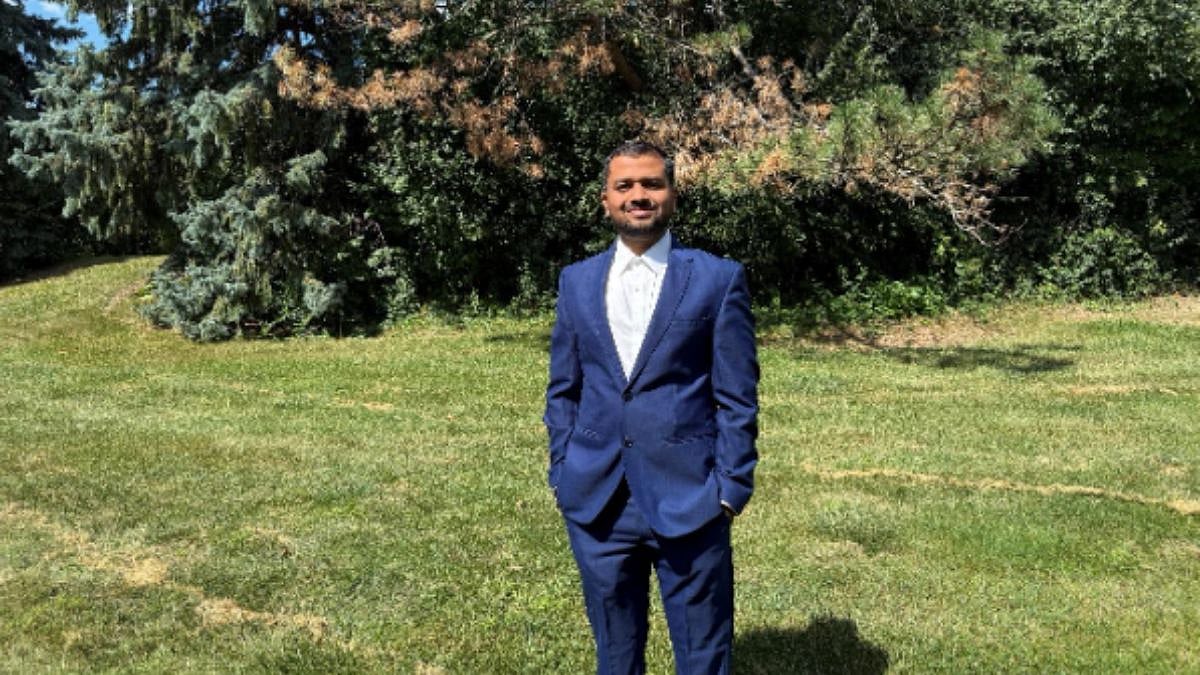
Gaurav Baban Pokharkar, who managed to evolve as an ADAS calibration technical leader transitioning in his career as a body structure engineer, breaks new ground in getting a clearer grasp of just how nuanced this particular field of engineering can be. His career is littered with the gradual accrual of knowledge: mechanical systems, electronic control units, high-performance computing, and non-deterministic algorithms, and an intense laser focus on his vision: providing resilient calibration solutions to mass market automobiles. He has used his career to spearhead the linkage of multidisciplinary groups, with his work closing the physical gap between hardware and software limits. This has made him instrumental in making sure that assisted driving features do not just work in theory but can be counted on when used in real-life driving conditions.
Central to Gaurav’s contributions is his approach to ADAS calibration, which goes beyond textbook definitions and theoretical accuracy. Recognizing the real-world constraints of production vehicles, he has developed methods to refine calibration using massive, high-volume datasets. These are not simply plugged into analytics tools; rather, he has architected automated scripts capable of processing Controller Area Network (CAN) data via parallel computing, significantly reducing data analysis time. By slashing processing durations by nearly half, his workflow not only enhanced the speed of feature validation but also optimized resource use allowing more room for innovation and iteration in tight development cycles.
Another critical domain where His impact is evident is in the qualification of ground truth measurement systems, an essential foundation for validating perception algorithms. These systems, incorporating GNSS, lidar, and camera arrays, provide the benchmarks against which ADAS features are judged. Through his careful evaluation and field testing, He has enabled engineering teams to establish reliable baselines for performance, ensuring that features like lane keeping, pedestrian detection, and collision avoidance are developed with real-world integrity at their core. His calibration efforts are not just exercises in precision; they directly influence the safety and functionality of technologies that have the potential to save tens of thousands of lives annually.
Of course, none of this comes without challenges. A key hurdle in ADAS deployment is navigating the intricate terrain of functional safety standards such as ISO 26262. While many engineers remain focused on feature design, Gaurav has taken a broader view, integrating safety frameworks into calibration strategies from the ground up. By doing so, he’s helped create systems that are not only performant but also resilient in the face of sensor limitations and unforeseen edge cases conditions that are all too common on real roads.
Into the future, He foresees the new Automated Vehicle Framework as a possible inflection point in the industry. In his opinion, much more than alignment of regulations will be necessary to have successful adoption, a closer integration of safety, engineering accuracy, and practical feedback will be necessary. Calibration will continue being fundamental in this future not only as a technical activity but also as a strategic process that makes autonomous systems develop with both trustworthiness and accountability.
In the landscape of vehicle autonomy, where flashy sensors and deep learning often steal the spotlight, it is professionals like Gaurav who ground innovation in reality. Through meticulous calibration, system-level thinking, and a commitment to safety, he is helping redefine what it means for vehicles to truly drive themselves.
Published on: Monday, April 06, 2026, 04:24 PM ISTRECENT STORIES
-
-
-
-
-