Aumni: The Quiet Operator Behind Some Of The Fastest-Scaling AI Teams In The West
The US AI talent crunch, worsened by H-1B backlogs and rising costs, is pushing firms to alternative hiring models. Aumni, based in Pune, builds and operates AI engineering teams for global clients, offering 21-day onboarding, low attrition, and a GCC ownership pathway, positioning itself as a “capability operator” for scalable AI engineering capacity.

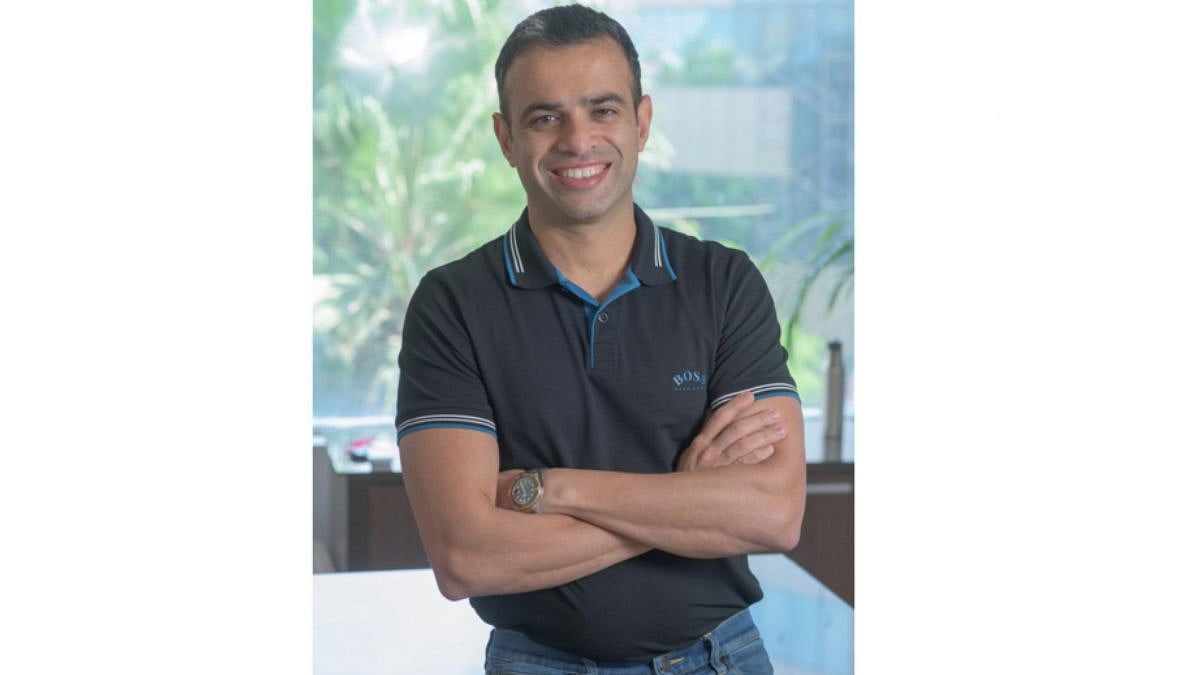
How a Pune-based capability builder is quietly becoming the infrastructure layer for AI engineering at global product companies and why its founder believes the category is only getting started. | file photo
The race to hire AI talent in the US has never been more brutal. H-1B visa backlogs stretch years long, immigration policy grows less predictable by the month, and the engineers that companies desperately need are either unavailable, unaffordable, or caught in an indefinite administrative hold.
It's a problem that demands a structural solution, and that's precisely what one quietly ambitious company has spent years building. A repeatable, scalable model for building world-class AI engineering capacity without the visa queues, the inflated salaries, or the revolving door of contractors.
That company is Aumni.
Based in Pune, India, Aumni builds and operates dedicated engineering teams for product companies in the US, the UK, and Europe, with a focus on AI, data, and product engineering. The category sounds familiar. Offshore engineering has been sold to Western companies for the better part of two decades. But Divesh Agarwal, Founder and CEO of Aumni Techworks, will stop you right there.
We're a capability operator, and that difference determines whether an offshore team actually works, or quietly falls apart over 18 months."
The Problem Worth Solving
Walk into any product company in the US right now, and you'll find the same story told in slightly different words. There's an AI roadmap. There's board pressure to execute on it. And there's a hiring plan that's three-quarters wishful thinking.
The math isn't pretty. Demand for AI engineers, ML engineers, and data specialists is outrunning supply in every major US metro. The engineers who do exist are priced for companies with nine-figure valuations, and there simply aren't enough of them to go around. AI and ML talent is one of the few categories where demand is outpacing supply faster than the market can correct. For a growth-stage startup trying to build an AI-native product without burning through runway, that's not just a hiring challenge. It's an existential one.
"Every product company we talk to has an AI roadmap," says Agarwal. "Almost none of them have the team to execute it. That's not a strategy problem, it's a capacity problem. And capacity problems have engineering solutions."
Why Pune?
The choice of location is considered, not accidental. Pune sits outside the frenzied salary inflation of Bangalore while offering access to one of India's densest concentrations of engineering talent, much of it trained at institutions that feed directly into global tech companies.
Aumni's recruiters don't cast a wide net and sort later. They screen specifically for engineers who have worked in production AI environments: people who've built real data pipelines, shipped real features, and kept systems running at the pace a product company actually demands. The difference between a Python developer relabelled as an AI engineer, and someone who's lived in those stacks is, in Agarwal's view, the entire ballgame.
Three Weeks from Signed to Shipping
The number Aumni leads with is 21 days from signed agreement to a fully embedded team running in production sprints, integrated into the client's Jira, Slack, and GitHub. For a VP of Engineering used to a four-month hiring cycle for a single senior engineer, that figure tends to stop the conversation cold.
But speed is only half the story. Aumni combines rapid execution with remarkable team stability, maintaining employee attrition below 6%, a rarity in the offshore engineering landscape. Agarwal's explanation is simple: give people real stability, real growth, and they stay. "Low churn isn't just good for engineers," he says. "It's how your offshore team actually gets better over time. That institutional knowledge doesn't walk out the door every year.
The Exit Ramp Nobody Else Builds
Perhaps the most quietly radical part of Aumni's model is the GCC ownership pathway. When a client is ready to own their India operations fully, Aumni hands over the legal entity, infrastructure, team, and culture, transferred cleanly into a client-owned Global Capability Centre. It's a model that builds toward its own optional irrelevance, and Agarwal makes no apology for it.
"The best long-term clients are the ones who trust us enough to one day not need us. That's not a threat to our business model, it's proof that it worked."
Agarwal believes he's operating at the leading edge of a genuine category shift that, within five years, having an AI-native offshore engineering partner will be as unremarkable a business decision as choosing a cloud provider. The companies that move early, in his view, won't just save on hiring costs. They'll compound an engineering advantage that late movers will find very difficult to close.
Published on: Friday, May 22, 2026, 04:05 PM ISTRECENT STORIES
-
-
-
-
-