MP News: IIT-Indore Develops App To Monitor Climate Risks
IIT-I researchers, led by Professor Manish Kumar Goyal, have developed an app to monitor droughts and extreme rainfall in India’s KBAs. The tool provides district-level historical data from 1951–2022, helping policymakers and conservationists identify climate hotspots and support evidence-based actions. The app aims to enhance biodiversity protection and climate resilience across India’s over 600

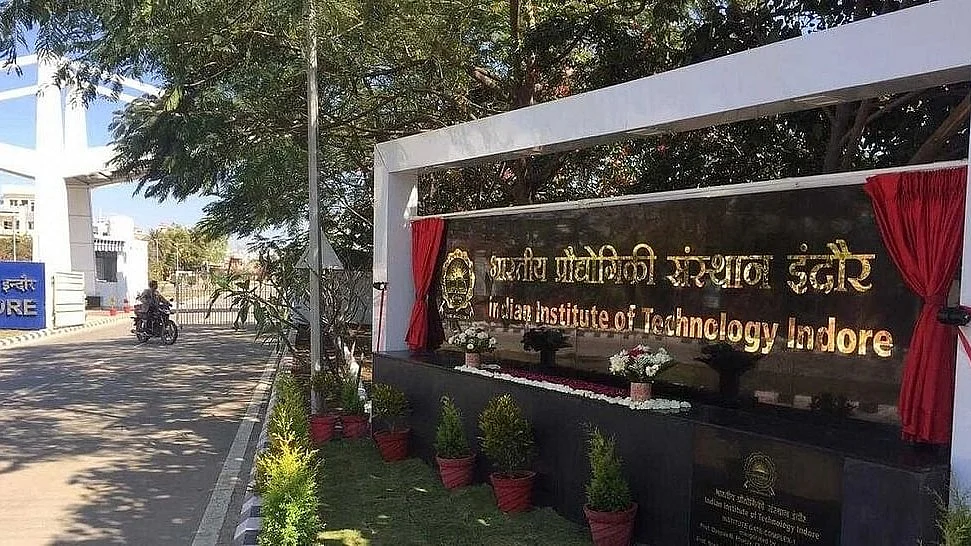
Indore News: Cutting-Edge Research Facilities To Be Inaugurated At IIT-Indore |
Indore (Madhya Pradesh): Researchers at IIT Indore have developed a new application to monitor precipitation extremes and drought in India’s Key Biodiversity Areas (KBAs), aiming to strengthen biodiversity conservation and improve climate resilience.
This innovation has been led by Manish Kumar Goyal, a professor at the institute, along with his research team, including Vijay Jain from the Department of Civil Engineering at IIT Indore.
The application identifies hotspots of drought and extreme rainfall across Indian KBAs and provides historical monitoring of these major water-related challenges to support informed decision-making. India has more than 600 KBAs spread across diverse climates and ecosystems. The highest number of these regions falls within India’s four biodiversity hotspots.
However, climate change and human activities are increasing extinction risks for many plant and animal species.
For instance, the Western Ghats region has one of the highest population densities in the world, adding pressure on biodiversity, while the Himalayan region is warming faster than the global average. These conditions make conservation efforts even more critical.
A KBA is officially defined as a site that significantly contributes to the global survival of biodiversity. Such areas may contain many unique species or provide rare habitats for species found nowhere else, or only in a few locations worldwide. KBAs can exist in deserts, forests, wetlands, mountains, or even oceans. When a site is designated a KBA, it is extremely important for maintaining the planet’s ecological balance.
The identification of a KBA is based on five criteria. The first is Threatened Biodiversity, which assesses whether species or ecosystems in the area are at risk. The second is Geographically Restricted Biodiversity, which focuses on species found only in limited regions. The third is Ecological Integrity, which checks whether the area remains largely natural and undisturbed. The fourth is Biological Processes, which considers whether the site supports important life stages such as breeding or nesting. The fifth is Irreplaceability, which evaluates the site’s global importance in conserving biodiversity. A place qualifies as a KBA if it meets at least one of these criteria.
Climate change is a major global challenge and is significantly affecting India’s biodiversity. It is altering where plants and animals live, how many survive, and how they behave. Many species are shifting to new regions due to changing temperature and rainfall patterns. Extreme precipitation events, which can cause floods, pose serious threats to KBAs. Heavy rainfall can damage habitats, uproot vegetation, and reshape landscapes. Fragile ecosystems such as wetlands, forests, and grasslands are especially vulnerable.
Droughts also severely impact KBAs. Reduced water availability affects freshwater ecosystems and species that depend on specific water levels for survival and reproduction. Drought can lead to habitat loss, changes in vegetation patterns, and the weakening or death of plants. This affects food and shelter for many species. Migratory animals may experience disruptions in their movements due to shortages of water and food. Reduced plant and insect populations also affect the entire food chain.
Highlighting the significance of the initiative, Suhas Joshi, director of IIT Indore, said, “At IIT Indore, we are committed to developing research-driven solutions that address real-world environmental challenges. This application reflects our effort to combine scientific research with practical tools that support biodiversity conservation and climate resilience in India.”
ALSO READ
Goyal stated, “We have developed this district-level monitoring application that tracks historical precipitation extremes and drought patterns from 1951 to 2022. By helping understand changing climate trends and supporting evidence-based conservation actions, this tool marks an important step toward protecting India’s rich biodiversity from climate-related risks.”
RECENT STORIES
-
-
-
-
-