Gen-Z-nomics: Swipe Now, Save Later-- How Students Fall Into EMI Trap
A growing number of students are opting for EMI-based purchases over saving money, raising concerns among financial experts. Easy credit access and lifestyle pressures are driving impulsive spending, with economists warning that this habit could lead to long-term financial instability and poor money management among Gen Z.

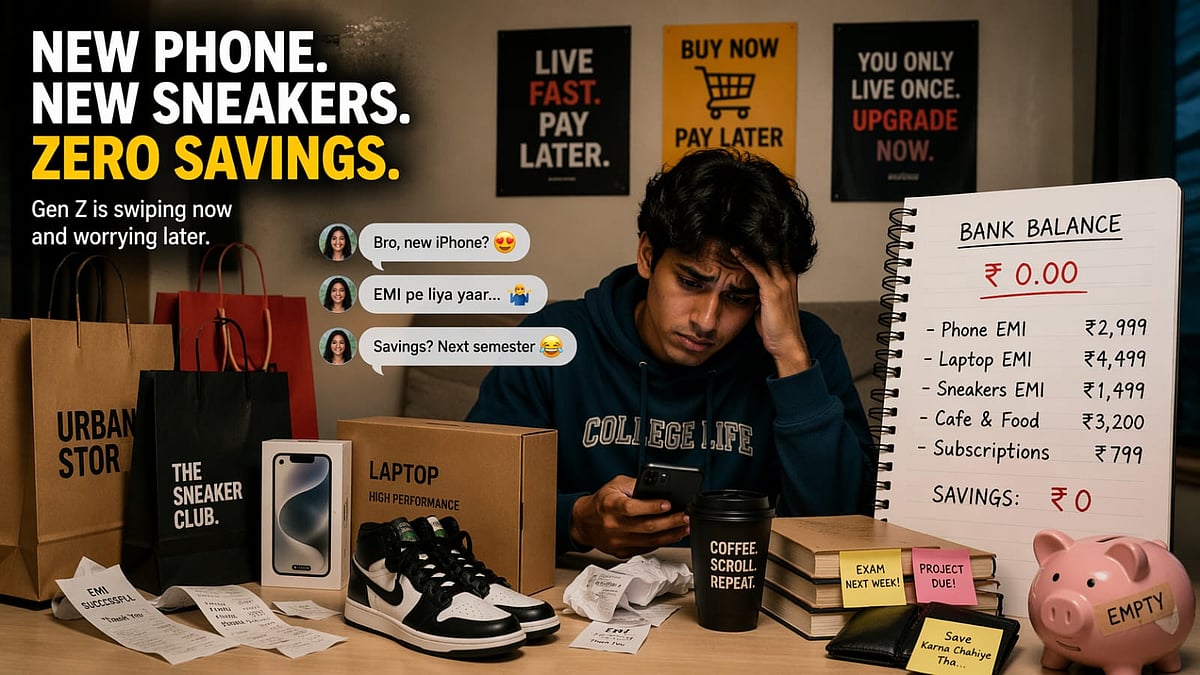
Swipe Now, Save Later? Students Fall Into the EMI Trap | AI Generated
Indore (Madhya Pradesh): A noticeable shift in financial behaviour is emerging among students across India, with many choosing Equated Monthly Instalments (EMIs) over traditional saving habits. From smartphones and laptops to luxury items, easy credit access has made it increasingly convenient for young consumers to “buy now, pay later”, often without fully understanding the long-term consequences.
What was once considered a disciplined approach, saving up before making a purchase, is now being replaced by instant gratification. Students, particularly Gen Z, are embracing EMI options due to peer pressure, social media influence, and the desire to maintain a certain lifestyle. However, financial experts warn that this growing dependence on credit could lead to poor financial planning in the future.
According to a study by The Economic Times, there has been a steady rise in young consumers opting for EMI-based purchases rather than building savings. The report highlights how fintech platforms and easy loan approvals have normalised debt among students, often masking the real cost of purchases.
Sanjay Tolani, a renowned financial strategist, coach, and author specialising in insurance and tax planning, points out that “young individuals are entering a cycle of consumption without understanding liabilities". He emphasises that while EMIs may seem manageable in the short term, they reduce future financial flexibility and increase dependency on credit.
ALSO READ
Similarly, economist Radhika Gupta, MD & CEO of Edelweiss Mutual Fund, widely known as India's only female head of a major asset manager, has raised concerns about the lack of financial literacy among students. She notes that early exposure to debt without proper guidance can discourage saving habits and delay long-term financial goals like investments or emergency funds.
Another expert, Anil Lamba, a chartered accountant, financial literacy activist, and corporate trainer, stresses that the issue lies not in EMIs themselves, but in their misuse. "EMIs are a tool, not a lifestyle. When used irresponsibly, they create a false sense of affordability,” he says.
Students, on the other hand, view EMIs as a necessity. With rising costs of education and lifestyle expectations, many believe they have little choice but to rely on credit. However, experts argue that this mindset needs urgent correction.
As India’s youth increasingly step into a credit-driven economy, the challenge lies in striking a balance between convenience and caution. Without proper financial awareness, the habit of choosing EMIs over savings could have lasting implications on the financial health of an entire generation.
RECENT STORIES
-
-
-
-
-