Uttar Pradesh: Rising Night Temperatures And Shorter Winters Threaten Wheat Production, Warns Climate Study
A Climate Trends study has warned that rising night-time temperatures, shrinking winters and erratic rainfall are threatening wheat production in Uttar Pradesh and other major farming states. Experts say heat stress and warmer nights are reducing grain quality and yields, raising concerns over farmer incomes and India's long-term food security.

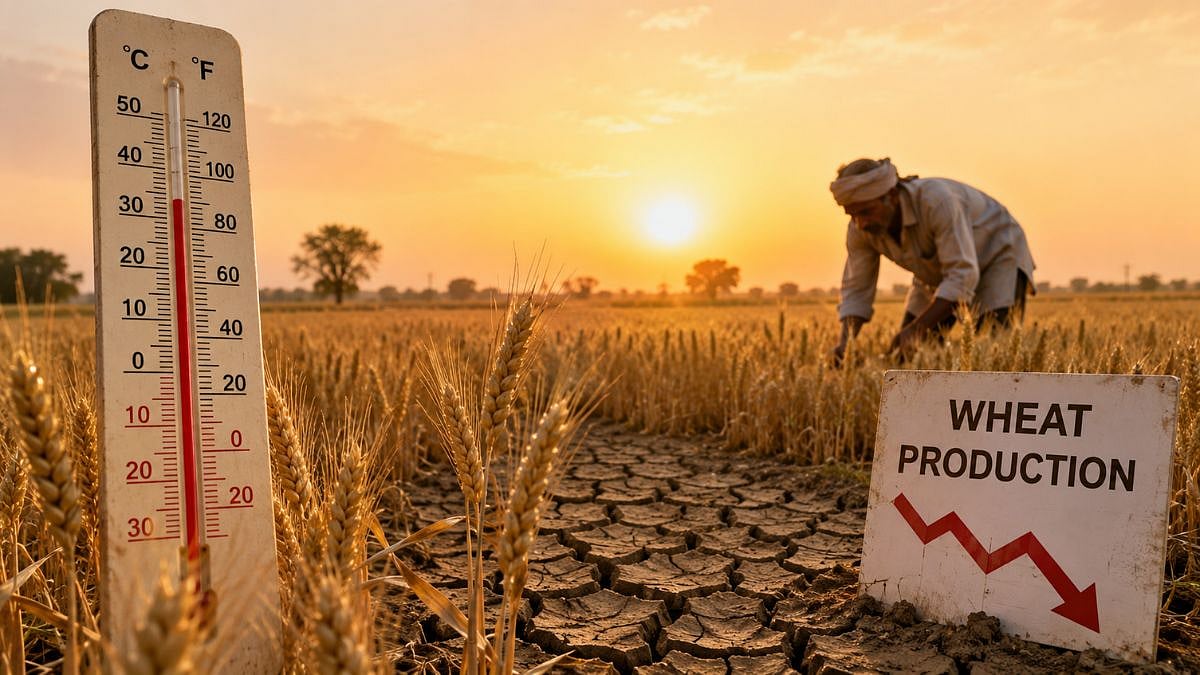
Wheat farmers face mounting climate challenges as rising temperatures and erratic weather patterns threaten crop yields across Uttar Pradesh | AI Generated Representational Image
Lucknow, June 1: Rising night-time temperatures and shrinking winters are emerging as major threats to wheat production in Uttar Pradesh, India's largest wheat-producing state, according to a new study released by climate research organisation Climate Trends.
The report, titled Wheat Under Stress: Climate Change, Rising Heat, and Adaptation Pathways in India's Major Wheat-Growing States, warns that warming winters, increasing night-time temperatures, and frequent heat stress events are disrupting wheat growth cycles across major producing states, including Uttar Pradesh, Punjab, Haryana, Madhya Pradesh, and Gujarat.
The findings come at a time when concerns are growing over India's food security. The India Meteorological Department has recently revised its monsoon forecast downward to 90 per cent of the long-period average, while global weather agencies are tracking what could become the strongest El Niño event since 2015-16.
Study highlights impact of warming nights on wheat crops
India produces around 107 million tonnes of wheat annually and accounts for nearly 14 per cent of global wheat production. Wheat is a key staple crop in Uttar Pradesh, which contributes the largest share to the country's overall output.
According to the study, night-time temperatures are increasing faster than daytime temperatures across all major wheat-growing regions. Uttar Pradesh recorded one of the sharpest increases in minimum temperatures among all states analysed.
Researchers said rising night-time temperatures increase plant respiration, causing wheat crops to consume stored carbohydrates that would otherwise contribute to grain development. As a result, crops mature prematurely, reducing grain size, quality, and overall productivity.
"One of the most under-recognised and worrying threats to India's wheat production is the steady increase in night-time temperatures," said Dr Palak Balyan, Research Lead at Climate Trends and lead author of the study. "Warmer nights increase respiration and create physiological stress on plants, while abrupt warming during February and March shortens the grain-filling period."
Shorter winters and heat stress affecting crop growth
The study found that winter seasons are becoming shorter, with February registering the fastest warming trend at 0.69 degrees Celsius per decade. March and April have also witnessed significant increases in temperature.
Experts said critical growth stages such as flowering and grain filling are becoming increasingly vulnerable to heat stress. The resulting impact includes poor germination, reduced tillering, early maturity, and greater susceptibility to pests and diseases.
Dr N. K. Chaudhary, an agricultural scientist, said climate variability is increasingly affecting wheat cultivation across Uttar Pradesh.
"Wheat is a winter crop and it requires a prolonged cool period for proper growth and grain development. However, winters are becoming shorter, temperatures are rising earlier than usual, and rainfall patterns have become unpredictable. Sudden heat during the grain-filling stage and unseasonal rain near harvest affect both the quantity and quality of wheat production. These changes are emerging as a serious challenge for farmers," he said.
Unseasonal rainfall adds to challenges for farmers
The report also highlights the growing threat posed by unseasonal rainfall. Delayed western disturbances are bringing heavier rainfall during March and April, often coinciding with harvesting periods. Such weather events damage standing crops, lower grain quality, and increase post-harvest losses.
Aarti Khosla, Founder and Director of Climate Trends, said climate change is already reshaping India's agricultural landscape and affecting rural livelihoods.
"Farmers across regions are reporting lower grain quality, repeated crop losses, and rising input costs. Building long-term resilience through climate-smart agriculture, early warning systems, and financial protection mechanisms is now essential," she said.
The study noted that farmers are attempting to adapt by changing sowing schedules, adopting short-duration and heat-tolerant varieties, and improving water management practices. However, these measures remain limited by inadequate resources, finance, and access to climate information.
Agricultural experts have called for stronger policy interventions to protect wheat production. They stressed the need to promote climate-resilient farming practices, improve soil health, and strengthen support systems for farmers facing increasing climatic uncertainty.
Also Watch:
With Uttar Pradesh accounting for a substantial share of India's wheat output, experts warned that continued warming trends could have significant implications not only for farmers' incomes but also for national food security in the coming years.
To get details on exclusive and budget-friendly property deals in Mumbai & surrounding regions, do visit: https://budgetproperties.in/
RECENT STORIES
-
-
-
-
-