UP Wetlands Emerging As Haven For Migratory Birds Boosting Eco-Tourism
As migratory birds began returning to Central and Southeast Asia after winter, Uttar Pradesh’s wetlands recorded high bird activity and rising tourist footfall. Officials said improved conservation and eco-tourism projects helped attract visitors to Ramsar sites and the Terai region. The state has sanctioned 85 tourism projects worth over ₹282 crore around wetlands and water bodies.

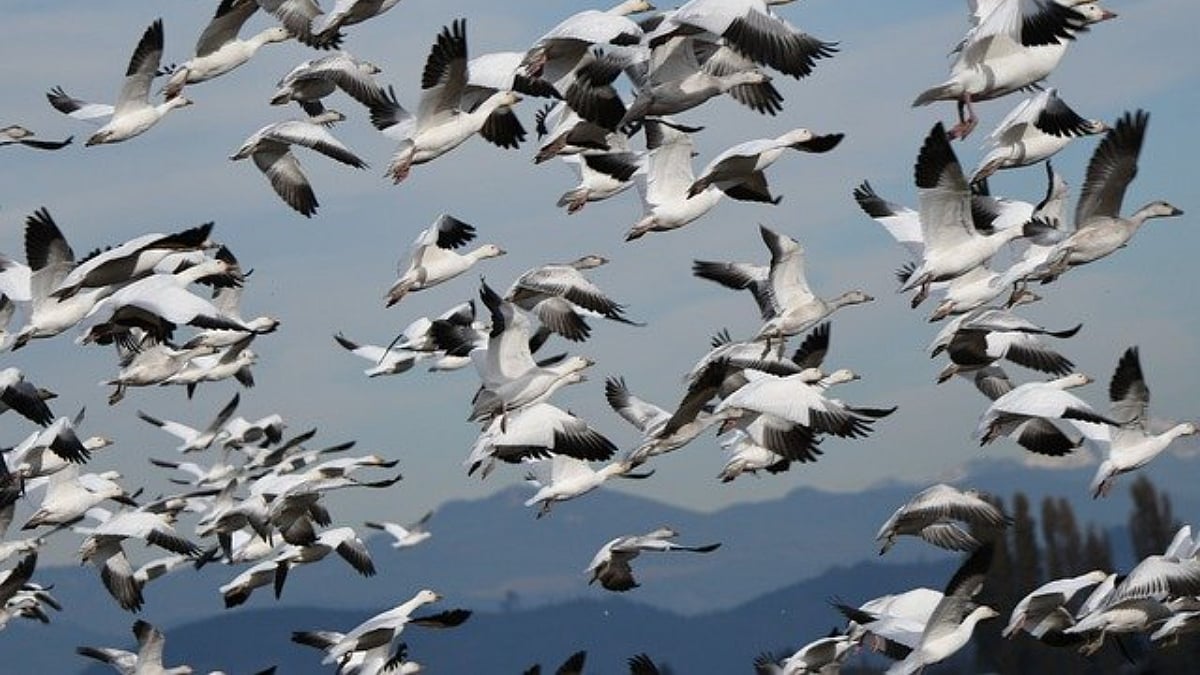
UP Wetlands Emerging As Haven For Migratory Birds Boosting Eco-tourism | Representational Image
Lucknow: As winter recedes and migratory birds begin their long return journey to Central and Southeast Asia, Uttar Pradesh’s wetlands are once again witnessing the seasonal transition that has turned the state into one of north India’s major birding destinations.
From the floodplains of the Ganga and Yamuna rivers to the marshy grasslands of the Terai region, wetlands across Uttar Pradesh hosted thousands of migratory birds this season, drawing birdwatchers, researchers and tourists in increasing numbers. Officials say the steady rise in footfall is closely linked to the growing ecological importance of these wetlands and the state’s push towards eco-tourism.
Located along the Central Asian Flyway, Uttar Pradesh provides a crucial winter refuge to migratory species arriving from Siberia, Mongolia, Tibet and other cold regions of Central Asia. The state’s network of over 1.2 lakh wetlands offers ideal feeding, breeding and resting habitats for birds such as Bar-headed Geese, Northern Pintail, Common Teal, Eurasian Wigeon and Greater Flamingo.
Bird activity remained particularly high this season in the Terai belt, oxbow lakes and shallow freshwater wetlands spread across districts including Unnao, Hardoi, Mainpuri and Lakhimpur Kheri. Wetlands connected to river systems and agricultural landscapes also attracted large congregations of waterfowl due to the availability of food and relatively undisturbed habitats.
Several of Uttar Pradesh’s key bird habitats have gained international recognition as Ramsar sites, helping strengthen conservation measures and improve ecological management. These include Nawabganj Bird Sanctuary, Sandi Bird Sanctuary, Samaspur Bird Sanctuary, Saman Bird Sanctuary, Parvati Arga Bird Sanctuary and Sur Sarovar Bird Sanctuary, all of which recorded significant migratory bird presence during the winter months.
Officials said the recent inclusion of Shekha Jheel in Aligarh as a Ramsar site has further reinforced Uttar Pradesh’s status as an important wetland state in the country. The state now has 12 Ramsar sites.
The wetlands are also emerging as major eco-tourism destinations. The Uttar Pradesh Eco Tourism Development Board has sanctioned 85 projects worth over Rs 282 crore aimed at improving tourism infrastructure around wetlands and water bodies. These projects include development of nature trails, birdwatching points, interpretation centres and eco-friendly visitor facilities designed to minimise ecological disturbance.
Officials said improved habitat conservation and tourism infrastructure have contributed to a rise in visitors to the Terai and wetland regions. Around 1.06 crore tourists visited the Terai region in the last year, with birdwatching and nature tourism emerging as major attractions.
Tourism and Culture Minister Jaiveer Singh said the government was focusing on balancing conservation with sustainable tourism.
“Our wetlands are not only biodiversity hotspots but also centres of livelihood and tourism. The effort is to preserve these ecosystems while allowing people to experience and understand their ecological value,” he said.
Officials said community participation is also being encouraged through training programmes for local youth as nature guides and awareness drives around wetland conservation. Digital campaigns and local festivals are being used to promote lesser-known birding destinations across the state.
ALSO READ
Also Watch:
The Nature and Bird Festival organised at Deogarh earlier this year brought together students, birdwatchers and conservationists, while also drawing attention to the eco-tourism potential of Bundelkhand.
The government is additionally implementing initiatives such as ‘One District One Wetland’ and the Sarus Crane Conservation Initiative to strengthen conservation efforts while linking them with tourism and community awareness.
Additional Chief Secretary, Tourism, Culture and Religious Affairs, Amrit Abhijat said wetlands were becoming central to the state’s sustainable tourism model.
“Protecting wetlands ensures the survival of migratory birds and biodiversity, while also creating economic opportunities for local communities through eco-tourism,” he said.
RECENT STORIES
-
-
-
-
-