Supreme Court Tells ED Not To Overstep Its Powers In Kerala CMRL-Exalogic Case, Stays Probe For Seven Days
The Supreme Court cautioned the Enforcement Directorate against exceeding its statutory powers in the CMRL-Exalogic corruption case involving former Kerala Chief Minister Pinarayi Vijayan. The court granted seven-day protection against investigation and permitted an appeal against the Kerala High Court's FIR order.

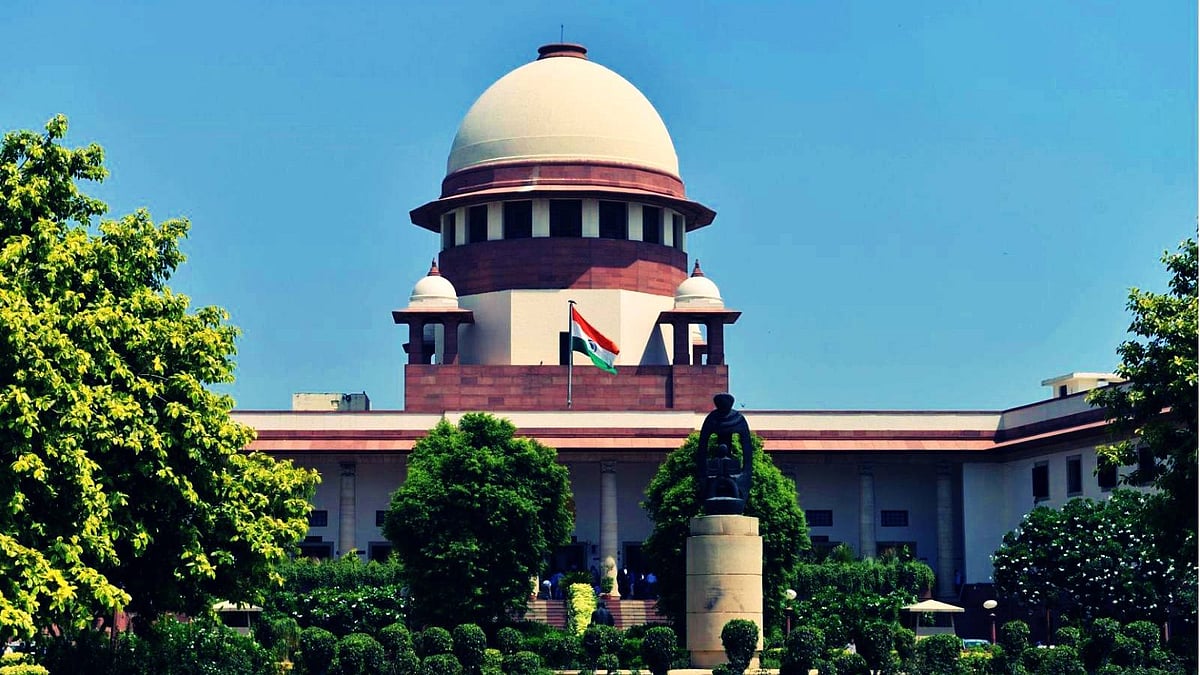
Supreme Court Tells ED Not To Overstep Its Powers In Kerala CMRL-Exalogic Case, Stays Probe For Seven Days | Representative image
The Supreme Court on Wednesday cautioned the Enforcement Directorate (ED) against interfering in the powers of other investigating agencies while hearing petitions related to the CMRL-Exalogic corruption case involving former Kerala Chief Minister Pinarayi Vijayan and his family members.
The court temporarily stayed the investigation into a First Information Report (FIR) registered by the Kerala Vigilance and Anti-Corruption Bureau against Vijayan and others. It also allowed them to challenge the Kerala High Court’s order directing the registration of the FIR, Live Law reports.
‘Don’t Go Beyond Your Powers,’ Supreme Court Tells ED
A bench of Justices Joymalya Bagchi and V Mohana made the observations while hearing petitions filed by Vijayan and others challenging the Kerala High Court’s decision to order a corruption investigation based on information provided by the ED.
During the hearing, Justice Bagchi made it clear that the ED could investigate suspected money laundering under the Prevention of Money Laundering Act (PMLA), but could not interfere with the legal powers of other agencies.
“Don’t extend your hand beyond your statutory limits,” Justice Bagchi told the ED’s counsel, Advocate Zoheb Hossain.
The judge also warned the agency against using its statutory powers to interfere in matters that fall under the jurisdiction of other authorities.
The court’s observations underline an important distinction between sharing information about a suspected offence and deciding how another investigating agency should act on that information.
Can ED Information Automatically Trigger An FIR?
One of the main questions before the Supreme Court was whether information shared by the ED under Section 66(2) of the PMLA made it compulsory for the Kerala police to register an FIR.
The court questioned whether the State police could first examine the information and decide if a preliminary inquiry was necessary before starting a formal investigation.
Justice Bagchi pointed out that the Kerala High Court’s single-judge order appeared to take different positions on the issue. While one part of the order suggested that registering an FIR was mandatory, another indicated that some verification was required.
The Supreme Court observed that the ED had fulfilled its responsibility by informing the State authorities about suspected offences under the Prevention of Corruption Act. The next course of action, however, had to be decided by the State agency in accordance with the law.
Court Questions Need For Prior Approval
The hearing also raised the question of whether an investigation against a former Chief Minister could proceed without prior approval under Section 17A of the Prevention of Corruption Act.
Appearing for the ED, Hossain argued that such approval was unnecessary when an investigation was ordered by a court. He relied on a Supreme Court judgment that had upheld the Bombay High Court’s position on the issue.
Justice Bagchi, however, noted that the present case arose from information supplied by the ED and was not originally a court-directed investigation.
The judge observed that the State investigating agency must be allowed to examine whether the available material justified an investigation under the Prevention of Corruption Act.
“It cannot be said that you completely shut out the agency’s prerogative,” Justice Bagchi said.
ED Can Continue Money Laundering Probe
The Supreme Court clarified that its observations did not prevent the ED from investigating suspected hawala transactions or pursuing money laundering cases.
Justice Bagchi said the agency had the authority to investigate suspected hawala dealings, including those involving former Chief Ministers, under the PMLA.
The court also observed that a person could face proceedings under the PMLA even without being named as an accused in a scheduled offence.
However, the bench maintained that the ED’s authority to investigate money laundering did not automatically give it control over investigations conducted by State agencies under other laws.
The distinction is significant because the CMRL-Exalogic matter involves questions concerning both alleged money laundering and suspected corruption, which fall under different legal frameworks.
Supreme Court Grants Seven-Day Protection
The Supreme Court set aside the Kerala High Court division bench’s decision refusing permission to Vijayan and the other petitioners to appeal against the single judge’s order.
It directed the division bench to consider their appeal and granted interim protection against investigation for seven days to allow them to pursue the legal remedy.
The FIR will remain in place, but the investigation cannot proceed during the period of interim protection.
The Supreme Court’s order does not decide whether the corruption allegations are true. Instead, it leaves the legal questions surrounding the registration of the FIR and the powers of the investigating agencies to be examined through the appeal.
What Is The CMRL-Exalogic Case?
The case concerns allegations involving payments made by Cochin Minerals and Rutile Ltd (CMRL) to Exalogic Solutions, a company owned by Vijayan’s daughter, Veena T.
During its investigation, the ED gathered material that it believed indicated possible offences under the Prevention of Corruption Act. It subsequently shared the information with the Kerala police under Section 66(2) of the PMLA.
The State government had initially formed a Special Investigation Team (SIT) to conduct a preliminary inquiry into the allegations.
However, on October 9, a single judge of the Kerala High Court allowed a petition filed by K M Shajahan and directed the State Vigilance and Anti-Corruption Bureau to register an FIR against Vijayan, Veena, Riyas and other suspected persons.
The High Court held that the information provided by the ED contained sufficient material to justify registration of an FIR and that another preliminary inquiry was unnecessary.
It also set aside the State government’s decision to constitute the SIT for a preliminary inquiry.
How The Case Reached The Supreme Court
Following the October 9 order, Vijayan and the other petitioners approached a division bench of the Kerala High Court, seeking permission to appeal against the single judge’s directions.
On October 15, the division bench declined to entertain their petitions, prompting them to move the Supreme Court.
The Supreme Court has now cleared the way for the petitioners to pursue their appeal before the High Court division bench while temporarily preventing further investigation.
The case raises a wider legal question about the limits of the ED’s powers when it shares information with State investigating agencies. The High Court’s consideration of the appeal will be important in determining how those powers apply to the corruption investigation.
RECENT STORIES
-
-
-
-
-