Supreme Court Refuses PIL Seeking Mandatory Ethanol Percentage Labels On Fuel Nozzles, Invoices; Directs Petitioner To HC
The Supreme Court refused to entertain a PIL seeking mandatory labelling of ethanol content on petrol pump nozzles and fuel invoices. The bench directed petitioner Narendra Kumar Goswami to approach the jurisdictional high court, while the Centre called the plea proxy litigation.

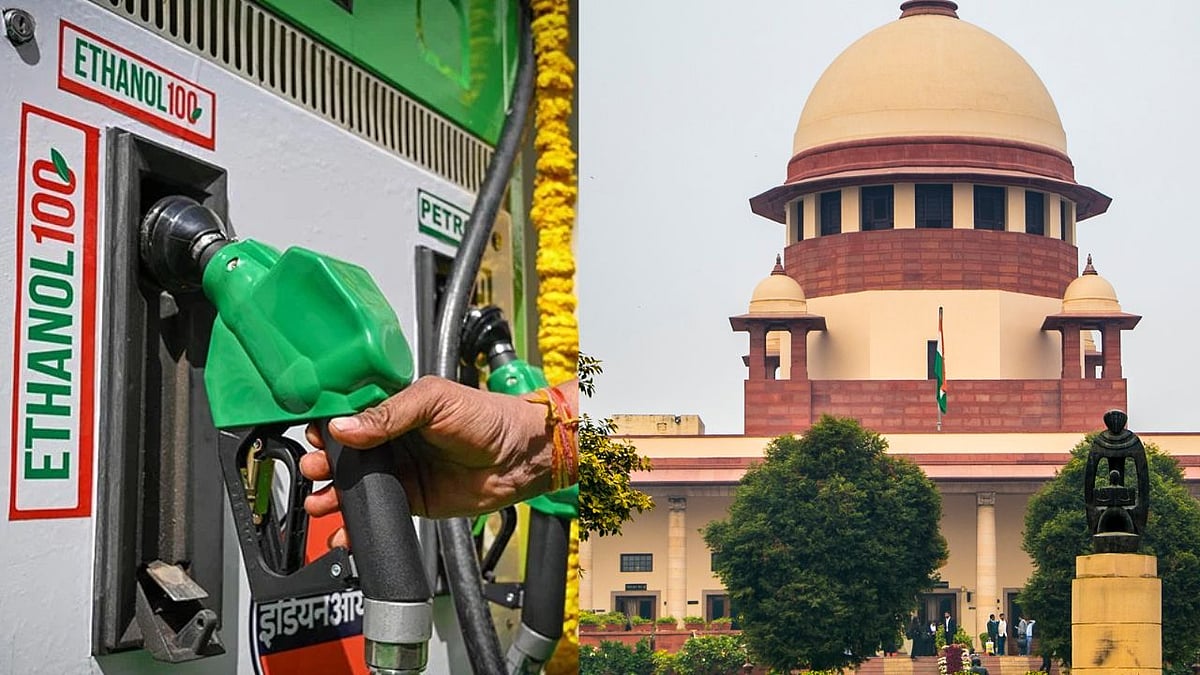
Supreme Court Refuses PIL Seeking Mandatory Ethanol Percentage Labels On Fuel Nozzles, Invoices; Directs Petitioner To HC |
New Delhi: The Supreme Court on Monday refused to entertain a PIL seeking a directive to the Centre and others to ensure mandatory and uniform labelling on every dispensing nozzle at petrol pumps, disclosing the exact percentage of ethanol in petrol. A bench of Justices MM Sundresh and PB Varale said it is not going to entertain the PIL under Article 32 (right to approach Supreme Court directly) and the petitioner Narendra Kumar Goswami can approach the jurisdictional high court for relief.
Also Watch:
Attorney General R Venkataramani, appearing for the Centre, submitted that it is a proxy litigation as a petition on a similar issue has been dismissed by the court.
"The petitioner wants government of India to be answerable to him," the AG submitted.
Goswami contended that he has the right to know the content of the petrol given at fuel pumps.
"Not only me but citizens at large should be informed about the composition of the fuel given to them," he submitted.
The bench asked Goswami, appearing in-person, to raise his contentions before the high court.
ALSO READ
Goswami has also sought a direction that every fuel invoice should specifically and legibly state the percentage of ethanol in the petrol sold. "Direct the respondents (Centre and others) to prepare and publish within a stipulated time an official, public, vehicle-wise compatibility database searchable by manufacturer, model, engine type and year of manufacture, indicating the suitability or otherwise of various ethanol blends for each vehicle," his plea said. It has also sought the constitution of an independent expert committee comprising representatives from the ministries of petroleum and natural gas, road transport and highways, the Bureau of Indian Standards and others, including independent automobile engineers, to examine and submit a public report on real-world vehicle compatibility of E20 across the existing fleet. The plea said the committee should also submit a report on the impact on fuel efficiency, engine longevity and maintenance costs, warranty and insurance implications, the net environmental footprint, including tail-pipe emissions and water consumption associated with ethanol production, and food-security and feed-diversion concerns allegedly arising from the blending programme.
(Except for the headline, this article has not been edited by FPJ's editorial team and is auto-generated from an agency feed.)
RECENT STORIES
-
-
-
-
-