Supreme Court Quashes 2021 Post-Facto Environmental Clearance OM, Allows Limited Exceptions Through Law
The Supreme Court ruled that projects cannot routinely seek environmental clearance after beginning operations, quashing the Centre's 2021 Office Memorandum while permitting limited, time-bound exceptions through a statutory notification in genuine public-interest cases.

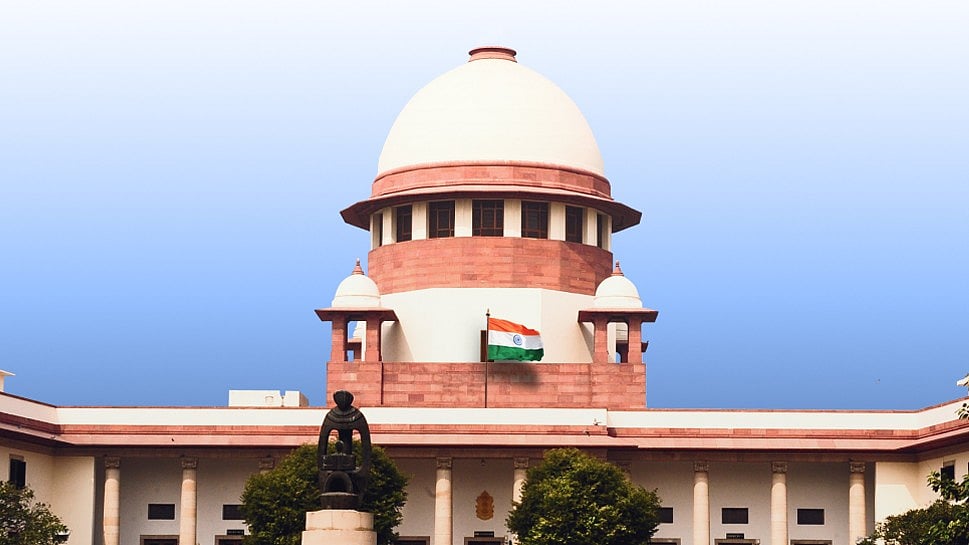
Supreme Court Quashes 2021 Post-Facto Environmental Clearance OM, Allows Limited Exceptions Through Law | File Pic
In a landmark judgment delivered on Wednesday, July 29, the Supreme Court unanimously struck down the Centre's 2021 Office Memorandum (OM), which had created a mechanism for granting post-facto (retrospective) environmental clearances (ECs) to projects that commenced construction or operations without obtaining prior environmental approval.
A three-judge bench comprising Chief Justice Surya Kant, Justice Joymalya Bagchi and Justice Vipul Pancholi held that the 2021 OM, which enabled projects to seek environmental clearance after beginning operations, was legally unsustainable and accordingly quashed it.
The apex court reaffirmed that obtaining prior environmental clearance is the cornerstone of India's environmental regulatory framework and cannot be bypassed through executive orders. However, it clarified that the Centre may introduce a limited, time-bound mechanism for granting post-facto clearances in exceptional circumstances, provided it does so through a valid statutory notification rather than an administrative order.
Prior Environmental Clearance Remains the Rule
The bench held that the Environment Impact Assessment (EIA) Notification, 2006, clearly mandates that specified projects must secure environmental clearance before beginning any construction or operational activities.
The judges stressed that allowing projects to seek approvals after commencing work would undermine the precautionary principle and defeat the very objective of environmental protection.
2021 Office Memorandum Declared Invalid
The Court ruled that the 2021 Office Memorandum exceeded the powers granted under the Environment (Protection) Act, 1986. It observed that the executive order effectively created a permanent amnesty mechanism for projects violating environmental norms.
According to the judgment, the OM failed the test of proportionality, lacked a reasonable legal basis, and could not replace or override delegated legislation through an executive instruction.
Centre Can Introduce Limited Statutory Amnesty in Exceptional Cases
While striking down the 2021 OM, the Supreme Court acknowledged that rigid enforcement could sometimes cause disproportionate hardship in projects involving larger public interest.
It therefore allowed the Centre to frame a narrowly tailored, time-bound amnesty scheme through a statutory notification, but made it clear that such a mechanism cannot become a routine method of regularising environmental violations.
Existing Environmental Clearances Remain Protected
The Court clarified that environmental clearances already granted under the earlier 2017 notification and the now-quashed 2021 Office Memorandum will continue to remain valid unless challenged individually before a competent court.
The ruling will operate prospectively, meaning no fresh post-facto environmental clearances can be granted under the quashed mechanism.
Supreme Court Retains Extraordinary Powers Under Article 142
The bench also observed that the Supreme Court retains the authority under Article 142 of the Constitution to grant post-facto environmental clearance in appropriate cases where complete justice so requires.
Background: A Long Legal Battle Over Post-Facto Clearances
The judgment marks the latest chapter in the legal debate surrounding retrospective environmental approvals.
In May 2025, while hearing the Vanashakti case, a Supreme Court bench comprising Justices A.S. Oka and Ujjal Bhuyan had struck down both the 2017 notification and the 2021 Office Memorandum, calling post-facto environmental clearances a "gross illegality" and contrary to established environmental jurisprudence.
However, in November 2025, a three-judge bench recalled that verdict by a 2:1 majority, holding that the earlier decision had overlooked binding precedents. The Court restored limited flexibility for post-facto clearances in exceptional situations to prevent disproportionate consequences, including the demolition of major infrastructure projects.
Building on that decision, the Supreme Court has now drawn a clearer distinction between executive instructions and statutory law by invalidating the 2021 OM while allowing the government to frame a legally sustainable, narrowly defined framework for exceptional cases.
ALSO READ
Balancing Development and Environmental Protection
The Court concluded that sustainable development requires a careful balance between economic growth and environmental conservation. It underscored that development cannot come at the cost of environmental safeguards, while also recognising that genuine public-interest projects may require limited legal flexibility under a transparent statutory framework.
The ruling is expected to have significant implications for sectors such as mining, infrastructure, real estate and industrial development, where several projects have historically faced scrutiny for commencing work without obtaining prior environmental clearance.
RECENT STORIES
-
-
-
-
-