Supreme Court On Stray Dogs: Activists Seek Government Accountability Over Confinement Of Animals
The Supreme Court on Tuesday refused to recall its November 2025 directions requiring stray dogs to be removed from high-footfall institutions, including schools, hospitals, railway stations and sports complexes. A bench led by Justice Vikram Nath dismissed petitions challenging AWBI's SOP and said dogs picked from such sensitive places must be shifted to shelters.

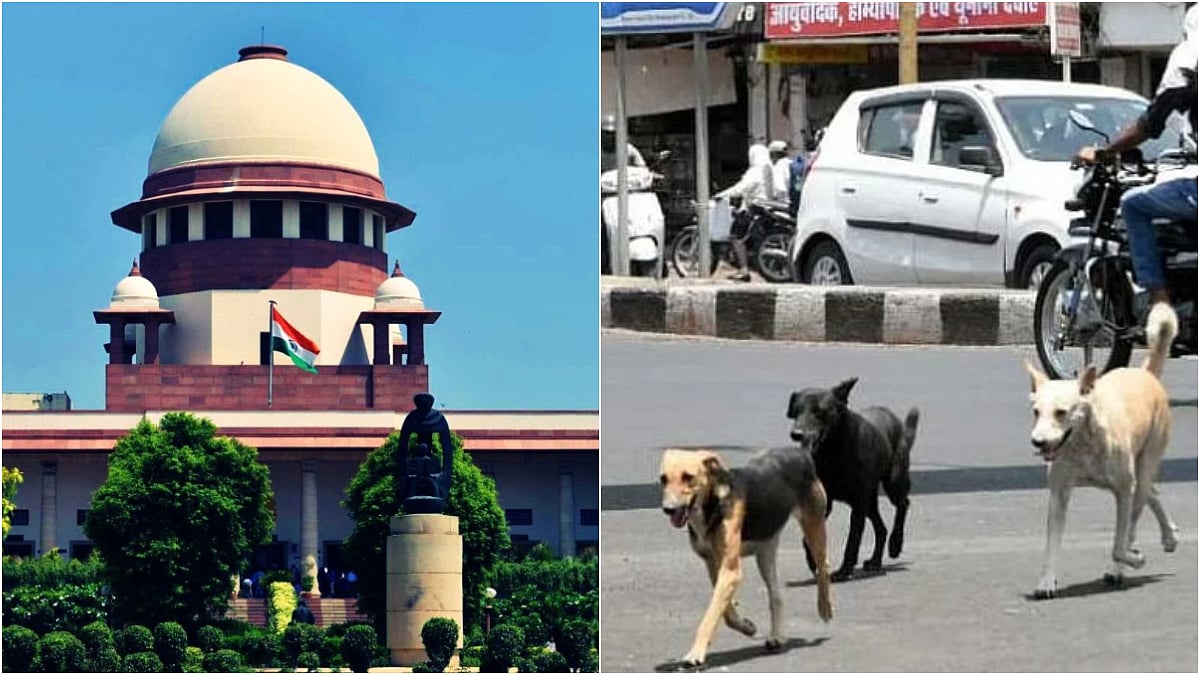
Supreme Court On Stray Dogs: Activists Seek Government Accountability Over Confinement Of Animals | File Pic
Mumbai: The Supreme Court of India on Tuesday dealt a significant blow to animal welfare advocates by refusing to recall its November 2025 mandate, which directs the removal of stray dogs from high-footfall public institutions. While the apex court’s firm stance on relocating strays has sparked widespread disappointment within the animal rights community, many activists have cautiously welcomed the Court's intensified focus on the professionalisation of the Animal Birth Control (ABC) programme.
Dogs to Be Moved to Designated Shelters
A three-judge bench, headed by Justice Vikram Nath and including Justices Sandeep Mehta and N V Anjaria, dismissed a series of petitions challenging the Standard Operating Procedure (SOP) issued by the Animal Welfare Board of India (AWBI). The court reiterated that stray dogs picked up from sensitive areas – such as schools, hospitals, railway stations, and sports complexes – must not be released back into those locations, but instead, be moved to designated shelters.
The bench was unyielding in its observation regarding the safety of citizens. Emphasising that the ‘right to life with dignity’ under Article 21 includes the right to move freely without the fear of dog bites, the court stated it could not remain "blind to the harsh ground realities." It said that the state cannot remain a passive spectator where preventable threats to human life continue to proliferate, noting that children, the elderly, and travellers have frequently been victims of attacks. The bench also permitted authorities to take "legally permissible measures," including the euthanasia of demonstrably aggressive or rabid dogs.
Activists Fear Collapse of CSVR Model
The animal welfare fraternity has expressed deep concern over the removal policy. Organisations and activists claimed that the country has historically witnessed that removal of stray dogs has not solved the problem. Many argue that relocating dogs to shelters effectively dismantles the successful 'Capture Sterilise Vaccinate Release' (CSVR) model that has been the bedrock of community animal management for years.
Humane World for Animals India stated that ABC remains the only practical, logical and evidence-based solution to manage dogs humanely. as it has delivered measurable results when implemented consistently. It highlighted that sustained collaboration between communities and the municipal corporation in Dehradun led to the sterilisation of over 55,000 community dogs in nine years, resulting in a documented reduction of nearly 40 percent in dog population density.
ABC Rules Designed for Humane Management
HWA India's managing director Alokparna Sengupta said, “The ABC rules were introduced after decades of experience showed that mass culling and removal of dogs was ineffective and frequently led to public health crises. In 2023, they were improved to address gaps relating to monitoring and conflict resolution. These rules were designed to provide a humane, scientifically grounded, and sustainable framework for managing street dog populations.”
Expressing displeasure, People for Ethical Treatment of Animals (PETA) India compared the size of stray dog shelters to traditional funeral pyres, stating that these shelters are tantamount to sentencing them to death. It warned that caging dogs would institutionalise cruelty, increase the risk of zoonotic and other disease, divert public resources away from the requirements of the ABC rules and inevitably collapse under its own weight due to the lack of infrastructure, funding or administrative capacity to confine an estimated 62 million free-roaming dogs in the country.
PETA Offers Science-Based Roadmap
PETA India has previously written to prime minister Narendra Modi, states, union territories and the AWBI, submitting a detailed science-based roadmap grounded in the principles of Ahimsa and Vasudhaiva Kutumbakam, offering humane and effective solutions for managing India’s community dog and stray cow populations. It strongly opposed proposals that rely on lifelong jailing of animals in overcrowded and underfunded facilities or any killing of dogs indiscriminately labelled aggressive.
The roadmap proposes a time-bound, area-wide implementation of the ABC Rules, expansion via including smaller-scale sterilisation and rabies-vaccination efforts, closure of illegal breeders and pet shops, prohibition of foreign dog breeds bred for use in illegal dogfights, protection of community feeders and strong government incentives for adoption.
Activists Welcome Court's Stern View on States
However, there is a silver lining highlighted by the activists. The Supreme Court took a stern view of the lackadaisical approach of state governments, noting that the current crisis is a direct result of poor planning and underfunded ABC programmes. The organisations appreciated the apex court acknowledging that the current community dog population is attributable wholly to consistent institutional failure at every level to implement the ABC rules since 2001.
“We are encouraged by the Court's directions towards urgent and effective implementation of the statutory mandate of ABC. We urge all states and municipal bodies to undertake the responsibility to address the root cause of the conflict – systematic and scientific sterilisation and vaccination programs,” said Sengupta.
Concerns Over Euthanasia of Aggressive Dogs
While the animal rights advocates whole heartedly backed the Court's observation on the lack of effective implementation of ABC rules, they also raised concerns over permitting the authorities to euthanise aggressive dogs. PETA India said that it is committed to exploring legal remedies and appealing to authorities for resources to be focused on the implementation of the ABC Rules and for better sense to prevail regarding the AWBI's procedures and any killing of dogs.
ALSO READ
“We are hopeful that the states and UTs will not resort to measures that are beyond the scope of established law and scientific process, such as culling of dogs. The path forward lies not in removal, but in responsible implementation of the law already in place. Although the Act and Rules provide for specific instances in which street dogs may be euthanised, it should not be circumvented or misinterpreted in order to resort to substitute measures,” added Sengupta.
As Mumbai’s municipal authorities scramble to meet the upcoming deadlines, the city's activists remain in a state of watchful waiting. The focus has now shifted from the legal battle to the ground-level implementation of whether the authorities prioritise the scientific, humane management of the stray population, or will the relocation policy lead to a crisis in the city’s already strained animal shelters?
Mumbai-based Roshan Pathak, an animal rights advisor with InDefence of Strays, said, “The Court has overlooked practical implementation of who will determine if a dog is aggressive or not. The Court should have also talked about the harassment to animal feeders, who do the civic body's work of vaccinating and sterilising the strays even by paying a big chunk of money from their pocket. If such a huge amount of money has to be spent on establishing shelters, it should better be used to manage the dog population scientifically. The government officials, who have failed to carry out their duties, should be held accountable.”
To get details on exclusive and budget-friendly property deals in Mumbai & surrounding regions, do visit: https://budgetproperties.in/
RECENT STORIES
-
-
-
-
-