Sankoo Becomes Ladakh’s Eighth District; Here’s All You Need To Know About The Region
Ladakh Lieutenant Governor Vinai Kumar Saxena announced Sankoo as the Union Territory’s eighth district on October 16, fulfilling a long-standing demand of residents. Carved out of Kargil, the Suru Valley region is known for its green landscapes, agriculture and cultural heritage. The move aims to decentralise administration and improve access to government services.

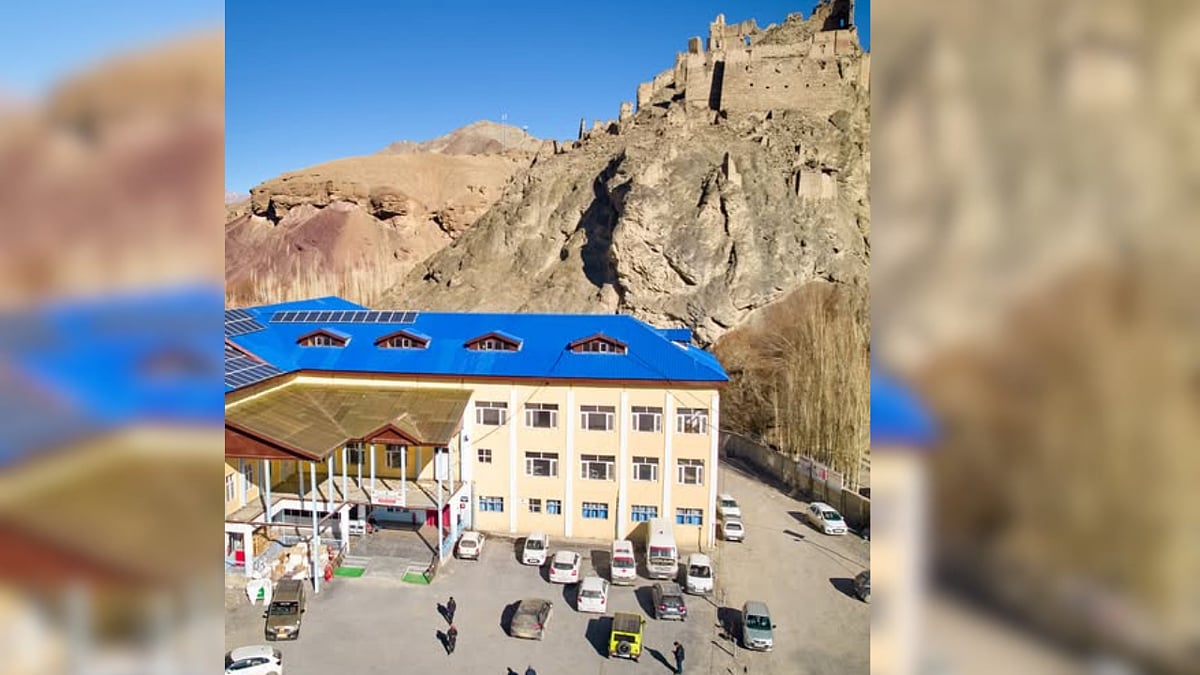
Ladakh Lieutenant Governor Vinai Kumar Saxena on Friday, October 16, announced that Sankoo, a region in the Suru Valley, will become the Union Territory’s eighth district. The decision fulfils a long-standing demand of residents and is aimed at decentralising administration and improving access to government services in the remote region.
Saxena made the announcement during his visit to Sankoo, where residents celebrated the decision. He said administrative arrangements, including the posting of officials, would be made promptly to ensure the new district becomes operational.
The announcement comes less than six months after Ladakh announced five new districts in April 2026 Changthang, Drass, Nubra, Sham and Zanskar. The Union Territory, which had only Leh and Kargil as its districts after becoming a Union Territory in 2019, will now have eight districts.
Saxena credited Prime Minister Narendra Modi and Union Home Minister Amit Shah for the decision, invoking the government's vision of “Sabka Saath, Sabka Vikas”. He said he had discussed the demand with local leaders and secured clearance from Shah following a late-night conversation.
The administration also announced five new tehsils across Ladakh to further decentralise governance. A Ladakh Autonomous Hill Development Council (LAHDC) for Sankoo was also announced, with further administrative notifications expected.
Where Is Sankoo? A Look At Its Geography
Sankoo, also spelled Sanku, is located in the Suru Valley, around 42 km south of Kargil town. Known for its relatively green landscape and agricultural fields, the region is among the more fertile parts of Ladakh.
Situated at an altitude of approximately 3,150 metres, Sankoo lies in a bowl-shaped valley surrounded by mountainous terrain. The Suru River flows through the area, meeting tributaries from neighbouring valleys.
Unlike the stark, arid landscapes commonly associated with Ladakh, parts of the Suru Valley are known for poplar and willow plantations, wild roses, apricot orchards and barley fields. The region is sometimes referred to as “Ladakh’s Gulmarg” because of its greenery and natural landscape.
The area experiences relatively pleasant summers, while winters can be severe, with freezing temperatures and heavy snowfall that may disrupt travel and isolate settlements.
Why Has Sankoo Been Made A District?
The creation of Sankoo district is intended to bring government administration closer to residents and reduce the difficulties associated with accessing services from Kargil, particularly for people living in remote villages.
The region's population and geographical spread have contributed to demands for a separate administrative unit. District status is expected to improve coordination between government departments, strengthen public participation and help ensure that development schemes reach remote communities.
The move also forms part of the wider administrative reorganisation of Ladakh, which has seen the creation of new districts and tehsils to improve local governance.
Sankoo will be carved out of the existing Kargil district. The new district is expected to include the tehsils of Sankoo, GM Pore, TSG and Taisuru, along with their associated revenue villages.
The precise administrative boundaries and operational arrangements will depend on the relevant government notifications.
What Is The Significance Of The New District?
For residents, the announcement represents a step towards reducing the distance between local communities and the administration. Access to government offices, public services and development programmes can be particularly challenging in high-altitude regions where travel is affected by terrain and weather.
The creation of a separate district is expected to improve administrative coordination and provide a more accessible channel for residents to raise local concerns.
The proposed LAHDC for Sankoo is another part of the decentralisation process. Such councils play a role in local development and governance in Ladakh's hill districts, although the specific arrangements for Sankoo will depend on the formal notification and subsequent administrative steps.
Sankoo's Culture, Communities And Historical Heritage
Sankoo and the wider Suru Valley have a distinctive cultural history shaped by the region's connections with Ladakh and the surrounding Himalayan areas.
The area is predominantly inhabited by the Purgi community, whose cultural and linguistic traditions reflect the region's broader Tibetan and Himalayan heritage. Shia Islam is the predominant religion in the area, and languages spoken in the wider region include Purgi, Balti and Ladakhi.
The region also has religious and historical sites associated with local scholars, spiritual figures and historical rulers. These sites form part of the cultural landscape of the Suru Valley, which also has links to the wider Buddhist heritage of Ladakh.
Nearby villages and valleys, including Sangra, Stakpa, Umba, Lankarchay, Thasgam, Barso, Farona and Nagma Kousar, reflect the area's rural character and longstanding settlement patterns.
Economy And Tourism Potential
Agriculture remains an important part of life in the Sankoo region. The valley's comparatively fertile terrain supports crops such as barley, while apricot orchards and other local produce contribute to the area's rural economy.
Sankoo also has potential for nature-based tourism, village stays and cultural experiences. Its greener landscape distinguishes it from some of Ladakh's more widely visited high-altitude destinations, although harsh winters and challenging transport conditions remain important considerations for visitors.
ALSO READ
With district status, improved administrative access and infrastructure development could support local economic opportunities. However, the extent of any tourism or investment growth will depend on future planning, connectivity and the protection of the region's environment and cultural heritage.
Ladakh's Changing Administrative Map
Ladakh became a Union Territory in October 2019, following the reorganisation of the former state of Jammu and Kashmir. It initially retained two districts, Leh and Kargil.
In April 2026, five additional districts were announced: Changthang, Drass, Nubra, Sham and Zanskar. The announcement of Sankoo as the eighth district on October 16 marks another stage in the Union Territory's administrative reorganisation.
RECENT STORIES
-
-
-
-
-