Rajasthan News: CAG Flags 14 Tiger Deaths In Ranthambore And Sariska Reserves During 2016–23, Points To Security Lapses
A Comptroller and Auditor General of India report tabled in Jaipur flagged 14 tiger deaths in Ranthambore Tiger Reserve and Sariska Tiger Reserve between 2016-23, citing security lapses, poaching, staff shortages and poor corridor management by the forest department in Rajasthan.

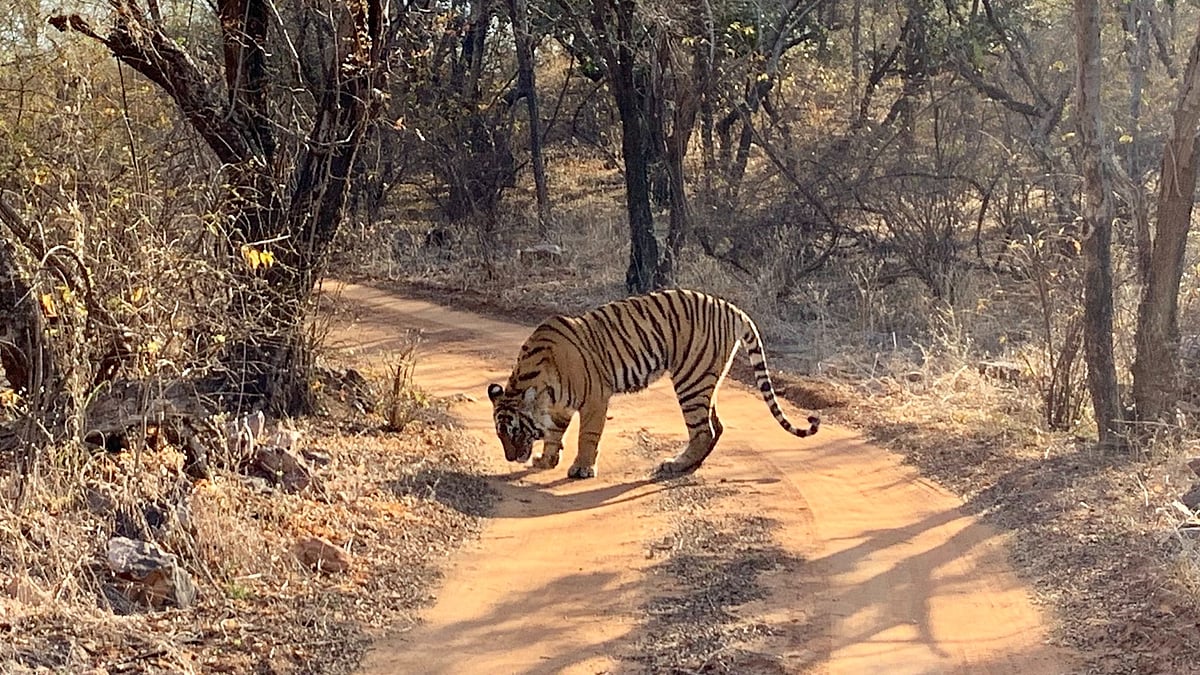
Audit findings expose conservation failures and security gaps leading to multiple tiger deaths in Rajasthan’s premier wildlife reserves. | Representational Image
Jaipur, Feb 20: As many as 14 tigers died due to lapses in security measures in the Ranthambore (RTR) and Sariska (STR) tiger reserves of Rajasthan during 2016–23. Four of these tigers were poached, while ten were killed in territorial fights.
The report of the Comptroller and Auditor General of India (CAG), tabled in the Assembly, has stated that these deaths could have been prevented with improved security measures.
CAG flags shortcomings in tiger conservation
The CAG, in its audit report of the management of tiger reserves in Rajasthan to assess the effectiveness of conservation and protection measures during 2016–23, has flagged significant shortcomings in wildlife protection and tiger conservation efforts by the forest department of the state.
As per the report, the forest department could not prevent wildlife poaching, which caused the death of four tigers. Moreover, the failure to develop critical tiger corridors, especially between RTR 1 and 2, resulted in overcrowding and territorial fights that caused the death of ten tigers.
Financial and manpower gaps highlighted
The report has flagged poor financial management, inadequate security measures, and ineffective manpower management by the department during the audit period.
As per the report, despite an allocation of Rs 539.59 crore, Rs 344.06 crore was utilised. Wildlife security was compromised due to the absence of effective patrolling plans, lack of adequate staff, and insufficient facilities.
As per the report, more than 50 per cent of the posts for officers and personnel engaged in forest protection were vacant, including 65 per cent for forest guards alone.
“The department's inability to address staffing shortages and provide adequate training resulted in forest guards being overburdened with larger monitoring areas,” said the report.
Illegal mining and eco-sensitive zone violations
The report raised the issue of illegal mining and encroachment near the forest area as well. As per the report, the non-compliance with the Ministry of Environment, Forest, and Climate Change directives regarding Eco-Sensitive Zones exacerbated the situation, particularly around STR, where mining continued near the reserve.
There were significant failures in securing and managing tiger reserves, which jeopardised conservation efforts. The department did not adequately demarcate and secure land for tiger reserves, leading to encroachment, crop raiding, and cattle grazing.
Slow pace of village relocation
The major issue of village relocation has also been pointed out in the CAG report. The report states that there were shortcomings in relocating villages from core areas of tiger reserves and involving local communities in conservation efforts.
Also Watch:
ALSO READ
Out of 108 planned village relocations in RTR, STR, and Mukundra Hills Tiger Reserve (MHTR), only 15 were fully relocated and 17 partially by March 2023. This slow pace of relocation resulted in underutilisation of allocated funds. The incomplete relocation led to issues such as uncontrolled cattle grazing and wildlife crop raiding within reserves.
RECENT STORIES
-
-
-
-
-