‘NSA Would Have Wanted A Common Plan To Deter Cyber-Attacks’: Defence Analyst Captain Sarabjeet S Parmar On Ajit Doval’s Maldives Visit
The Colombo Security Conclave brings six member nations together to address regional threats, including maritime security, terrorism, trafficking and cyber risks. Defence analyst Captain Sarabjeet S Parmar says NSA Ajit Doval likely sought a common plan to protect critical infrastructure from cyber-attacks. He also discusses India’s engagement with the Maldives and regional cooperation.

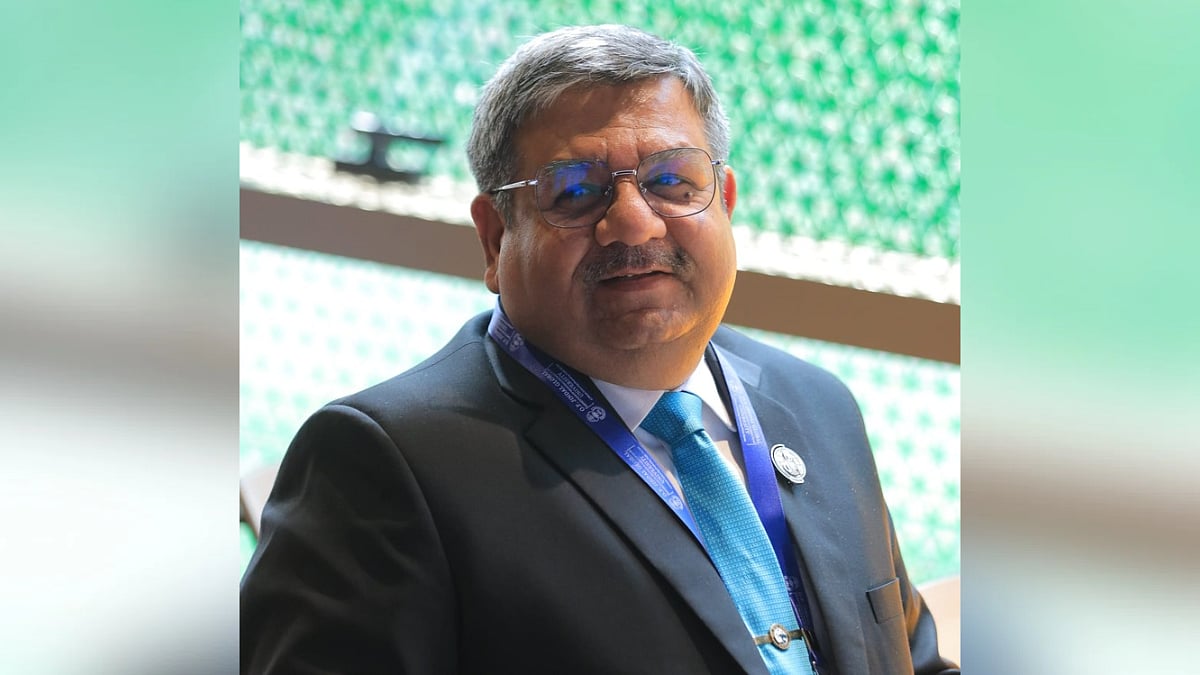
Defence analyst Captain Sarabjeet S Parmar discusses cyber threats and regional security cooperation at the Colombo Security Conclave | File Photo
Defence analyst Captain Sarabjeet S Parmar (Retd), Distinguished Fellow, Council for Strategic and Defence Research, decodes NSA Ajit Doval’s recent visit to Male for the Colombo Security Conclave in an interview with Ashwin Ahmad. Excerpts:
Why is the Colombo Security Conclave important to India?
The focus of the Colombo Security Conclave (CSC) is to promote regional security and tackle threats that are common to all the member states. Where we find convergence, we work together. CSC members work on five pillars, which include maritime safety, countering terrorism and radicalisation, combating trafficking and transnational organised crime, cybersecurity and protection of critical infrastructure and technology, and humanitarian assistance and disaster relief (HADR). The importance of the CSC for India is that it functions at the NSA level, so there’s a big push from the top down, and everything else falls in place. It also has a secretariat, and the first secretary general is a former vice chief of the Indian Navy (S. N. Ghormade). It also has just six member nations, which ensures that there can be a more focused approach to issues that could get lost in larger organisations such as BIMSTEC or IORA.
The NSA talked about the “challenges of tomorrow” and mentioned AI as a particular challenge. How would the CSC handle such a threat?
AI is central to the ambit of the CSC. Remember, one of the pillars is cybersecurity and protection of critical infrastructure and technology. So when you place AI in this ambit and see it evolving and being used, you know that it can be used by everybody and anybody. I think what the NSA was hinting at was, how do we protect ourselves from attacks? He was probably referring to cyber-attacks suffered by both India and the US on ports in the past. AI is a tool a lot of actors can use, as it provides them with a lot of avenues for attack. The NSA’s message, which he probably conveyed privately to member nations, was how do we protect ourselves, and how do we safeguard our critical infrastructure, whether it is ports or dams and other things that are vital for our country’s economy.
Would nations look to counter China given the vast amounts of AI-developed weaponry it has developed?
There will be no direct fingers pointed at any states. You have to be careful of the sensitivities involved. So the best is to look at what the threat is. Let’s take ports. So if a certain port is hit, either conventionally or through AI, what is the mitigation process to address that sort of a threat? This process will never be publicly discussed, but all nations, I’m sure, will be discussing how to mitigate the damage which will be done by that particular attack.
The NSA held a bilateral meeting with the Maldivian defence minister Hassan Rasheed at the CSC. Is this in response to President Muizzu’s visit to Pakistan, where 20 MoUs were signed?
The security conclave meeting was held in the Maldives. It's a given that when you go there, you will call on the host, who is your equivalent in rank. Slowly we’ve also realised that the Maldives has come back towards India’s side. We have helped them on port development and connectivity projects such as the Greater Male Connectivity Project. Also, remember that just because 20 MoUs have been signed does not mean all 20 will fructify. There is a difference between signing and practicality. Having said this, I would like to think that perhaps the NSA would have had a word with the defence minister to say, listen, we can give you a better offer. That I think would have been the underlying agenda of the NSA’s meeting up with the defence minister.
Also Watch:
ALSO READ
External Affairs Minister S Jaishankar will now host member nations for the IORA Council of Ministers (COM) in Delhi. Is India pursuing a common maritime agenda through these two organisations?
The timing is coincidental, as the ambit of IORA and CSC is totally different. IORA’s ambit is economic: it looks at the blue economy and women’s economic empowerment. Its focus areas are maritime safety and security; trade and investment facilitation; fisheries management; disaster risk management; tourism and cultural exchanges; and academic, science and technology cooperation. It is the organisation where “big ticket” decisions are made, by which I mean it sets a multiyear programme for cooperation in areas such as trade, fisheries and the blue economy and creates mechanisms to support regional development. A key example is the IORA Development Initiative developed in Dhaka in 2022. IORA is useful to India, as it is a pan-Indian Ocean forum with 23 member states and 12 dialogue partners. This does make it harder to achieve consensus and provide deliverables faster, unlike the CSC. But through it, India does give it a seat at the table to shape regional rules.
To get details on exclusive and budget-friendly property deals in Mumbai & surrounding regions, do visit: https://budgetproperties.in/
RECENT STORIES
-
-
-
-
-