National Doctors' Day 2026: 'We Are Just People Too'; Doctors Speak Out On Burnout And Silent Endurance
National Doctors’ Day 2026 is observed on July 1 to honour India’s medical fraternity and the legacy of Dr Bidhan Chandra Roy. While celebrating doctors’ service, the day also highlights growing concerns of burnout, emotional fatigue and systemic pressures shaped by digital-age challenges and evolving doctor–patient dynamics in modern healthcare

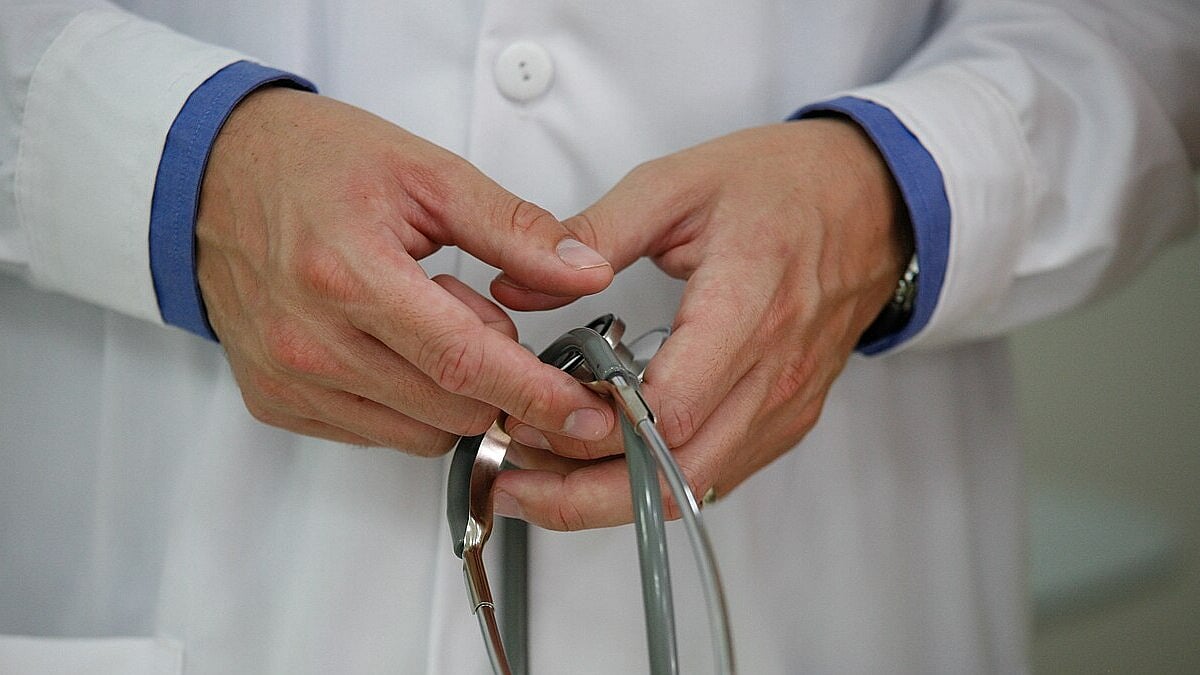
On National Doctors' Day, medical practitioners talk about the stress they endure | Alex Proimos/Wikimedia Commons
Today is July 1, 2026, marking the annual celebration of National Doctors' Day across India. While the day is widely recognised as a time to honour the medical fraternity, it arrives during an era where healthcare professionals are facing unprecedented levels of professional burnout and systemic stress.
What is National Doctors' Day and why is it celebrated on July 1?
National Doctors' Day is an official national observance in India dedicated to recognising the invaluable contributions of physicians, surgeons and healthcare workers to society. According to the Ministry of Health and Family Welfare, the day serves to thank doctors for their round-the-clock service and to highlight the vital role they play in keeping communities healthy.
The specific date of July 1 holds deep historical significance. It marks both the birth and death anniversary of Dr Bidhan Chandra Roy, one of India’s most legendary physicians and statesman. Born on July 1, 1882, Dr Roy passed away exactly 80 years later on July 1, 1962. Beyond his immense contributions to medicine, Dr Roy served as the second chief minister of West Bengal and was awarded India’s highest civilian honour, the Bharat Ratna, in 1961. The Government of India officially established National Doctors' Day to honour his legacy and inspire future generations of medical professionals.
Who is behind the mask? The human side of healing
While the public often views doctors as infallible, the medical community emphasises that behind the white coat are everyday individuals dealing with human vulnerabilities. Healthcare professionals frequently carry immense psychological and physical burdens while maintaining a composed exterior for their patients.
Dr Prachee Sathe, Founder Director of the Department of Critical Care Medicine and Consulting Physician at Ruby Hall Clinic in Pune, emphasises this hidden reality.
"We, as doctors, devote our life to the care of others. Listening, diagnosis, operation, comfort, reassurance. Even in the most challenging circumstances patients see us calm, confident and resilient. But beneath the surgical mask and the white coat we are just people too. We feel stressed and fatigued, we doubt ourselves, we grieve, we feel emotionally exhausted. The difference is that we sometimes keep carrying around burdens and burdens while we're still caring for others," says Dr Sathe.
How do gender roles dynamics affect doctors?
The physical and emotional struggles of medicine can be uniquely demanding for women, who constitute a large percentage of India's medical workforce. Female doctors frequently handle the intersection of high-stakes medical responsibilities and deep-rooted domestic expectations, often performing hidden physical labour under difficult personal circumstances.
Dr Sathe shares a candid perspective on the realities female physicians face.
"Being a female doctor, I feel the difficulties can be even more complex. Although medicine is challenging for all, for women in medicine, it is often more challenging because they have to balance many roles in their lives... We all come home from a long day at the hospital and start our shift at home," she says.
"Once we have the patients, the surgeries, the emergencies, the house, the kids, the old folks, it seems like we don't have much time for ourselves.One thing that people don't talk about is the physical struggle that doctors, particularly doctors who are women have to go through. There have been days I (and many of my colleagues) have worked through excruciating menstrual cramps, exhaustion, migraine, hormonal dizziness and much more, simply because patient care can't stop. The surgery is set for the day and no matter how we feel physically, we have to go through it," says Dr Sathe.
Where do modern medical stressors stem from?
The challenges of modern medicine extend beyond the operating room. In the current digital and corporate scenario, doctors must tackle shifting patient dynamics influenced by instant internet information, social media scrutiny and corporate hospital targets.
Dr Sathe explains that the digital age has altered the traditional doctor-patient relationship, adding new layers of public accountability.
"Patients today are informed and engaged in their own health care and that's a good thing. But the social media age and instant information has brought its own challenges. People are more prone than ever to challenge medical recommendations with information they've found online -- and some of that information is shady," she says.
"In today's day and age, doctors are not just expected to cure their patients, they are also expected to educate the public, speak out against misinformation, maintain a professional online presence and be held accountable for their actions by the public," says Dr Sathe.
Furthermore, doctors are increasingly caught between patient-first ethics and the business metrics of modern healthcare infrastructure.
According to Dr Sathe, "Like any organisation, hospitals have to be economically viable. Sometimes doctors are caught between the demands of administrative objectives, operational goals and financial concerns, while keeping patient care at the forefront. It can be challenging to balance that with integrity and in an honest way."
How are doctors beginning to heal themselves?
Historically, the medical field praised a culture of silent endurance. However, a growing cultural shift within the fraternity is encouraging doctors to step back, set clear professional boundaries and actively combat burnout through peer support and preventative wellness habits.
Dr Sulaiman Ladhani, Consultant Chest Physician at Saifee Hospital in Mumbai, notes the inherent irony in how doctors approach wellness, pointing out the necessity for small, sustainable lifestyle shifts
"As doctors we spend our days telling our patients the importance of healthy habits like exercising, managing their stress, sleeping well and maintaining a healthy work-life balance. The irony, of course is that we are the first ones to be neglecting these," says Dr Ladhani.
"Through the years, I've discovered that the key to avoiding burnout isn't a magical ‘solution', it's about creating small sustainable habits. I think exercising regularly is a must for me. Just a short exercise refreshes my mind and after a hectic day, it resets me. Another stress reliever is travel. Waking up out of the hospital and out of the WhatsApp consultation sets in a different perspective and reminds me that there's a world beyond hospital corridors and WhatsApp consultation," he says.
"Resilience is important, but I think that the notion that doctors should always be there and that they shouldn't be emotionally vulnerable anymore is a thing of the past," says Dr Ladhani.
This sentiment is echoed by Dr Sathe, who believes that acknowledging vulnerability is a sign of medical wisdom rather than a professional failing.
"I think the first step in healing for me is to realise that doctors are not super-heroes. We need rest, support and care like everyone else... We are learning to discuss burnout now, perhaps most importantly. Medicine had been an advocate for silent endurance for too long. There is a greater awareness today that it is a sign of weakness to ask for assistance, it is a sign of wisdom and self-awareness... Healing the healers is after all a necessity and not a luxury," says Dr Sathe.
RECENT STORIES
-
-
-
-
-