Mere Swear Words Not Obscenity, Rules Supreme Court; Upholds Grievous Hurt Conviction
The case stemmed from an altercation over agricultural land in Tamil Nadu in August 2017. According to the prosecution, the appellant first quarrelled with the complainant's brother-in-law over the property and, two days later, had another confrontation with the complainant's nephew.

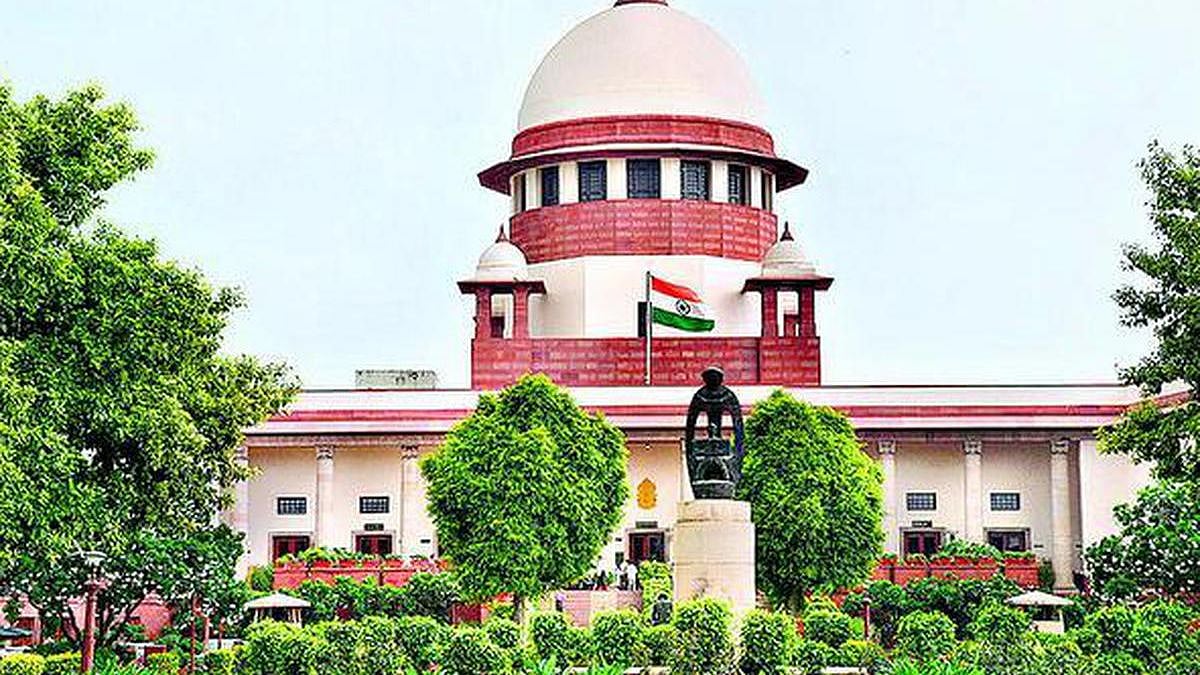
Mere Swear Words Not Obscenity, Rules Supreme Court; Upholds Grievous Hurt Conviction |
The Supreme Court has clarified that using abusive language, swear words or vulgar expletives, however offensive or uncivil, does not by itself amount to the offence of obscenity under Section 294(b) of the Indian Penal Code (IPC). The Court held that obscenity in law is different from vulgarity or profanity and requires the words to be lascivious, appeal to prurient interests and have the tendency to deprave and corrupt susceptible minds.
A Bench of Justice Sanjay Karol and Justice Vipul M Pancholi made the observation while partly allowing the appeal of a 70-year-old Tamil Nadu man convicted in a case arising out of a land dispute. While the Court set aside his convictions under Sections 294(b) IPC and 506(ii) IPC for criminal intimidation, it upheld his conviction under Section 326 IPC for voluntarily causing grievous hurt with a dangerous weapon. Taking into account his age, poor health and the background of the dispute, the Bench reduced his sentence to imprisonment till the rising of the court and directed him to pay a fine of ₹50,000 within two months.
Drawing the line between vulgarity and obscenity
The case stemmed from an altercation over agricultural land in Tamil Nadu in August 2017. According to the prosecution, the appellant first quarrelled with the complainant's brother-in-law over the property and, two days later, had another confrontation with the complainant's nephew. When the complainant intervened, the appellant allegedly abused him using vulgar expletives and caste-based slurs before fetching a billhook from his house and attacking him.
The complainant suffered injuries to his forehead, nose and thumb, while a CT scan confirmed that his nasal bone had been fractured. The trial court convicted the appellant under Sections 294(b), 326 and 506(ii) of the IPC, along with provisions of the Scheduled Castes and Scheduled Tribes (Prevention of Atrocities) Act. The Madras High Court later acquitted him of the offences under the SC/ST Act but upheld his convictions under the IPC, prompting him to approach the Supreme Court.
In examining Section 294 IPC, the Supreme Court said the prosecution must prove two essential ingredients: that obscene words were uttered in or near a public place and that the utterance caused annoyance to others. The Bench stressed that the law does not treat every abusive or offensive expression as obscene.
The judges observed that words which are merely vulgar or abusive may evoke disgust, revulsion or shock, but that alone does not make them obscene in law. They held that only words that are lascivious, appeal to prurient interests and have the tendency to deprave and corrupt those exposed to them would attract Section 294(b) IPC.
Landmark ruling reinforces legal distinction
Applying these principles, the Court held that the abusive expressions allegedly used by the appellant, including profane expletives, were at best vulgar or abusive and did not satisfy the legal requirements of obscenity. The Bench also noted that there was no evidence to show that the words caused annoyance to others in a public place, a mandatory requirement under Section 294 IPC. On that basis, it set aside the conviction under Section 294(b).
The Court also acquitted the appellant of the charge of criminal intimidation under Section 506(ii) IPC. Referring to its earlier ruling in Naresh Aneja v. State of Uttar Pradesh (2025), it said that merely using threatening words during an altercation is insufficient unless there is evidence that they were intended to cause alarm or force the complainant to do or refrain from doing a particular act. Since the prosecution failed to establish this, the conviction could not stand.
ALSO READ
However, the Bench found no reason to interfere with the conviction under Section 326 IPC. It said the medical evidence clearly corroborated the complainant's testimony that he had been attacked with a billhook and had suffered a fractured nasal bone, which falls within the definition of grievous hurt under Section 320 IPC.
While deciding the appeal, the Court also referred to several landmark judgments, including Ranjit D. Udeshi v. State of Maharashtra (1965), Chandrakant Kalyandas Kakodkar v. State of Maharashtra (1969), Samaresh Bose v. Amal Mitra (1985), S. Khushboo v. Kanniammal (2010), Aveek Sarkar v. State of West Bengal (2014), Madhanagopal v. Lalitha (2022), Apoorva Arora v. State (NCT of Delhi) (2024), Naresh Aneja v. State of Uttar Pradesh (2025), Sivakumar v. State (2026) and Mathai v. State of Kerala (2005). Collectively, these decisions reaffirm that vulgar or abusive language alone does not constitute obscenity unless it carries a sexually depraving or lascivious element.
Considering that the incident arose out of a long-standing land dispute and the appellant is about 70 years old and in poor health, the Supreme Court modified his sentence to imprisonment till the rising of the court while enhancing the fine to ₹50,000. The ruling is expected to serve as an important precedent by drawing a clear legal distinction between offensive language and criminal obscenity, while reaffirming that serious acts of violence will continue to attract stringent punishment.
RECENT STORIES
-
-
-
-
-