'I Was A Judge, Not A Kashmiri Hindu': Justice Sanjay Kaul On Upholding Article 370 Abrogation, Kashmir's Pain & Judicial Impartiality | Watch
Former Supreme Court judge Sanjay Kishan Kaul discusses judicial impartiality during the Article 370 verdict, calls for acknowledgement of human rights violations in Kashmir, defends the Rafale deal ruling and clarifies a viral photograph with CJP leader Saurav Das.

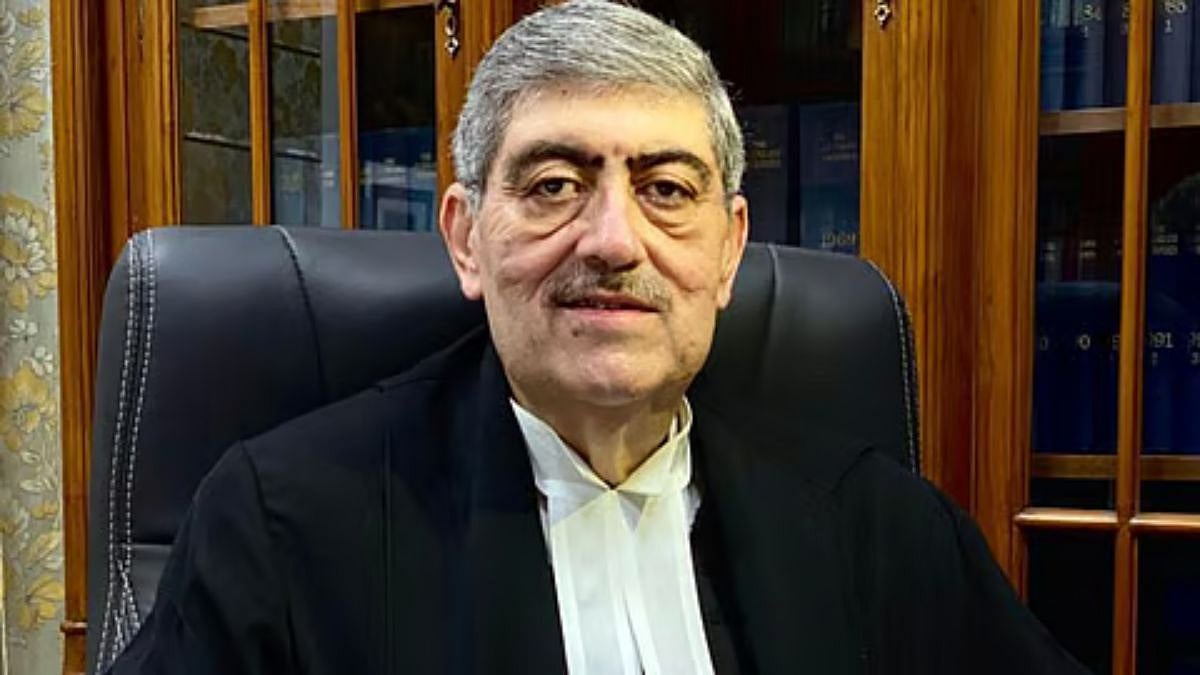
'I Was A Judge, Not A Kashmiri Hindu': Justice Sanjay Kaul On Upholding Article 370 Abrogation, Kashmir's Pain & Judicial Impartiality | Watch |
New Delhi: Former Supreme Court Judge Justice Sanjay Kishan Kaul reflected on the delicate balance between personal heritage and judicial duty during his tenure on the bench.
Also Watch:
Opening up to ANI about his family’s ancestral roots and the trauma of Partition, Justice Kaul stressed that judicial impartiality required him to function strictly as a constitutional judge rather than letting personal background influence his rulings, most notably during the landmark Article 370 proceedings.
Addressing his role as part of the five-judge Constitution Bench that unanimously upheld the abrogation of Article 370 in December 2023, Justice Kaul emphasised that judges must transcend personal history when administering justice.
"I was a judge there. I am not a Kashmiri Hindu there—that's why I was able to carry that... My family went through the Partition of 1947. We saw the Kashmir problem and suffered as a consequence thereof; post-Partition as well, people had to move on. Similarly, I felt we must move on," he said.
Justice Kaul, who notably authored a concurring opinion recommending an impartial "Truth and Reconciliation Commission" to investigate human rights violations by both state and non-state actors in Jammu & Kashmir since the late 1980s, highlighted the urgent need for formal recognition of past atrocities as a prerequisite for healing.
"Where the community feels aggrieved is that they have not had an acknowledgement of what went wrong. At least acknowledge that this happened. Acknowledge that what happened was wrong. That's one of their greatest grievances," said Justice Kaul.
Recognizing the complex realities faced during decades of militancy, he added that grievances exist across all sections of the population, "Now, in that process, when the army and the armed forces came in, they were fighting a war. Some things may have gone wrong there as well. Those people also want [closure]. There has to be a healing process in this... How long can we continue with that? How many generations will we continue with this system where we say, 'No, this wrong occurred'?"
Responding to lingering criticism surrounding the Supreme Court’s handling of petitions against the Rafale fighter jet deal, Justice Kaul defended the bench's decision, asserting that judicial review cannot substitute executive and technical expertise in national defense procurement.
"Which aeroplane the government purchases is their business. We still scrutinised some records and came to it. If that offence is criminal, then go and file a criminal case... Are we supposed to be an appellate authority over the Air Force and decide it?" he queastioned.
Addressing perceptions that court decisions lean politically, he reaffirmed that judicial outcomes follow law and facts, regardless of which political faction feels aggrieved.
"Some of my judgments have gone in favour of the government, some have gone against. Now, the government may be aggrieved in some, and the other group may be aggrieved in another," said Justice Kaul.
Justice Kaul also clarified recent controversies regarding a viral photograph showing him with Saurav Das, a key leader of the Cockroach Janata Party (CJP) involved in recent protests at Jantar Mantar.
Dismissing claims that he was mentoring Das or aligning with the party's ideology, Justice Kaul explained that the photograph was taken informally at a Diwali gathering a year prior, "So, it was one year ago. He was not even in the news then... He was a journalist, maybe met me a couple of times. He was insistent that I must, at Diwali time, come. I was going somewhere else. I said, 'Okay, I'll drop in for ten minutes.' I told my wife, 'Have a cup of coffee, I'll drop in for ten minutes, and then we'll go.' That's all that happened."
He added that he had simply advised Das as a young journalist to "taper down a little" in his language, noting that generational differences often shape political expression.
(Except for the headline, this article has not been edited by FPJ's editorial team and is auto-generated from an agency feed.)
RECENT STORIES
-
-
-
-
-