Himachal Pradesh Air Quality Improves By 50% In 5-6 Years, Shimla And Manali Record Low Pollution Levels After Diwali
Himachal Pradesh's air quality has improved by 50% over the past five to six years, Chief Scientist Suresh Attri said on Tuesday. He attributed the improvement to increased public awareness, reduced firecracker pollution, fewer forest fires and intermittent rainfall.

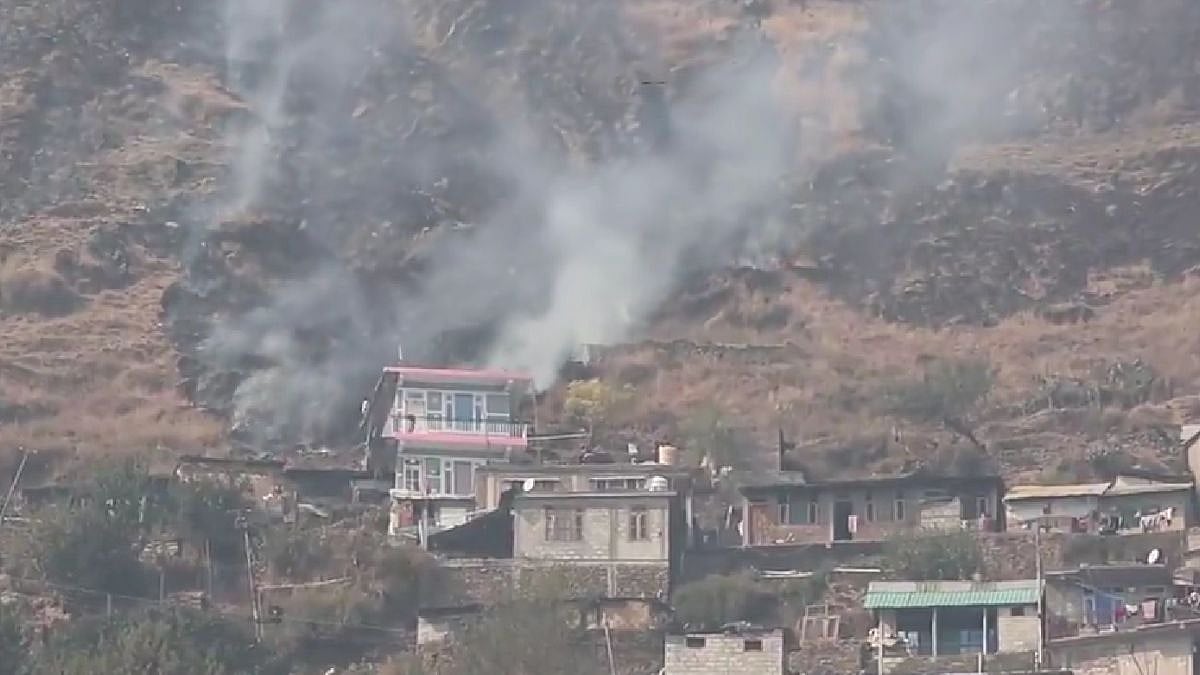
Himachal Pradesh Air Quality Improves By 50% In 5-6 Years, Shimla And Manali Record Low Pollution Levels After Diwali | X @ians_india
Shimla, Nov 10: A comparative analysis of data showed that air quality in Himachal Pradesh improved by 50 per cent over the last five to six years, the state's Chief Scientist Suresh Attri said on Tuesday.
He attributed the improvement to several factors, including increased public awareness, caution in the use of firecrackers, decreased number of forest fires and intermittent rainfall.
Attri said there is greater awareness of environmental issues among the public, and people are exercising more caution in the use of firecrackers. There is a growing preference for crackers that produce less smoke and pollution; the use of 'electronic' firecrackers has also begun.
He said the state government and Shimla administration are also working to raise awareness about the use of green and eco-friendly firecrackers, and these efforts are yielding positive results.
Amid concerns over air pollution rising in the country's major cities post Diwali, the air quality in Himachal Pradesh remains good. The state's major cities, including Shimla, Dharamshala, Manali and Sundernagar, have recorded good air quality, with levels of pollutants such as sulfur dioxide, carbon monoxide, PM2.5, and PM10 remaining within the established permissible limits, the chief scientist said.
In Shimla, PM2.5 levels were recorded at approximately 16 micrograms per cubic metre, while PM10 levels were around 50 micrograms per cubic metre. Both are indicators of good air quality, he said.
Attri explained that air quality has also remained better this year due to a relatively lower number of forest fires, combined with intermittent rainfall.
Rain helps settle dust and pollutants in the atmosphere, while prolonged dry weather often leads to an increase in air pollution. Conditions have been relatively favourable this year, he said.
Initiatives such as promotion of green development, large-scale tree plantation, and reduced vehicular emissions are crucial to control air pollution. While the results of these efforts are not immediate, their cumulative impact becomes apparent over time, he said.
Regarding the impact of stubble-burning in Punjab and Haryana on Himachal Pradesh, Attri said the effect largely depends on wind direction.
If the wind blows towards Delhi, smoke moves in that direction. However, if the wind blows towards Himachal Pradesh, pollutant particles can reach the state, he explained.
(Except for the headline, this article has not been edited by FPJ's editorial team and auto-generated from an agency feed.)
RECENT STORIES
-
-
-
-
-