From Wedding Savings To Livestock: How A Genuine Iranian Relief Appeal Became A Rs 18 Crore Donation Scam In Kashmir
A classified J&K Police report reveals how a genuine humanitarian appeal for Iran was hijacked by middlemen to siphon off Rs 17.91 crore, allegedly diverting local donations of cash and gold to sustain regional separatist networks

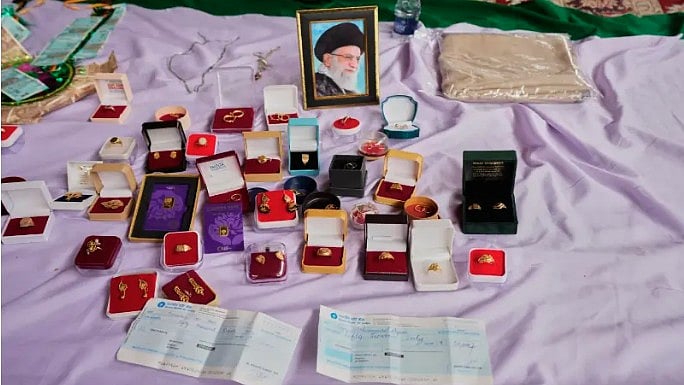
From cash to gold to livestocks, people in Jammu and Kashmir donated to help war-ravaged Iran |
In mid-March 2026, a legitimate plea for international aid was issued by the Iranian Embassy to support civilians caught in regional conflict. However, within weeks, Jammu and Kashmir law enforcement uncovered a massive, unauthorised financial network that had allegedly intercepted this goodwill.
According to a classified report by the Jammu & Kashmir Police, first accessed by News18, what was intended as a relief fund has been diverted into an organised racket. Authorities estimate that nearly Rs 17.91 crore in cash and valuables has been siphoned off through these illicit channels.
The scam has not only raised financial alarms but has also triggered a high-level security probe. Intelligence agencies, including the State Investigation Agency (SIA), have flagged the operation as a significant threat, alleging that the funds are being used to sustain separatist "payrolls" within the Valley rather than reaching humanitarian victims in Iran.
Mechanism of the collection
The scheme relied on a door-to-door and stall-based collection model. Once the Iranian Embassy’s genuine appeal was made public on March 14, unauthorised intermediaries began moving through various districts in the Valley. These collectors avoided official banking channels, instead requesting direct contributions of cash, gold and household assets. To maximise their take, the scammers reportedly used high-pressure emotional and religious messaging.
This approach was particularly effective in poorer rural areas, where families, driven by a sense of religious solidarity, donated life savings, wedding gold, livestock and even copper utensils. By the time the police intervened, the geographic spread of the collection was vast. Budgam saw the highest concentration with Rs 9.5 crore, followed by Rs 4 crore from Baramulla and Rs 2 crore from Srinagar. Additional significant amounts were also reported from Kulgam, Bandipora, Ganderbal and Pulwama.
Key figures and the conduit system
Investigators have identified a sophisticated conduit system involving individuals with alleged links to external handlers and separatist networks. Two primary suspects have been named in the classified findings. Hakeem Sajad, based in Bagwanpora, Srinagar, is described as a central figure responsible for distributing the collected funds to local clerics to maintain regional influence. The second figure, Syed Ruhollah Rizvi, is originally from Ganderbal but currently resides in Iran. He is identified as the key link between external handlers and the local collection teams in Kashmir.
Authorities believe these individuals acted as the bridge between a genuine international crisis and a local funding mechanism for anti-national activities. The intelligence report explicitly links these individuals to the Islamic Revolutionary Guard Corps (IRGC) and separatist elements, suggesting a coordinated effort to exploit local sentiments for geopolitical gain.
Security concerns and the payroll model
The primary concern for the SIA and Central agencies is the ultimate destination of the money. Intelligence suggests that close to half of the total collection, roughly Rs 9 crore, is being routed back into the local economy to pay off a payroll of recipients tasked with maintaining separatist influence. This specific method mirrors the tactics found in the ongoing investigation of Maulavi Sarjan Barkati, a prominent cleric currently under fire for similar unauthorised crowd-funding activities.
The Barkati model involves using emotional public appeals to amass slush funds that are then laundered or used to finance secessionist agendas. By hijacking a legitimate Iranian cause, the organisers of this scam were able to bypass normal scrutiny, appearing as charitable actors while actually generating capital to sustain local unrest.
Government response and public safety
The scale of the fraud has brought in heavy-duty Central agencies, including the National Investigation Agency (NIA) and the Enforcement Directorate (ED). These bodies are currently working alongside the SIA to trace the full money trail and identify any potential links to foreign entities. The J&K Police has issued a public advisory strictly prohibiting unauthorised door-to-door collections and temporary stalls. Officials have warned that anyone found facilitating these unauthenticated middlemen will face severe legal consequences, similar to the crackdown on known secessionist figures in South Kashmir.
Police have urged citizens to verify any humanitarian appeal before contributing. Legitimate international aid is rarely collected in the form of livestock or household copper at a neighbourhood stall. It is typically processed through registered NGOs or official embassy-sanctioned bank accounts. If a solicitor cannot provide government-verified credentials or insists on untraceable cash and jewellery, it is a definitive red flag that the contribution may be funding a scam rather than a cause.
Published on: Thursday, March 26, 2026, 01:41 PM ISTRECENT STORIES
-
-
-
-
-