From Population-Based Redistribution To 50% Seat Hike: What Has Changed In The New Delimitation Bill?
The Centre’s revised delimitation plan proposes a uniform 50% increase in Lok Sabha and state assembly seats while protecting states’ relative share of parliamentary representation until 2051. The Constitution (132nd Amendment) Bill seeks to address concerns raised by southern states and pave the way for implementing 33% women’s reservation.

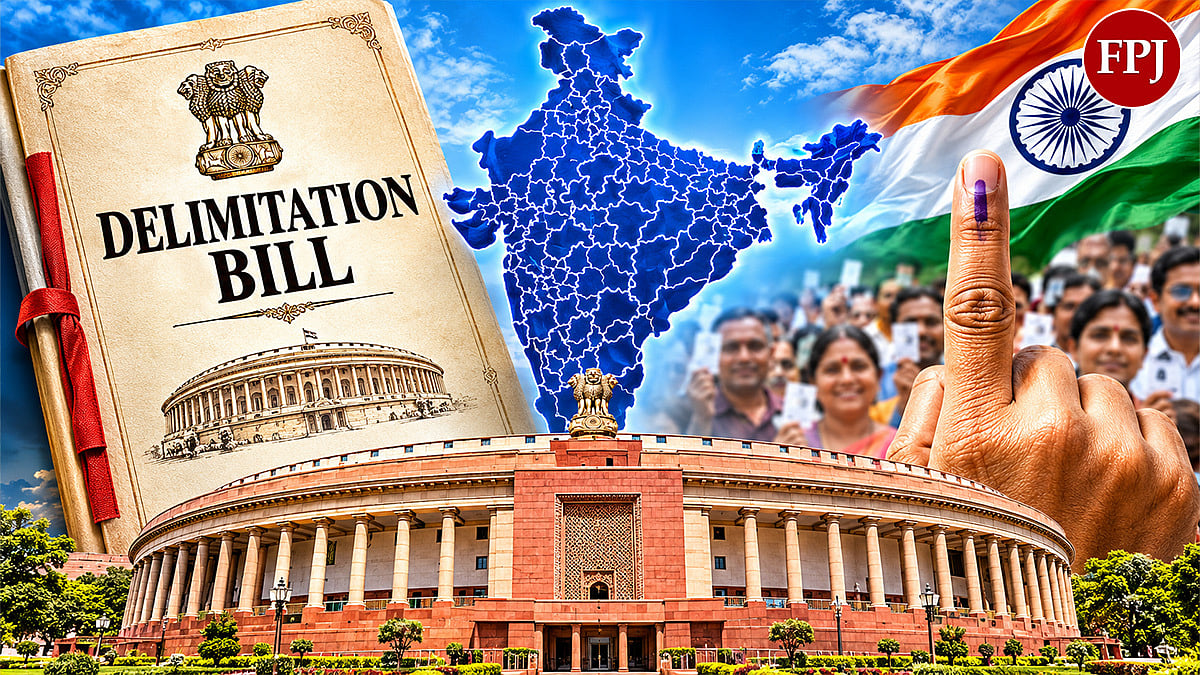
The Centre’s revised delimitation plan marks a significant shift from its earlier proposal, which failed to secure the required two-thirds majority in the Lok Sabha in April 2026. The Constitution (132nd Amendment) Bill, 2026, along with the Delimitation (Second) Bill, 2026, seeks to pave the way for 33% reservation for women in Parliament and state assemblies while addressing concerns over the political representation of states.
The biggest change is its approach to increasing the number of seats. Instead of allowing population-based redistribution that could alter the relative strength of states, the revised proposal promises a uniform 50% increase in seats across states and Union Territories.
Here is how the new proposal differs from the April legislation.
From population-based redistribution to a uniform 50% increase
The Constitution (131st Amendment) Bill, introduced in April, proposed expanding the Lok Sabha to a maximum of 850 seats and linking delimitation to population figures. However, it did not guarantee a uniform increase for every state, raising concerns that states with slower population growth, particularly in southern India, could lose their relative share of parliamentary representation.
The revised 132nd Amendment Bill takes a different approach. It proposes increasing Lok Sabha seats by 50% for every state and Union Territory, while also providing for a corresponding 50% increase in the strength of state and UT legislative assemblies.
Under the proposal, the Lok Sabha's maximum strength would rise to 850, comprising up to 815 members from states and 35 from Union Territories. The maximum strength of state assemblies would increase from 500 to 650.
Seat-sharing freeze extended until 2051
Another major departure concerns the freeze on the allocation of seats among states.
The April proposal sought to move away from the existing arrangement based on the 1971 Census and allow population-based redistribution. This had raised apprehensions among southern states, which have recorded relatively slower population growth.
The revised legislation proposes retaining the existing inter-state proportion of parliamentary representation, based on the 1971 Census, until 2051. This means that while the total number of seats would increase, the relative share of each state would be protected under the proposed formula.
Which Census will determine constituency boundaries?
While the revised proposal seeks to protect the relative representation of states, it still provides for the redrawing of constituency boundaries.
Under the 132nd Amendment Bill, internal constituency boundaries within states and Union Territories would be determined using the latest published Census figures available when the amendment comes into force. Given the current availability of Census data, this could mean the 2011 Census.
This is different from the broader population-based redistribution envisaged under the April proposal, which had raised concerns over changes in the balance of representation between states.
How does the proposal bring women's reservation into effect?
Both legislative packages are linked to the implementation of the 33% reservation for women under the Nari Shakti Vandan Adhiniyam, or the 106th Constitutional Amendment.
The reservation covers the Lok Sabha and state legislative assemblies, including seats reserved for Scheduled Castes and Scheduled Tribes. Its implementation is linked to a delimitation exercise following the amendment.
The revised proposal seeks to facilitate the expansion of legislatures so that seats can be reserved for women without reducing the existing number of seats. The reservation framework also retains a 15-year duration, with the Delimitation Commission expected to determine the details of the exercise.
A revised Delimitation Commission framework
The April package included a separate delimitation legislation, which was dropped after the constitutional amendment failed to pass.
The November package, however, comes with the Delimitation (Second) Bill, 2026. It proposes a three-member Delimitation Commission to carry out the exercise, with provisions for a judicial chairperson and election officials.
The revised package is expected to be introduced during the special Parliament session beginning around November 30, 2026.
What does the change mean?
At its core, the revised proposal moves away from population-based redistribution towards a model of uniform expansion while protecting the relative share of states until 2051.
The shift addresses one of the major objections to the April legislation: the fear that states which had successfully controlled population growth could lose political representation. At the same time, the Centre aims to create the legislative framework needed to implement women's reservation before the 2029 general elections.
Level up your brain the fun way. Play daily games and quizzes on FPJ Smart!
RECENT STORIES
-
-
-
-
-