Form 6 Explained: The Voter Enrolment Form, SIR Clause And EC’s Latest Move
Form 6 is the application form used by eligible Indian citizens to register their names as voters. It is submitted to the Election Commission of India (ECI) through the electoral registration process and is meant for people seeking inclusion in the electoral roll.

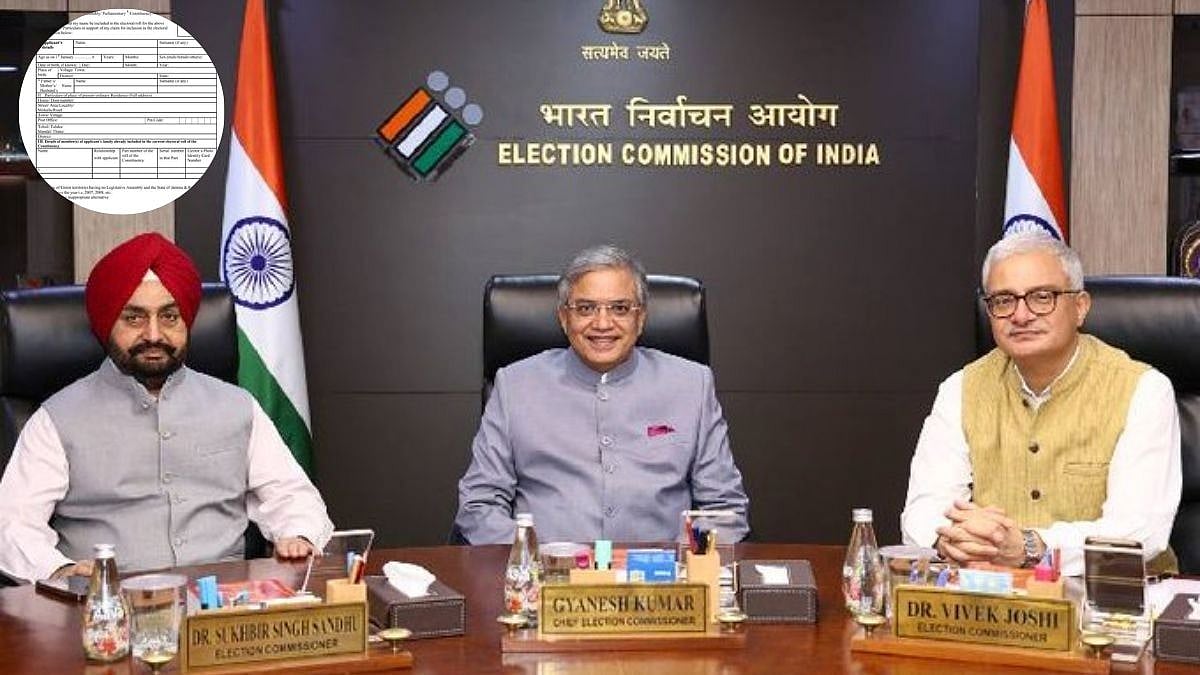
Form 6 Explained: The Voter Enrolment Form, SIR Clause And EC’s Latest Move | X
The debate regarding Form 6 does not concern its fundamental role as a voter registration application form. It pertains to a supplementary declaration requested with Form 6 during the Election Commission of India’s (ECI) Special Intensive Revision (SIR) of voter lists.
The matter became clear after reports indicated that Election Commissioners Sukhbir Singh Sandhu and Vivek Joshi had expressed concerns about including the SIR declaration in the Form 6 procedure. Their stated worry was that Form 6 is a legal form established under the Registration of Electors Rules, 1960, and that altering the legal form would necessitate a modification to the Rules.
What is Form 6?
Form 6 is the application form used by eligible Indian citizens to register their names as voters. It is submitted to the Election Commission of India (ECI) through the electoral registration process and is meant for people seeking inclusion in the electoral roll.
The form is generally used by individuals who have attained the qualifying age for voter registration and are ordinarily residing in the constituency where they want to be enrolled. Applicants are required to provide details such as their name, date of birth, address and other information needed for verification.
What is the issue about?
As per the reports of Indian Express, Election Commissioners Sukhbir Singh Sandhu and Vivek Joshi objected 14 times over 10 months because they claimed major decisions were made without their knowledge, and they disagreed with changes to voter registration forms and the central control of voter data. According to them, the Election Commission of India made the important choices and built new tech systems without consulting them. Both the election commissioners called the changes made to the Form illegal because the government had not updated the rules officially.
Understanding the SIR clause
The door-to-door intensive revision had been taking place since 1950. Meanwhile, the current, modernised nationwide SIR framework was officially implemented via an ECI directive issued on October 27, 2025, with active house-to-house field enumeration starting on November 4, 2025.
The Special Intensive Revision (SIR) of electoral rolls is a verification exercise undertaken by election authorities to check and update voter lists. During such exercises, electors may be asked to provide information or documents to establish their eligibility and connection with the electoral roll, depending on the instructions applicable to the particular revision.
RECENT STORIES
-
-
-
-
-