Employer Must Verify If Resignation Was Truly Voluntary When Letter Cites Threat Or Pressure, Rules Chhattisgarh High Court
The Chhattisgarh High Court ruled that employers cannot mechanically accept resignations mentioning threat or pressure. The court said management must verify whether such resignations are voluntary before approval. The ruling came in a case involving Chouksey Engineering College, where an Assistant Professor's resignation was accepted without inquiry despite allegations of coercion by colleagues.

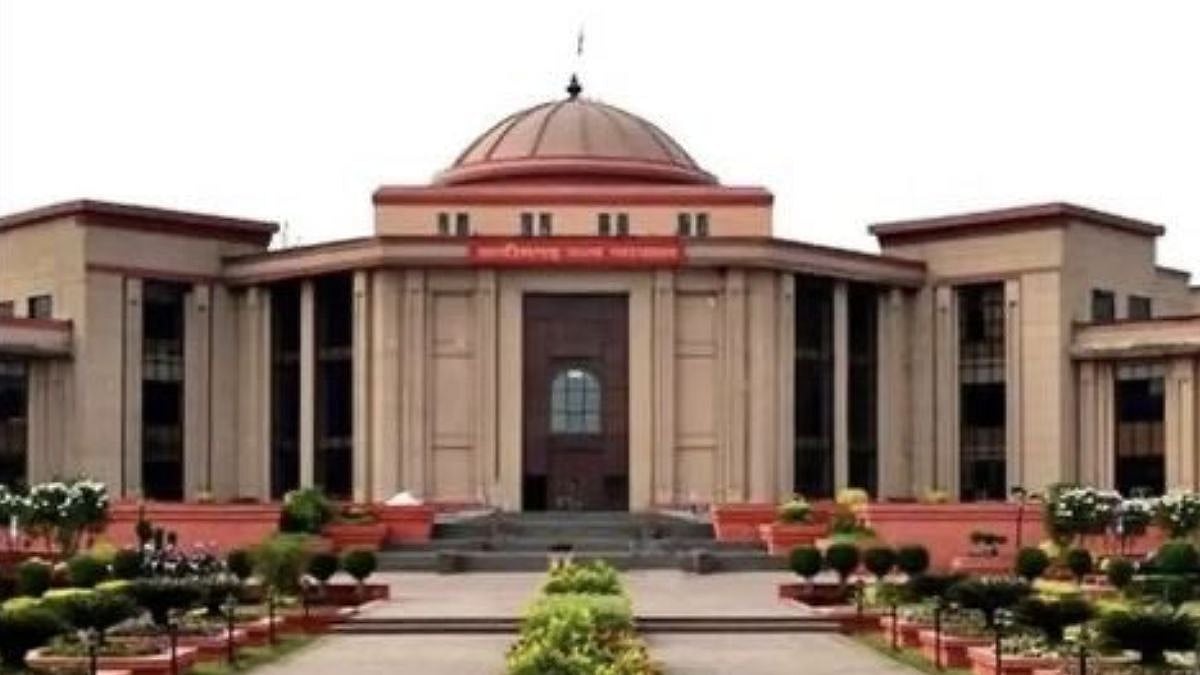
Chhattisgarh High Court |
The Chhattisgarh High Court has ruled that an employer cannot mechanically accept an employee's resignation if the resignation letter itself states that it was submitted under "threat" or "pressure". The court held that in such cases, it is the employer's responsibility to verify whether the resignation was genuinely voluntary before accepting it.
The Division Bench of Chief Justice Ramesh Sinha and Justice Ravindra Kumar Agrawal observed that accepting such a resignation without conducting any inquiry into its voluntariness is legally unsustainable. The court further said that later denials by the individuals accused of exerting pressure cannot make up for the employer's failure to verify the circumstances at the time the resignation was accepted, Live Law reports.
Court Stresses Employer's Duty
The ruling came while hearing an intra-court appeal filed by Chouksey Engineering College against a Single Judge's order that had set aside the acceptance of the resignation of one of its Assistant Professors.
According to the case, the employee submitted his resignation on Sept 21, 2020. However, he claimed that the resignation was not voluntary and had been tendered under threat and pressure allegedly exerted by two of his colleagues. Accepting this contention, the Single Judge had quashed the college's decision to accept the resignation and directed the employee's reinstatement along with arrears of salary and all consequential service benefits. The college challenged this order before the Division Bench.
The college argued that the resignation had been submitted voluntarily and accepted by the competent authority in accordance with the applicable rules. It also contended that there was no evidence to establish coercion and pointed out that the two colleagues accused of pressuring the employee had denied the allegations through affidavits. The institution further argued that there is no legal requirement to conduct an inquiry before accepting a resignation voluntarily submitted by an employee.
Failure To Verify Proved Costly
Rejecting the college's arguments, the High Court noted that the resignation letter itself clearly mentioned that it had been submitted under threat and pressure from two named colleagues. In such a situation, the management was expected to satisfy itself that the resignation was voluntary before accepting it.
ALSO READ
The Bench observed, "…the Management was required to satisfy itself regarding the voluntariness of the resignation before accepting the same. Admittedly, no inquiry or verification was undertaken… The subsequent denial by the concerned colleagues through affidavits cannot cure the failure of the appellant to examine the circumstances existing at the time of acceptance of the resignation."
The court agreed with the findings of the Single Judge, holding that the resignation could not be treated as voluntary. It found no legal or factual error in the earlier order that warranted interference in the appeal.
The Bench also observed that once the acceptance of the resignation was declared invalid, the directions for reinstatement, payment of salary arrears and other consequential service benefits naturally followed.
Accordingly, the High Court dismissed the writ appeal, reinforcing the principle that employers must ensure a resignation is genuinely voluntary when the employee alleges coercion in the resignation letter itself.
RECENT STORIES
-
-
-
-
-