Delhi Red Fort Car Blast: Doctors Plotted Terror In Room 13 Of Al-Falah University Hostel Building 17
Faridabad's Al-Falah University and Hospital came into the spotlight after it was revealed that Dr Umar Nabi, who carried out the blast near the Red Fort Metro Station on Monday, killing 13 people, was associated with the institute.

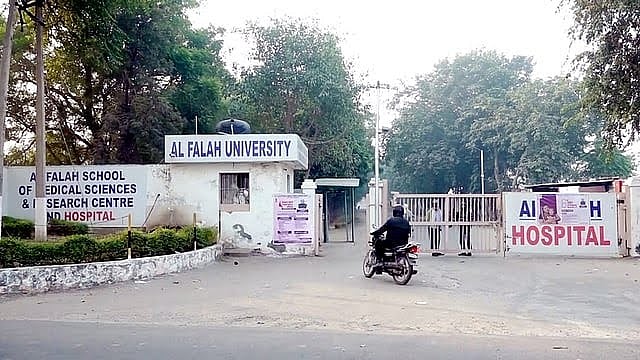
Investigation into the car bomb blast case has revealed that the accused doctors used a hostel room at the Al-Falah University campus in Haryana to plan attacks in Delhi and Uttar Pradesh. According to reports, it was room number 13 in building number 17 of the boys' hostel where these "white collar" radicals met and plotted to target several locations using explosives.
Faridabad's Al-Falah University and Hospital came into the spotlight after it was revealed that Dr Umar Nabi, who carried out the blast near the Red Fort Metro Station on Monday, killing 13 people, was associated with the institute.
Two days prior to the car blast, 2,900 kilograms of explosives were seized from the rented premises of Dr Muzammil Shakeel, who was also employed at Al-Falah University. Another suspect arrested in the case, Dr Shaheen Shahid, who was reportedly tasked with setting up the women's wing of Pakistan-based Jaish-e-Mohammed in India, also worked at the university.
Two doctors, Muzammil and Shaheen, have been arrested, whilst Umar perished in the blast. Nisar-ul-Hassan, another suspect in the case who is also employed at the university, is on the run.
Room number 13 in the hostel was assigned to Dr Muzammil, who hails from Pulwama in Kashmir. Authorities allege this room served as a meeting place where he and other radicalised medical professionals planned coordinated bombings in Delhi and surrounding regions.
Interrogation of detained suspects has disclosed that the explosions were being scheduled around 6 December, the anniversary of the Babri Masjid demolition.
Investigators suspect the group deliberated on methods to obtain and secretly transport chemicals from the university's laboratory to the hostel accommodation. Police have sealed the room and recovered electronic equipment and pen drives during their search.
ALSO READ
Chemical traces were discovered in room 13. Authorities suspect explosives were being manufactured by combining these chemicals with ammonium nitrate and trace amounts of metallic oxides. Initial investigation findings indicate that Ammonium Nitrate Fuel Oil (ANFO) was utilised in the Red Fort explosion.
Sources have additionally stated that Dr Umar and Dr Shaheen allegedly facilitated the transfer of chemicals from the university laboratory to sites in Dhauj and Taga villages in Faridabad. These materials are suspected to have been used for explosive assembly.
RECENT STORIES
-
-
-
-
-