'Chinese Propaganda': Netizens Slam Global Times For Claiming Japan PM's Bottled Water Use Shows 'Contempt' For India
Chinese state-run Global Times triggered online backlash after claiming Japanese PM Sanae Takaichi's reported use of bottled water during her India visit reflected hypocrisy and contempt for India. Indian netizens, including Mohandas Pai, dismissed the criticism as "Chinese propaganda," arguing personal health precautions should not be politicised or linked to diplomatic relations.

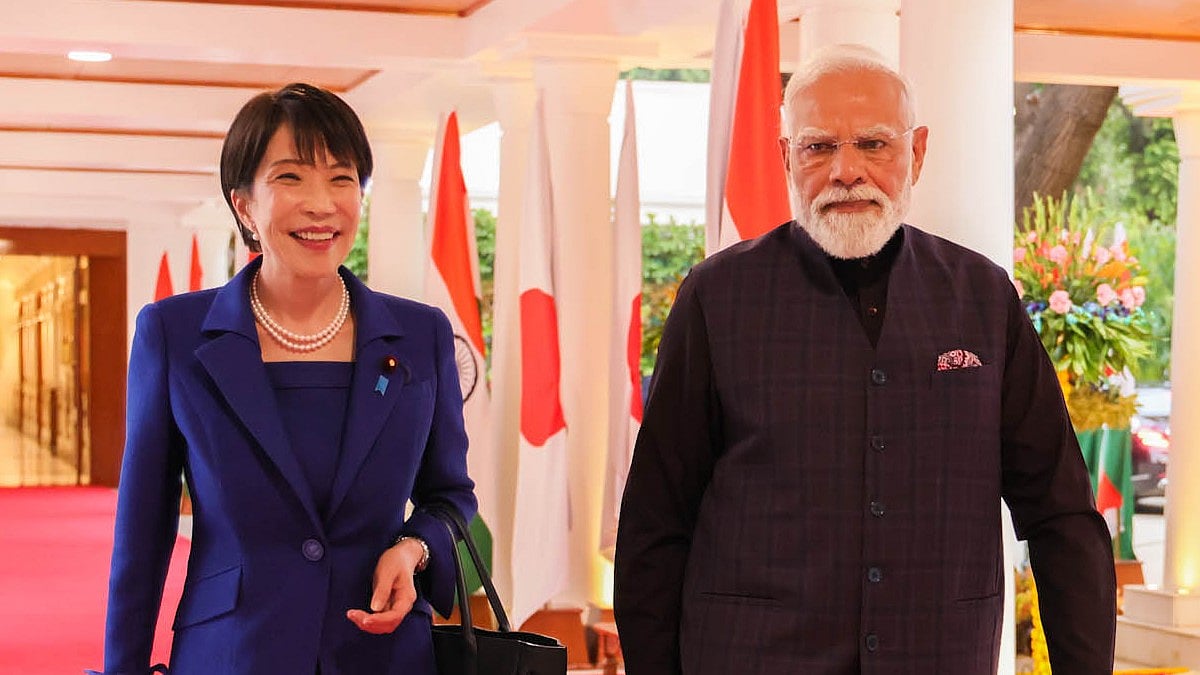
A Global Times article criticising Japanese Prime Minister Sanae Takaichi over her recent India visit has sparked a backlash online, with several Indian social media users accusing the Chinese state-run publication of pushing propaganda to undermine growing India-Japan ties.
The article, published on Saturday, was titled, "Takaichi's 'brotherly' embrace of Modi contradicted by a reported ban on local tap water, exposing Japan's hypocrisy and contempt for India: observer." It questioned the Japanese delegation's reported decision to rely on bottled mineral water brought from Japan instead of using local tap water during the visit.
The controversy gained traction after Chinese media personality Hu Xijin shared a screenshot of the article on X, writing, "During her visit to India, Japanese Prime Minister Sanae Takaichi didn't drink a single sip of Indian water and even used bottled mineral water brought from Japan for rinsing her mouth. Is this true? If so, she's living way too delicately, and it's quite disrespectful to India as well."
The Global Times article cited a report by Japanese outlet ABEMA TIMES, which claimed that the Japanese government had instructed its delegation not to use local tap water under any circumstances, including for drinking and gargling, and had transported a large stock of bottled mineral water aboard the government aircraft.
The publication contrasted this with the warm public exchange between Takaichi and Prime Minister Narendra Modi, during which the two leaders referred to each other as elder brother and younger sister. According to the report, Chinese experts argued that the bottled water arrangement reflected hypocrisy and suggested Japan viewed India as a strategic tool to counter China rather than as a genuine long-term partner.
The article also quoted Qian Feng, director of the Research Department at Tsinghua University's National Strategy Institute, who claimed the reported precautions demonstrated discriminatory attitudes toward India and could expose the "true mindset" of the Japanese government.
ALSO READ
However, the report drew sharp criticism from Indian social media users.
"Looks like India-Japan cooperation has hit a nerve in Beijing. Solution? Roll out the propaganda, manufacture outrage, and hope someone believes it. That playbook is getting old," X user Vixek wrote.
Former Infosys CFO Mohandas Pai also dismissed the criticism, saying, "Silly remarks. People have a right to what they consume. Indian kings used to take huge urns of Ganga water on trips to London. Was that disrespect?"
Retired Major General Harsha Kakar hit out at Chinese media personality Hu Xijin, commenting, "What @HuXijin_GT fails to mention is that the US delegation accompanying @realDonaldTrump dumped every gift, souvenir, card, and even lapel pins into a dustbin at the entrance to the aircraft. What greater insult than this to #WinnieThePooh-ruled China?"
Another user, Salil Mathur, argued that carrying bottled water while travelling is a personal health precaution rather than an insult. "Even my children when in India play safe by drinking only mineral water, and there's nothing wrong about it. While in Canada, I too filter the water while Canadians drink straight from the tap," he wrote.
ALSO READ
The Global Times article further cited reactions from Japanese social media, where some users criticised Takaichi's diplomatic style and questioned her emphasis on personal rapport with foreign leaders. However, the focus of online discussion in India remained on what many described as an attempt by Chinese state media to sow distrust between New Delhi and Tokyo at a time of expanding strategic cooperation.
RECENT STORIES
-
-
-
-
-