'Bodies Were Like Cotton': First Responders Recall The Gruelling Battle To Pull Survivors From The Wreckage Of AI-171 Plane Crash
Eyewitnesses of the AI-171 crash in Ahmedabad recall the moment the aircraft turned the city suburb into an inferno, with explosions, blazing fuel, and bodies on the road. Locals and first responders rushed in before official teams arrived, pulling victims from burning debris and enduring extreme heat and chaos during one of the city’s worst aviation disasters.

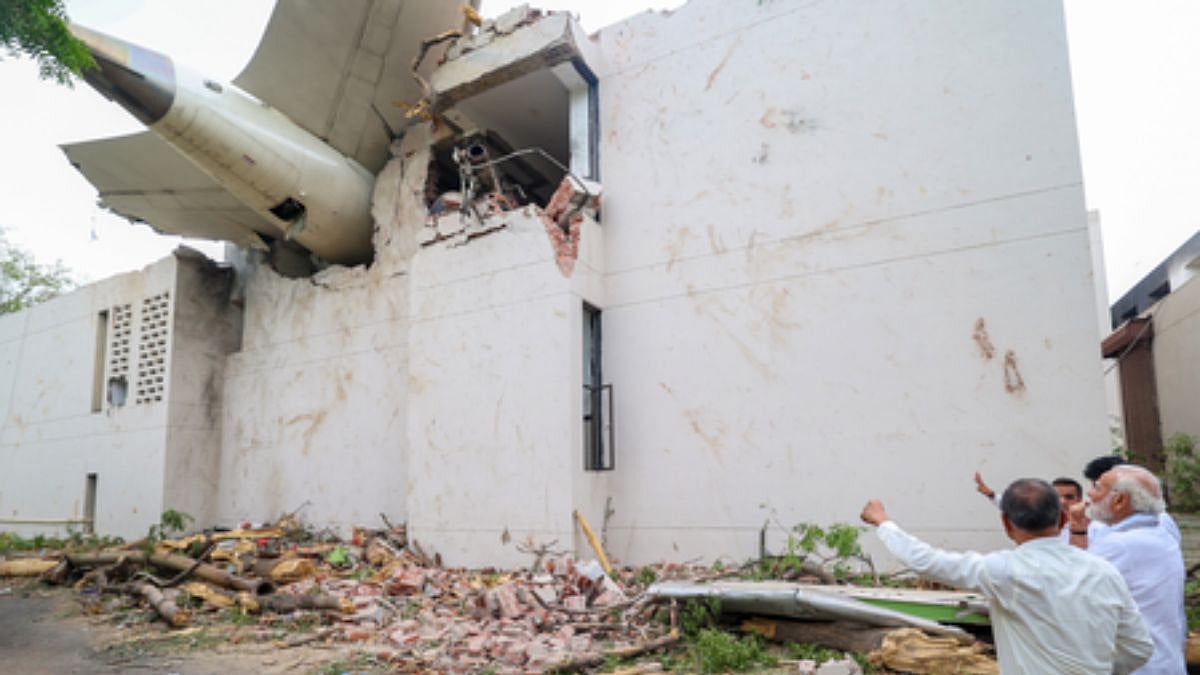
'Bodies Were Like Cotton': First Responders Recall The Gruelling Battle To Pull Survivors From The Wreckage Of AI-171 Plane Crash | IANS
Ahmedabad: To the local residents, motorists, and ordinary citizens who were at the perimeter fence, the AI-171 plane crash disaster exists as a raw, sensory assault. For them, the timeline is measured in the blinding flash of a low-flying fuselage, the deafening roar of exploding aviation fuel, and the harrowing minutes spent pulling bodies from a sea of flame before the official rescue machinery could even reach the gates.
One year after the tragedy that claimed 260 lives, the vivid first-hand accounts of eyewitnesses and the local first responders, who rushed into the black fog, present a gripping picture of an afternoon when a quiet Ahmedabad suburb transformed into an absolute inferno.
For Rashmin Chauhan, a local businessman, the line between life and a horrific death was a matter of a few meters and a split-second decision. He was driving on a routine private errand toward the Shahibaug area, navigating the afternoon traffic just 500 meters from his house, when the sky darkened unnaturally.
ALSO READ
"The force of the explosion sent a shower of debris rattling against my car windows. I had to frantically throw the car into reverse just to escape the encroaching heat. As I tried to turn back, the wall of fire kept pushing forward, moving ahead of me." As the smoke parted slightly in front of his windshield, Chauhan was confronted with the immediate, visceral human cost of the impact. "There were bodies lying on the road right ahead of my car. I was paralysed with fear.”
Chirag Patel, who runs a shop nearly 300 metres from the crash site, ran to the site after hearing an explosion and encountered a chaotic, high-temperature crisis zone that blocked out the afternoon sun. Air-conditioning units and vehicles on the premises were exploding sequentially due to the ambient heat, creating secondary blasts that pushed back the crowds.
"The air-conditioning units were bursting violently, and the fire was so intense that initially, no one – not even the arriving fire brigade – could get close to the core area. An aviation disaster of this scale is a nightmare because everything happens in a single flash. You realise very quickly that you cannot save many people inside the cabin. It took just one second, and in that one second, everything was completely incinerated to ash,” he added.
ALSO READ
While the civic body’s fire tenders were yet to arrive, local residents like Kaushik Yadav and Rajnikant Parmar did not wait for official orders. They ran directly toward the towering column of black smoke. Despite the immense danger, these local volunteers formed an immediate perimeter defense.
Parmar had rushed to the site after a frantic phone call from his father, who reported a massive explosion near their locality, which was evident to the son all the way from Lal Darwaza. When Parmar arrived near the local canteen, he found the landscape littered with fragmented aircraft components and scattered fuselage panels. He and Yadav, along with other like-minded people, immediately began digging through the rubble of the collapsed hostel structures.
"We pulled so many bodies out of that debris. We pulled out young children who had passed away. The bodies had become soft, light, almost like cotton. A massive wing of the plane was resting right in the middle of the compound."
Yadav reached the impact zone within 15 minutes of the crash, arriving before the first wave of ambulances had managed to navigate the congested municipal roads. He recalled that the oppressive heat prevented them from moving into certain sectors, and they had to wait out the first few minutes until the fire tenders arrived.
“Our immediate instinct was to secure the site and recover what we could. We began pulling out jewelry, cash, and personal belongings from the edge of the debris field, working non-stop until three o'clock that morning to assist the teams,” he said.
The psychological toll on the volunteers grew heavier as the rescue operation stretched into days. The initial adrenaline faded, leaving behind the grim reality of a recovery mission.
"Even five to six days after the crash, we were still recovering remains from beneath the deep rubble. We kept finding severed limbs days later,” said Parmar. “We pray to God that no human being ever has to witness such a sight, where entire families are completely scattered and obliterated in a moment. Even now, when we recall those hours, our eyes get teary.”
RECENT STORIES
-
-
-
-
-