Assam Passes Uniform Civil Code Bill, Becomes 3rd State After Uttarakhand And Gujarat
Assam Assembly passed the Uniform Civil Code Bill, 2026, on Wednesday, making it the third state after Uttarakhand and Gujarat to clear such legislation. CM Himanta Biswa Sarma said the move fulfilled a BJP manifesto promise. The Bill covers marriage, divorce, succession and live-in relationships, but exempts Scheduled Tribes amid Opposition objections

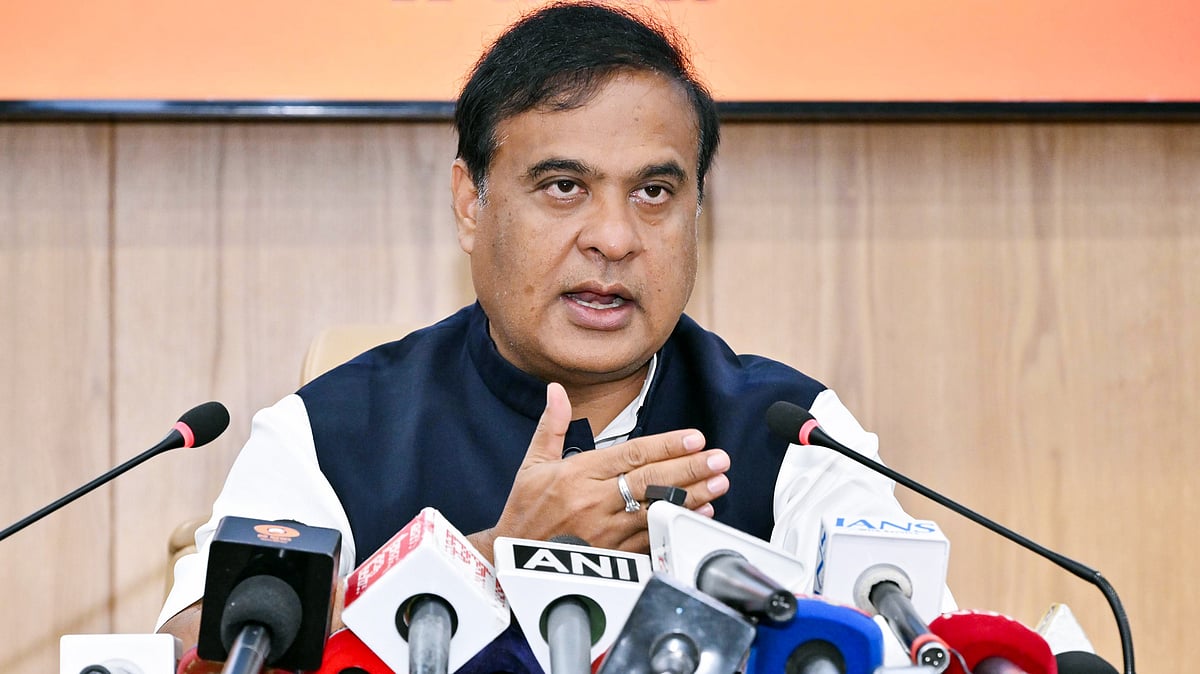
Assam Chief Minister Himanta Biswa Sarma | ANI
Guwahati: The Assam Assembly on Wednesday passed the Uniform Civil Code (UCC) Bill, which seeks to put in place a common legal framework to govern marriage, divorce, succession and live-in relationships irrespective of religion, despite the opposition demanding that it be sent to a select committee. Implementation of the UCC was also the BJP's key poll promise in the state.
"Today I am very happy to inform you that the Assam Assembly has adopted the Uniform Civil Code 2026. Assam will be the third state, after Uttarakhand and Gujarat, to adopt the Uniform Civil Code. The adoption of the Uniform Civil Code was one of our commitments in our election manifesto," Assam Chief Minister Himanta Biswa Sarma said, speaking to reporters.
"We are delighted that in the first session of the Assam Assembly, immediately after the election, we could adopt this historic Bill. Now this Bill will go for assent, Rashtrapati Ji," he added.
With this, Assam became the third state after Uttarakhand and Gujarat to clear the legislation. The Bill came up for discussion on the last day of the ongoing five-day Assembly session, India Today reported.
Chief Minister Himanta Biswa Sarma had tabled the Bill on Monday. The proposed law seeks to ban polygamy and make the registration of live-in relationships mandatory.
Exemption to Scheduled Tribes
The Bill will not apply to Scheduled Tribes residing in Assam.
Mandatory registration of marriages and divorces
The Bill proposes mandatory registration of marriages and divorces and live-in relationships.
The Bill also proposes a penalty of ₹10,000 for deliberate non-registration of marriages or divorces within 60 days. Submission of forged or fabricated documents during registration would attract imprisonment of up to three months, a fine of up to ₹25,000, or both.
Penalty on violations
The Bill proposes several punitive measures, including imprisonment of up to seven years for bigamy or polygamy, and up to three months in jail for failing to register a live-in relationship.
Violation of lawful divorce procedures and illegal dissolution of marriage would attract imprisonment of up to three years and a fine. Compelling a divorced person to fulfil unlawful conditions before remarriage would invite a jail term of up to three years and a penalty of ₹1 lakh.
Child marriage and marriage without valid consent would invite imprisonment of up to two years, a fine, or both, under the Prohibition of Child Marriage Act, 2006.
Fraudulent or deceptive marriages carried out through force, coercion or concealment would be punishable with imprisonment of up to seven years along with a fine.
Similarly, failure to register a live-in relationship within one month would invite imprisonment of up to three months or a fine of up to ₹10,000.
Concealment of material facts or furnishing false information in such declarations would attract imprisonment of up to three months and a fine of up to ₹25,000.
RECENT STORIES
-
-
-
-
-