Arrest Not The Default For Minor Offences, Says Supreme Court; Notice Must Come First
The Supreme Court ruled that for offences punishable up to seven years, police must issue a notice under Section 35(3) of BNSS before making any arrest. Arrest, the Court said, is discretionary and should be an exception, reinforcing that personal liberty cannot be sacrificed for routine investigation.

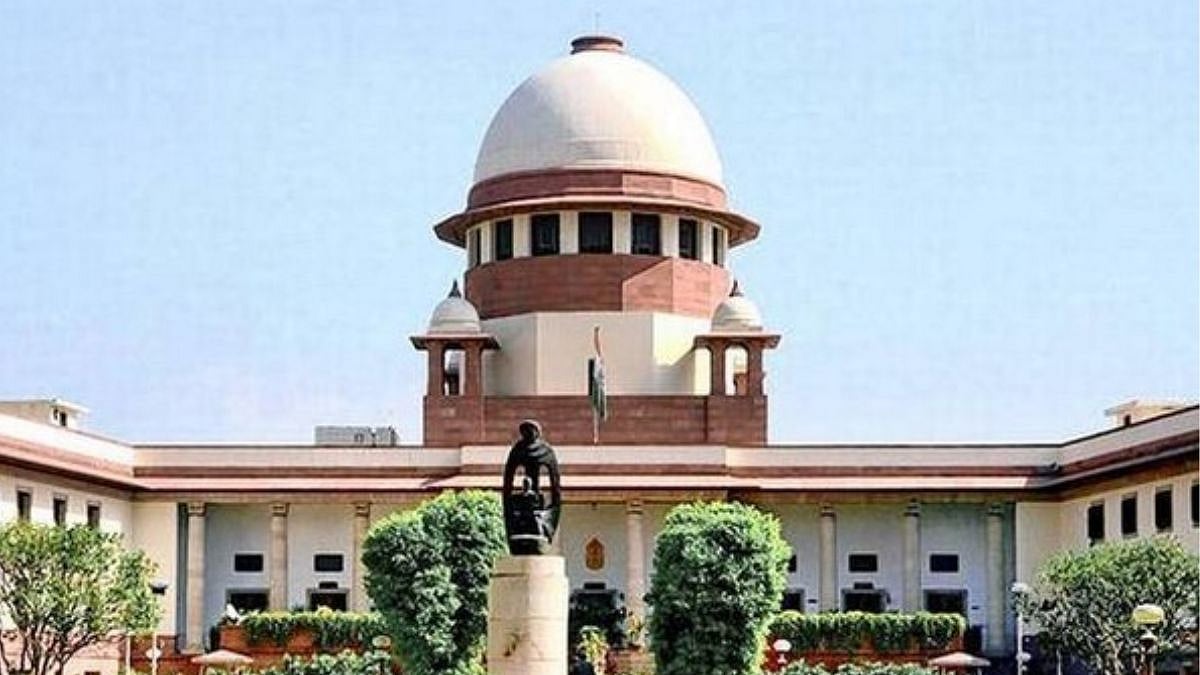
Arrest Not The Default For Minor Offences, Says Supreme Court; Notice Must Come First | X
The Supreme Court has laid down a clear rule aimed at curbing unnecessary arrests: for offences punishable with imprisonment of up to seven years, arrest should be the exception, not the norm. As a first step, police must serve a notice under Section 35(3) of the Bharatiya Nagarik Suraksha Sanhita (BNSS), 2023, instead of arresting the accused.
A Bench of Justices M.M. Sundresh and N. Kotiswar Singh held that the issuance of a Section 35(3) notice is mandatory in such cases. The Court made it clear that no arrest can be made for offences carrying a punishment of less than seven years unless the police first comply with this requirement. The ruling came while deciding whether notices under Section 35(3) are compulsory in all cases involving offences punishable up to seven years.
Arrest Is a Choice, Not a Compulsion
The Court underlined that arrest is not automatic and should never be treated as routine. It described arrest as a “discretionary and optional” act, to be exercised by a police officer based on the facts of each case. This is a strong reminder that personal liberty cannot be sacrificed for convenience in investigation.
Explaining the law, the Court noted that Section 35 of the BNSS allows police to arrest without a warrant only under specific conditions. First, the officer must have reason to believe that the accused has committed an offence under Section 35(1)(b)(i). Second, the officer must also be satisfied that custody is necessary for at least one reason listed under Section 35(1)(b)(ii), such as preventing further offences, ensuring proper investigation, stopping tampering with evidence, protecting witnesses, or securing the accused’s presence in court.
Reasons Must Be Written, Accountability Is Key
The Supreme Court stressed that both conditions must exist together for a valid arrest. Even then, arrest is not mandatory. The police officer may still decide not to arrest. Importantly, the law requires officers to record reasons in writing-whether they choose to arrest or decide that arrest is not required.
Section 35(3) of the BNSS allows the police to serve a notice directing the accused to appear instead of making an arrest. While this provision applies to all cognisable offences, the Court said that for offences punishable up to seven years, it must be read along with Section 35(1)(b) and its proviso. This ensures that arrests are justified, reasoned, and transparent.
The Court further pointed out that if a person complies with a Section 35(3) notice and appears before the police, they cannot be arrested, as clearly stated under Section 35(5). Arrest after issuing a notice, under Section 35(6), can only happen in exceptional circumstances.
ALSO READ
Also Watch:
Liberty First, Arrest Later
In a strong endorsement of personal freedom, the Court declared that for offences punishable up to seven years, serving a notice under Section 35(3) is the rule, while arrest is a “clear exception.” This observation reflects a conscious shift away from the culture of automatic arrests that has long plagued the criminal justice system.
Summing up its view, the Court laid down clear conclusions: arrest is only a statutory discretion to aid investigation, not a compulsory step; police must always ask whether arrest is truly necessary; the legal conditions for arrest must strictly exist; notices are the norm; and even when grounds for arrest are present, it should be used only when absolutely required. The power to arrest after issuing a notice, the Court said, must be exercised cautiously and sparingly.
The ruling by the Supreme Court of India sends a firm message to law enforcement agencies: liberty cannot be taken lightly, and arrest should never be the default response. For citizens, it reinforces a vital safeguard-freedom first, force last.
To get details on exclusive and budget-friendly property deals in Mumbai & surrounding regions, do visit: https://budgetproperties.in/
RECENT STORIES
-
-
-
-
-