'Absurd To Say Passport Is Not Citizenship Proof': Justice Dhulia Questions SIR Process
Former Supreme Court judge Justice Sudhanshu Dhulia criticised the Special Intensive Revision (SIR) of electoral rolls, saying it places an unfair burden of proving citizenship on individuals. He argued that a passport should be recognised as citizenship proof and questioned the powers given to Block Level Officers. Dhulia said the legal presumption should favour inclusion of citizens.

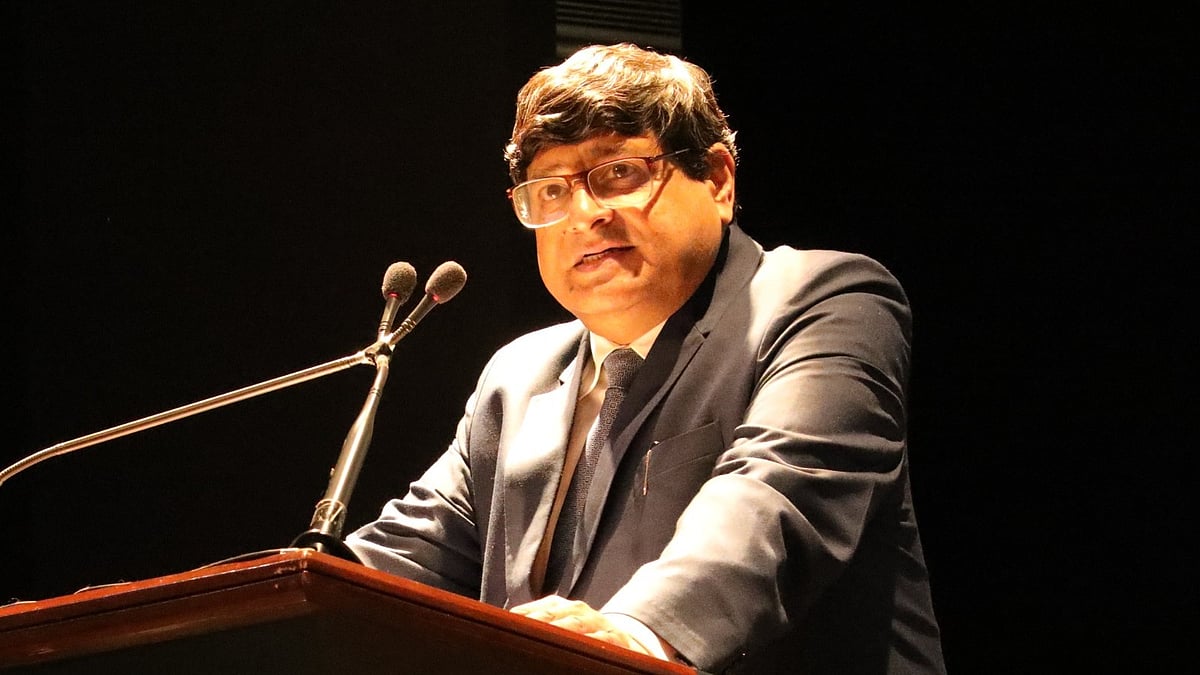
'Absurd To Say Passport Is Not Citizenship Proof': Justice Dhulia Questions SIR Process | X - @LBSNAA_Official
Former Supreme Court judge Justice Sudhanshu Dhulia has questioned the ongoing Special Intensive Revision (SIR) of electoral rolls, expressing concern over what he described as an "exclusionary" approach to citizenship documentation and the powers given to local election officials.
Speaking on the ‘Dil Se With Kapil Sibal’ programme, Justice Dhulia argued that the SIR process places an unfair burden of proof on citizens and could undermine the fundamental right to vote, Live Law reports. His remarks come amid the debate over whether a passport can be accepted as proof of Indian citizenship.
Constitution Favours Inclusion, Not Exclusion
Referring to the Constituent Assembly Debates, Justice Dhulia said the framers of the Constitution did not intend to deny citizenship or voting rights because of the absence of documents such as birth certificates. He argued that the presumption of law must always favour citizenship and criticised what he described as the present-day shift towards an exclusionary rather than an inclusionary approach.
He said, "If you are in India, the presumption is that you are an Indian citizen."
Justice Dhulia added that government policies are meant to benefit all citizens and that a person's citizenship should not be questioned merely because they do not possess specific documents or without substantial reason.
Recalling his own experience, he said he was born at home and does not have a birth certificate, noting that this was the reality for millions of Indians, particularly those born around the time of Partition. He said demanding birth certificates as proof of citizenship ignored this reality.
Passport Debate And Burden Of Proof
Justice Dhulia acknowledged the government's argument that a passport is a travel document but questioned the logic behind excluding it as proof of citizenship. He pointed out that every passport mentions the holder's nationality as Indian and said, "Agar Act kehta hai ki aapko passport nahi milega jab tak aap citizen nahi hain, toh nishchit roop se agar aapke paas passport hai toh aap citizen hain" (If the Act says you will not get a passport unless you are a citizen, then certainly if you have a passport, you are a citizen).
He also questioned why passports are accepted as proof of citizenship in countries such as the United States, the United Kingdom and across the European Union, but not in India.
SIR Gives Excessive Powers To BLOs, Says Dhulia
Justice Dhulia criticised the SIR framework for placing the burden of proving citizenship on individuals instead of the state. Reiterating that the law presumes a person living in India is an Indian citizen, he said, "Agar aap Hindustan mein hain toh presumption yeh hai ki aap Hindustan ke nagarik hain" (If you are in India, the presumption is that you are an Indian citizen).
He also questioned the authority given to Block Level Officers (BLOs) to raise objections over citizenship, calling it a dangerous trend. "Koi bhi aadmi aise oppose kar sakta hai ki aap nagarik nahi ho. Uska faisla kaun karega? BLO toh kar nahi sakta" (Anyone can oppose like this and say you are not a citizen. Who will decide that? A BLO cannot decide that)," he said.
Justice Dhulia further argued that the burden of proving a person is not a citizen should rest with the state, not the individual. He said, "Agar main yahan pe reh raha hoon toh presumption yeh hai ki main kyun rahunga yahan? Agar main kisi aur desh ka citizen hoon, toh main khud hi yahan visa pe aaya hoon, chala jaunga. Par agar nahi hai toh main kehta hoon main Bharatiya nagarik hoon. Aap prove karo ki main nahi hoon" (If I am living here, the presumption is why would I be here? If I am a citizen of another country, I would have come here on a visa and would leave. But if not, I say I am an Indian citizen. You prove that I am not).
Last week, former Supreme Court judge Justice Madan B Lokur also criticised the Ministry of External Affairs' assertion that a passport is only a travel document and not proof of Indian citizenship, calling the position "a complete misreading" of the law with potentially serious constitutional consequences.
RECENT STORIES
-
-
-
-
-