Managing Semiconductor Supply Chain Volatility: Logistics And Security Strategies For Indian Businesses
Semiconductor supply chain disruptions pose major risks for Indian manufacturers, affecting production, deliveries and business continuity. Diversified sourcing, secure logistics, shipment visibility, inventory planning and alternative transport routes can help businesses manage volatility and build resilience.

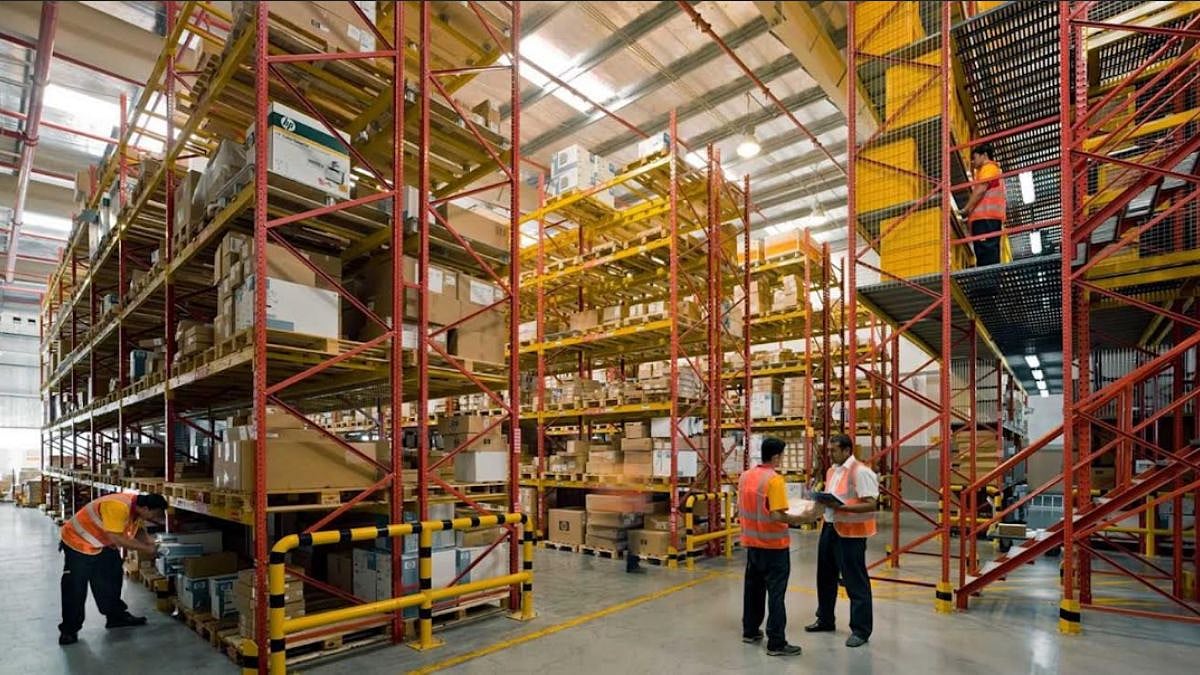
Managing Semiconductor Supply Chain Volatility: Logistics And Security Strategies For Indian Businesses | File photo
Introduction: Why Semiconductor Supply Chains Matter
Semiconductors are in almost every product that matters to modern life. The smartphone in a person's pocket, the car they drive, the medical device monitoring their health, the telecommunications network connecting them- all of these depend on chips made in a small number of fabs concentrated in a small number of countries. For Indian businesses that manufacture or assemble any of these products, the condition of the global semiconductor supply chain is not background noise. It is a direct operational concern that affects production schedules, customer commitments, and business continuity in ways that few other input categories can match.
When semiconductor supply chains are disrupted, the effects move quickly through downstream industries. A shortage of a specific microcontroller can idle a production line that is otherwise fully resourced because the missing chip cannot be substituted and the finished product cannot ship without it. Understanding this vulnerability and managing it actively is one of the more important supply chain capabilities an Indian manufacturer can build.
Understanding Semiconductor Supply Chain Volatility
The factors driving volatility in the semiconductor supply chain are structural, not temporary. Manufacturing concentration, where a large share of global chip production sits in Taiwan and South Korea, means that geopolitical tension or a natural event in those regions has immediate global consequences. Demand fluctuations across semiconductor-consuming industries create cycles of shortage and oversupply that are difficult to predict at the individual company level. Transportation disruptions, whether from port congestion, air freight capacity constraints, or customs delays, add lead time variability on top of the production uncertainty. A disruption at any stage of this chain delays Indian businesses at the end, often with limited warning.
The Role of Semiconductor Logistics
Moving semiconductors from manufacturer to end user involves a logistics chain that is as consequential as the supply chain it serves. Chips are high-value, often temperature-sensitive, and in some cases export-controlled, so logistics handling requirements go beyond those of most industrial goods. Shipment visibility, meaning the ability to track a consignment from origin through customs and final delivery in real time, is not a premium service in this context. It is an operational necessity because production planning depends on knowing when critical components will arrive and adjusting when they will not.
Delivery timeline reliability directly affects production schedules. A semiconductor shipment that arrives two weeks late is not merely an inconvenience. It causes a production stoppage, delays customer delivery, and creates contractual consequences for the manufacturer.
Managing Semiconductor Logistics Risks
The risks in semiconductor logistics cluster around transportation delays, customs clearance, cargo security, and capacity availability. Each of these is manageable with the right approach. Proactive shipment tracking that alerts the procurement team to delays before they become production stoppages allows time to activate alternative arrangements. Multiple logistics relationships, so that a capacity constraint or service failure with one carrier does not exhaust all available options, reduce the impact of individual logistics failures. Familiarity with customs requirements for semiconductor imports, including classification, documentation, and any applicable licensing, reduces the risk of anticipated clearance delays.
Securing the Semiconductor Supply Chain
The value of semiconductor shipments makes them targets for theft, and the criticality of specific chips to production makes tampering or substitution a serious operational risk. Secure handling protocols at every transfer point, chain-of-custody documentation, and tamper-evident packaging are physical controls that reduce these risks. End-to-end visibility that covers not just location but handling conditions and custody events gives the receiving manufacturer confidence that the components arriving are the ones that were shipped.
Working with logistics partners with established security protocols for high-value electronics cargo, rather than treating semiconductors as standard freight, is a practical step that closes the gap between cargo value and transit security.
Building a More Resilient Semiconductor Supply Chain
Resilience in semiconductor sourcing comes from diversification and preparation. Geographic diversification of the supplier base, so that not all chip supply comes from a single region or through a single distribution channel, reduces the exposure that concentration creates. Inventory planning for critical, long-lead-time components, calibrated to each chip's specific lead time and demand variability rather than a uniform safety-stock rule, provides a buffer that absorbs moderate supply disruptions without affecting production. Alternative transportation routes, understood before they are needed, allow a faster response when a primary route is disrupted.
Technology that provides visibility into the supply chain beyond the immediate supplier, covering supplier capacity utilisation, logistics conditions, and customs processing times, allows disruptions to be identified earlier and responses to be activated with more lead time. The businesses that manage semiconductor supply chain volatility best are not the ones that avoid disruption. They are the ones that see it coming earlier and respond faster.
Conclusion
Semiconductor supply chain volatility is not a solvable problem in the sense that it can be eliminated. It is a manageable one in the sense that its impact can be reduced through deliberate preparation. For Indian businesses whose production depends on the reliable availability of these components, diversified sourcing, reliable logistics partnerships, strong shipment security, and supply chain visibility convert a structural vulnerability into a manageable operational risk. Businesses that invest in these capabilities maintain production continuity when others cannot.
RECENT STORIES
-
-
-
-
-