Supreme Court Refuses To Cancel Assistant Professor’s Appointment Despite Doubt Over Ph.D.; Orders Fresh Probe Into Degree
The Supreme Court refused to cancel an Assistant Professor’s appointment, noting that UGC-NET was the mandatory qualification. However, it ordered MDU to conduct a fresh inquiry into doubts over his Ph.D. degree.

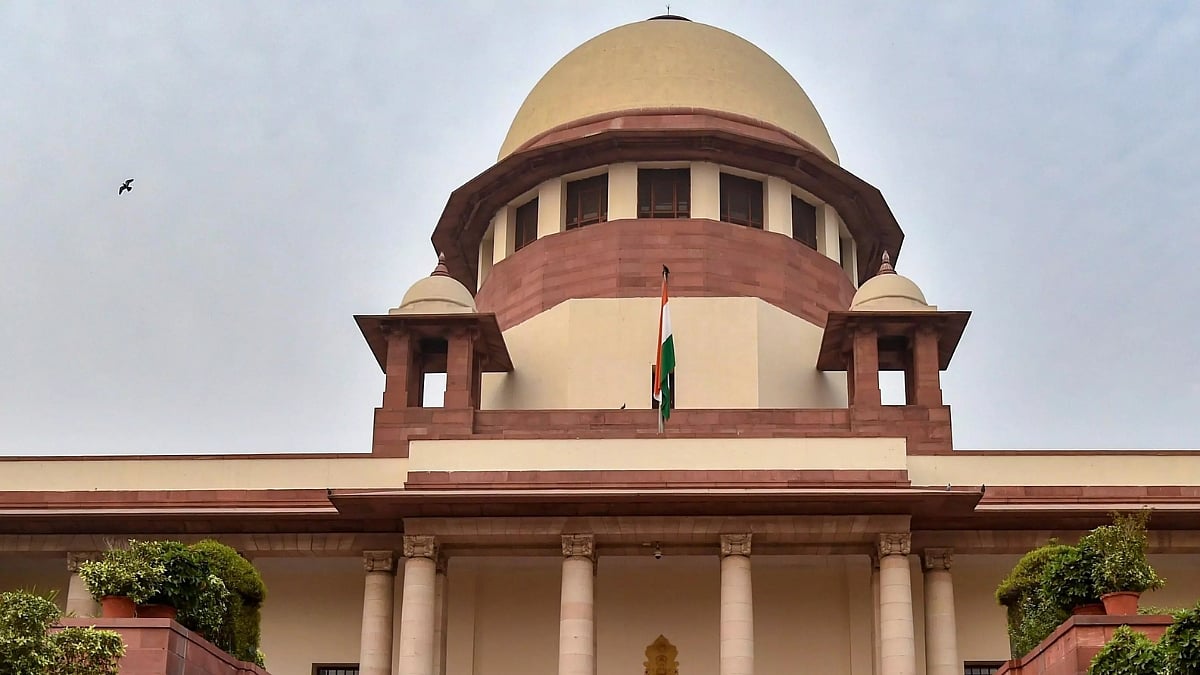
Supreme Court | PTI
The Supreme Court has refused to cancel the appointment of an Assistant Professor despite prima facie material raising serious questions over the authenticity of the Ph.D. degree submitted by him, holding that the doctoral degree was not an essential qualification for the post.
A Bench of Justice Dipankar Datta and Justice Manmohan held that the Assistant Professor had independently satisfied the mandatory eligibility requirement by qualifying the UGC-NET examination. However, taking note of documents suggesting that his Ph.D. degree could be fake, the Court directed Maharshi Dayanand University (MDU) to conduct a fresh inquiry into the degree, as reported by Live law.
The case relates to the appointment of an Assistant Professor of Physical Education at Sat Jinda Kalyana College, Rohtak, affiliated with MDU.
Challenge to Assistant Professor’s appointment
The appellants, who had approached the Court after failing to secure the appointment themselves, had challenged the selection of the sixth respondent. They questioned the authenticity of his Ph.D. degree, which was allegedly awarded by Bundelkhand University, Jhansi.
The Single Bench and subsequently the Division Bench of the Punjab and Haryana High Court dismissed the challenge, among other grounds, by questioning the appellants' locus since their names had not appeared in the merit list.
The unsuccessful candidates then approached the Supreme Court.
The top court declined to interfere with the High Court's decision on the appointment. According to the Live law report, Justice Datta, who authored the judgment, noted that the sixth respondent had cleared the UGC-NET and therefore possessed the mandatory qualification required for appointment.
Ph.D. was not mandatory qualification
The Supreme Court examined the applicable UGC regulations and the recruitment rules governing the post.
Under the relevant UGC Regulations, 2010, the mandatory qualification was clearance of NET, SLET or SET. Candidates holding a Ph.D. awarded in accordance with the applicable UGC regulations could claim exemption from the NET/SLET/SET requirement.
The Court also noted that the recruitment criteria applicable in Haryana required compliance with the UGC regulations and State Government rules.
In the present case, the Ph.D. was a desirable qualification rather than an essential qualification. A candidate who did not possess NET/SLET/SET was required to have a valid Ph.D. The sixth respondent, however, had undisputedly qualified the UGC-NET.
The Court therefore held that his appointment could not be set aside merely because questions had been raised over the Ph.D. degree.
The Bench, however, pointed out that the allegedly questionable Ph.D. could have played a role in the candidate's position in the merit list.
“By no stretch of reasoning can it be concluded that he lacked a mandatory qualification,” the Court observed, while adding that he may have “stole a march” over candidates ranked second and third because of marks awarded for the disputed Ph.D, as reported by live law.
The Court further noted that the outcome could potentially have been different if the second or third-ranked candidates themselves had challenged the appointment.
Supreme Court takes note of doubts over Ph.D.
While upholding the appointment for the purpose of the present proceedings, the Supreme Court said it could not ignore the material casting doubt on the authenticity of the doctoral degree.
The Court also referred to an affidavit filed by the Registrar or Controller of Examinations of Bundelkhand University, which described the degree as “fake and farzi.” Another document allegedly issued by the university was also stated to be forged.
In view of these materials, the Bench said it could not “turn a blind eye” to the issue.
MDU ordered to conduct fresh inquiry
According to the livelaw report, the Supreme Court directed Maharshi Dayanand University to conduct a fresh inquiry into the authenticity of the Ph.D. degree.
The Court directed the Assistant Professor to produce the original Ph.D. degree before MDU officials. Officials of Bundelkhand University would also be required to produce the documentary material on the basis of which the affidavit was filed before the Supreme Court.
The Court directed that the Assistant Professor must be given a proper opportunity to defend himself and to cross-examine witnesses. The inquiry is to be conducted in accordance with the principles of natural justice.
The Supreme Court also clarified that its observations in the judgment should not influence the outcome of the inquiry.
Criminal action possible if degree is found forged
The Court made it clear that the inquiry could have consequences if the Ph.D. degree is ultimately found to be forged.
The Court stressed that merely disposing of the appeals without directing an inquiry should not become a shield for an appointment obtained through deception, if such deception is ultimately established.
RECENT STORIES
-
-
-
-
-