‘Rage Bait’ Declared Oxford Word Of The Year 2025; Know Meaning, Usage & Why It Was Chosen
Oxford University Press has named ‘rage bait’ as the Oxford Word of the Year 2025, following a public vote involving over 30,000 participants. The term refers to online content deliberately designed to provoke anger and outrage to boost engagement. Its rise reflects growing concerns over emotional manipulation, digital wellbeing, and the influence of social media algorithms.

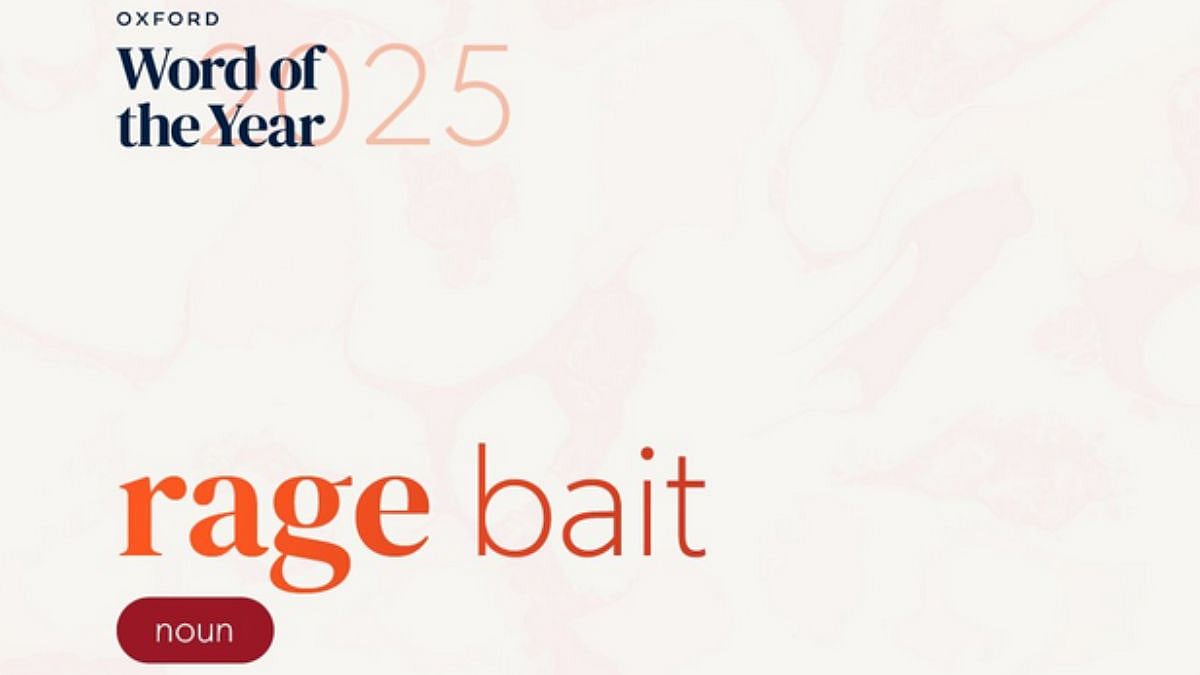
Oxford Picks ‘Rage Bait’ as Word of the Year | Image: X/@UniofOxford
In a year marked by heated online debates and escalating concerns over the impact of digital content on public emotions, Oxford University Press (OUP) has declared ‘rage bait’ as the Oxford Word of the Year 2025. The announcement follows a global public vote in which more than 30,000 participants cast their ballots over three days.
OUP shortlisted rage bait, aura farming, and biohack as final contenders, reflecting major conversations that defined 2025. The winning term was selected through a combined process of public voting, sentiment analysis, and linguistic research from OUP’s extensive language corpus.
A Word Rooted in Today’s Digital Culture
The term ‘rage bait’, defined as content intentionally crafted to provoke anger or outrage, saw its usage triple in the past year, coinciding with global unrest, wider discussions on content regulation, and heightened awareness of online emotional manipulation.
Unlike traditional clickbait, which focuses on curiosity-driven engagement, rage bait specifically leverages anger, division, and provocation to drive traffic. OUP noted that the rise of rage bait highlights a “deeper shift in how we understand attention, engagement, and online ethics.”
The phrase itself is a compound of two long-standing English words, “rage” and “bait,” both with Middle English origins. Its earliest recorded use dates back to 2002 on Usenet, referring to intentionally irritating behaviour on the road. Over time, the term migrated to internet slang and eventually into mainstream media, where it is now frequently cited to describe viral posts engineered to inflame emotions.
Casper Grathwohl, President of Oxford Languages, said, "As technology and artificial intelligence become ever more embedded into our daily lives—from deepfake celebrities and AI-generated influencers to virtual companions and dating platforms—there’s no denying that 2025 has been a year defined by questions around who we truly are; both online and offline."
"The fact that the word rage bait exists and has seen such a dramatic surge in usage means we’re increasingly aware of the manipulation tactics we can be drawn into online. Before, the internet was focused on grabbing our attention by sparking curiosity in exchange for clicks, but now we’ve seen a dramatic shift to it hijacking and influencing our emotions, and how we respond. It feels like the natural progression in an ongoing conversation about what it means to be human in a tech-driven world—and the extremes of online culture," he added.
Last year’s winner, brain rot, highlighted the fatigue caused by endless scrolling. This year, rage bait exposes the deliberate engineering of outrage that fuels online algorithms.
RECENT STORIES
-
-
-
-
-