From Claude To NotebookLM, How JEE Advanced 2026 AIR 1 Shubham Kumar Leveraged AI Tools To Excel | FPJ EXCLUSIVE
In a freewheeling chat with FPJ, JEE Advanced 2026 AIR 1 Shubham Kumar narrated how he used smart use of AI tools like Claude and NotebookLM AI tools for Quizzes, revision and practice tests apart from crediting disciplined study and teacher guidance

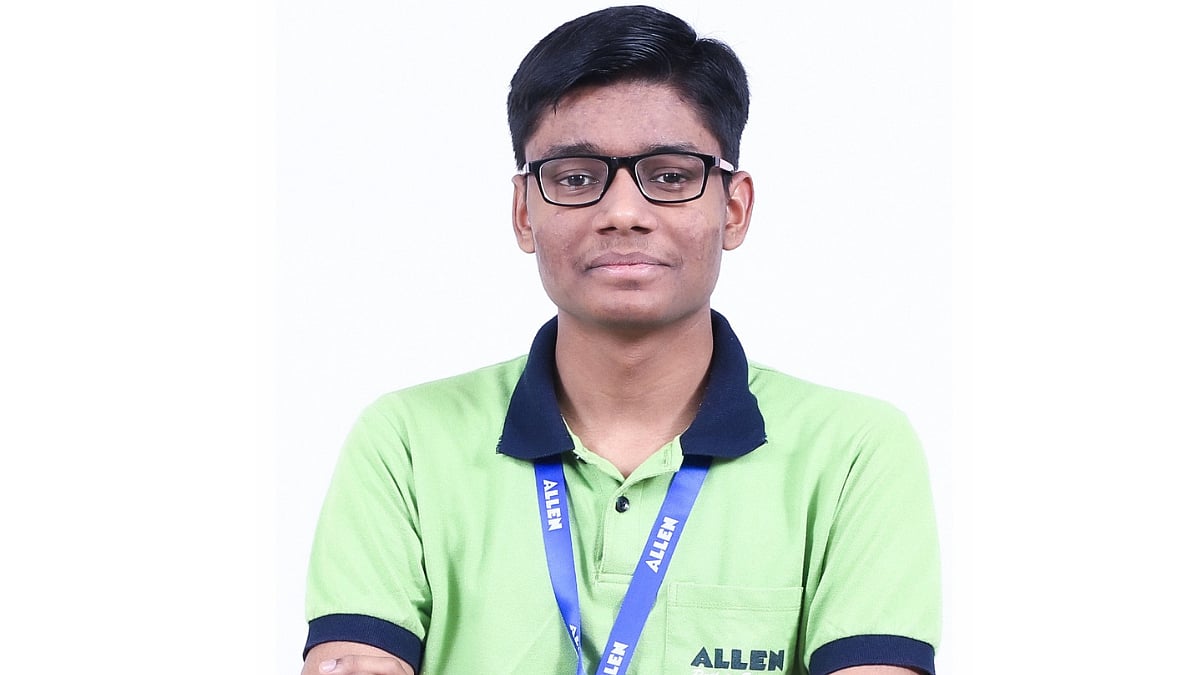
JEE Advanced 2026 results were declared on Sunday, and Shubham Kumar from Bihar secured All India Rank (AIR) 1 with an impressive score of 330 out of 360. Already a top performer in JEE Main 2026 with a 100 percentile score and AIR 6, Shubham's achievement has placed him among the country's brightest engineering aspirants.
Coming from Gaya in Bihar, Shubham is the son of Shivkumar, a hardware businessman, and Kanchan Devi, a homemaker. Behind the AIR 1 rank, however, is a story of discipline, consistency, trust in teachers, and determination through setbacks.
Speaking about his preparation journey, ALLEN Career Institute student Shubham Kumar said there was no complicated strategy behind his success.
"My strategy was simple. I followed my teachers and trusted their guidance. They already had a clear plan for what we needed to study and how we should prepare. I just followed that sincerely," he said to FPJ.
A routine built around consistency
For the past two years, Shubham's days revolved around studies, regular revision, and practice. He would wake up around 6.15 am, get ready, and begin studying by 7.30 am.
Apart from classes and self-study, he kept his routine simple. He would speak with his family and friends, take short breaks every few hours, and spend some time playing cricket or badminton in the evenings.
"I used to study most of the time. Other than that, I would talk to my parents, play simple games on my phone, and take breaks after every two to three hours," he recalled.
According to Allen, Shubham dedicated six to eight hours daily to self-study and made it a point to revise classroom lessons on the same day.
Organic chemistry was the toughest battle
Like many JEE aspirants, Shubham also had his weak areas. He admitted that some chapters in organic chemistry were particularly challenging because they required extensive memorisation.
"I had to fight with some chapters in organic chemistry because they were more about learning and less about logic. That was the most difficult part for me," he said.
Instead of avoiding difficult topics, he focused on repeated practice and clarification of doubts whenever required.
Overcoming chickenpox weeks before the exam
Perhaps the biggest test of his preparation came just weeks before JEE Advanced.
About three weeks before the examination, Shubham contracted chickenpox while staying in his hostel.
"I was alone in the hostel and had to manage everything myself, along with my studies. That was the most challenging phase," he said.
The illness forced him to take a break from studies for several days. "I was bedridden for three to four days. After that, I gradually returned to my normal routine and continued studying."
Rather than allowing the setback to affect his confidence, he used it as motivation. "Preparing for JEE brings pressure, but I never allowed it to become a weakness. Every challenge became a motivation for me."
Why mock tests matter
Shubham believes mock tests played a crucial role in his preparation.
While students may solve questions comfortably at home, performing under examination pressure requires a different skill set, he explained.
"Mock tests are the most important tool in preparation. They help build confidence, speed, and accuracy. The actual exam environment is very different from solving questions at home."
Regular testing also helped him identify weak areas and improve his performance before the final examination.
Limited social media, productive use of AI
Unlike many students his age, Shubham kept social media usage to a minimum. "I mostly used WhatsApp to stay connected with my family, teachers, and friends. Sometimes I watched YouTube, but my social media usage was limited."
At the same time, he embraced artificial intelligence as a learning tool.
Over the last six to seven months, he regularly used AI platforms to organise study material, generate quizzes, and prepare practice tests.
"I used tools like Claude and NotebookLM. NotebookLM was especially useful because I could upload multiple textbooks and generate quizzes to test myself."
However, he cautioned students against becoming overly dependent on AI. "It should be used wisely. Students should be aware of whether they are using it productively or not."
Advice for future aspirants
Asked about common mistakes made by JEE aspirants, Shubham pointed to one issue that he believes affects many students.
"After some months of preparation, many students start thinking they can ignore their teachers and do everything on their own. I think that is a mistake. Teachers have years of experience, and following their guidance is often the best path."
Competitive studying is also one of the recommendations he shares. "The best piece of advice that I have gotten is to study in a self-study room along with other students. It keeps you motivated when you see others studying with full enthusiasm. Going to the library and joining a study group can also make sure that you continue working on your preparation."
When he felt mentally exhausted, he used to meditate and play a game or two before continuing with his studies.
IIT Bombay computer science next
Having successfully scored AIR 1, Shubham is now planning to join the Computer Science Engineering programme offered by IIT Bombay.
While looking back at all that happened, he says he owes his success to his teachers, family, and his resolve to achieve his goal.
"The encouragement from my dad, support from my mom, and belief of my teachers really helped me. I always had confidence that if I continued working consistently under proper guidance, I would succeed."
Friendship beyond the rankings
While Shubham secured AIR 1 with 330 marks, his close friend Kabeer Chillar finished just one mark behind him with 329 marks and secured AIR 2. Asked whether the narrow margin made him feel competitive, Shubham's response reflected the camaraderie that had developed between the two during their preparation journey.
"I don't feel anything negative about it. We studied together, played together and evolved together. We had the same teachers and were part of the same peer group. It was expected that our scores would be very close," he said.
According to Shubham, a one or two-mark difference at such a high level often comes down to chance rather than ability. "When the difference is just one or two marks, it is a matter of luck. We both worked equally hard," he said.
Rather than focusing on the ranking gap, Shubham said he was happy to see his friend succeed alongside him. "We have been friends for many months and have gone through this journey together. Being a friend, I think we are both happy today."
The two are now preparing for the next phase of their academic journey and hope to continue together at IIT Bombay. "Finally, we are heading towards IIT Bombay together. I am happy and excited about that," he added.
For thousands of students preparing for competitive examinations, Shubham's journey offers a simple lesson: success does not always require a complicated strategy. Sometimes, discipline, consistency, and trust in the process are enough to reach the top.
RECENT STORIES
-
-
-
-
-