From Algorithms To AI: How Computer Science Education Is Evolving In India & Ireland
Computer science education is evolving as AI, data science and intelligent systems reshape industries. India is expanding AI-focused education, while Ireland emphasises practical learning, industry integration and employability.

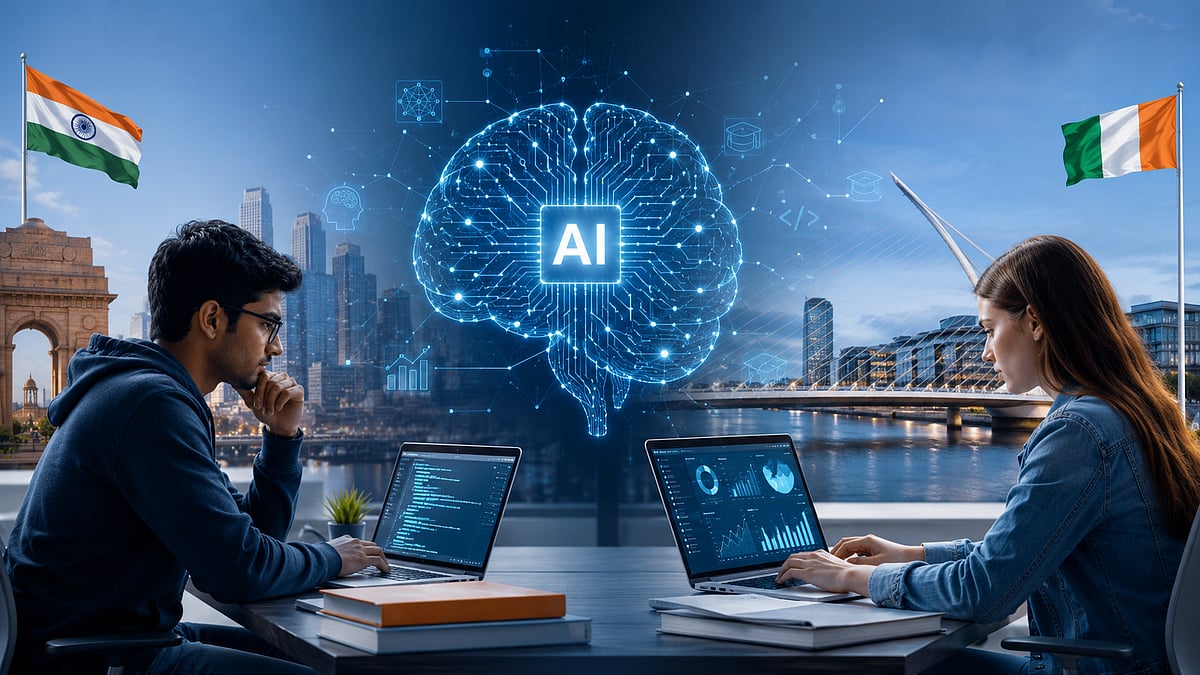
As the world accelerates towards a more data-driven future, the role of artificial intelligence (AI), data science, and intelligent systems in transforming industries has never been clearer. In response to this rapid evolution, computer science education is undergoing a profound shift to equip the next generation of professionals with the skills to navigate this complex landscape. Both India and Ireland are pivotal in shaping this change, with their educational systems adapting to meet the growing demand for expertise in these fields.
The Demand for AI Talent in India
India’s technology sector is growing rapidly, positioning the country as a major player in AI, data science, and intelligent systems. According to the report India's AI Revolution: A Roadmap to Viksit Bharat, released by the Union Ministry of Electronics & IT, India may require nearly one million AI professionals by 2026, highlighting the urgent need for the education sector to keep pace.
In response, engineering education has expanded significantly, with over 14.9 lakh B.Tech seats, especially in Computer Science, AI, and data-focused programs. This shift also reflects a move from traditional, theory-based learning to more application-driven, immersive education that prepares students to work in dynamic, data-driven environments.
Shifting from Theory to Application
These changes are being fueled not just by academic institutions but also by the overall ecosystem. The AI Summit 2026 and other such forums predicted that we would evolve from experimenting with AI to deploying it on a mass scale with diverse applications in governance, business, medicine, and education. Thus, it has become imperative for us to develop an education system that is not only about basic coding. It must provide students exposure to working with intelligent systems and using this knowledge to address real-world problems.
Hackathons, group projects, and corporate training programs have recently emerged as powerful tools to this effect in India. This need for hands-on learning that bridges the theory-practice divide is being addressed through such courses, allowing students to work and experiment with current technologies and prepare themselves for the rapidly changing AI and data world.
Ireland’s Emphasis on Employability and Industry Integration
The Irish education model is very forward-looking and places a strong emphasis on employability and matching education to industry needs. For example, according to the Irish Universities Association, over 62.9% of graduates find full-time work after graduation; 21.9% go on to pursue further study, often in emerging fields such as artificial intelligence and data science; and the unemployment rate for graduates in Ireland is about 4-5%, which demonstrates the stability of the transition from education to employment in technology-driven sectors.
Part of this success can be attributed to the emphasis placed on combining practical learning with academic work throughout the Irish system. All Irish universities also place a strong emphasis on research, innovation, and working closely with industry, providing students with an opportunity to experience the application of data and AI solutions in real-world environments across many industries such as technology, finance, and healthcare. This type of educational model is also consistent with the overall ecosystem where Ireland is home to a growing number of global technology companies, providing even more career opportunities for graduates.
Dublin City University: Preparing Students for the AI-Driven Future
Dublin City University (DCU) exemplifies how undergraduate education is adapting to global tech shifts. Its BSc in Computer Science starts with core subjects like programming, algorithms, and computational thinking before progressing to advanced areas such as AI, machine learning, and data analytics, ensuring that students build a strong technical foundation to innovate in AI-driven ecosystems. The programme also emphasizes experiential learning through project-based modules and industry placements, enabling students to apply their knowledge in real-world settings and understand how AI and data systems function in professional environments.
Building Future-Proof Skills
Students are introduced to specialised fields such as Cybersecurity, Cloud Computing, Data Mining, and Human-Computer Interaction, reflecting the interdisciplinary nature of modern computer science. The focus is on building adaptability, collaboration, and diverse skill sets, allowing students to evolve with rapidly changing technologies. DCU’s strong industry connections further enhance learning through placements and collaborative projects, helping students develop both technical expertise and a practical, solution-oriented mindset essential for today’s global economy.
A Global Shift in Education
The shift from algorithms to AI highlights how education systems are evolving to meet industry demands. In India, the focus is on scaling education to meet the growing need for AI professionals, while Ireland emphasises strong industry integration to produce job-ready graduates. Together, these approaches are shaping a new generation equipped to lead advancements in AI, data science, and intelligent systems. This transformation goes beyond coding, preparing students to work with intelligent systems and become architects of a data-driven future.
The author is Regional Advisor – South Asia, Dublin City University
RECENT STORIES
-
-
-
-
-