Every Child Deserves Wings To Soar: Inside BMC’s Schools Where Independence Becomes Every Student's Greatest Achievement
BMC’s 19 special schools across Mumbai are helping children with intellectual and multiple disabilities build communication, self-care and vocational skills. With individual learning plans and free support, the focus is on confidence and independence.

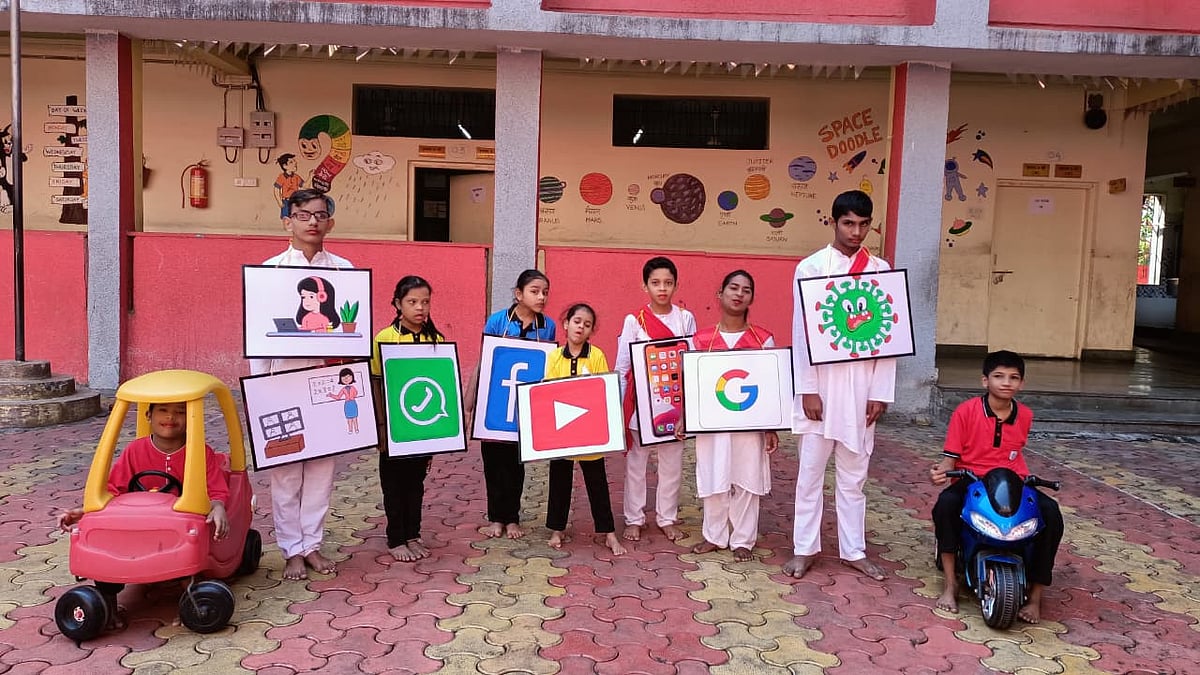
Every city is measured not only by the height of its skyline but also by the depth of its compassion. Beyond Mumbai's relentless traffic, crowded classrooms and restless ambitions lies a quieter story, unfolding without fanfare. It is a story where success is not counted in examination marks or university admissions, but in a child's first independent step, first confident smile or first conversation. Here, inclusion is not merely an educational policy. It is a patient promise that every child, regardless of ability, deserves the opportunity to flourish.
That philosophy has quietly guided one of the Brihanmumbai Municipal Corporation's (BMC) most remarkable yet least publicised educational initiatives.
Across Mumbai, from Borivali in the western suburbs to Mumbadevi in South Mumbai and Shivaji Nagar in Govandi, the BMC operates 19 special schools dedicated exclusively to children with intellectual disabilities, including autism and multiple disabilities. While children with hearing, visual and locomotor impairments continue to study alongside their peers in mainstream municipal schools, youngsters requiring greater cognitive support receive specialised education tailored to their individual needs.
Far removed from conventional academic competition, these schools pursue a different ambition: preparing children not merely to pass examinations, but to navigate everyday life with confidence, dignity and independence.
Different paths shared dreams
According to Dr Prachi Jambhekar, Deputy Municipal Commissioner (Education), BMC, the civic body's education system follows two complementary approaches.
Children with physical disabilities generally possess typical cognitive abilities and therefore study in regular municipal schools alongside their peers. Children with intellectual disabilities, however, often require specialised teaching methods, lower student-teacher ratios and continuous support that mainstream classrooms cannot always provide.
The objective is not separation but appropriate education.
Rather than expecting every child to fit one educational model, BMC seeks to provide an environment best suited to each learner's abilities.
Learning beyond textbooks
Unlike conventional schools, BMC's special schools are not organised according to age-based grades or examination standards.
Rashmi Luktuke, Education Officer overseeing the 19 special schools, explained that admissions begin with comprehensive assessments conducted at BMC hospitals. Children undergo IQ evaluations and disability assessments before receiving a Unique Disability ID (UDID) card.
Depending on the results, children are either admitted to one of the special schools or, where appropriate, integrated into mainstream education.
Once enrolled, the emphasis changes completely.
Instead of memorising lessons or preparing for examinations, pupils develop communication, self-care, motor skills, social interaction and practical independence.
Every lesson answers a simple but profound question: What skills will help this child lead a more independent life?
Every child individual journey
Central to that philosophy is Maharashtra's 'Disha' curriculum, adopted across all 19 schools in collaboration with experts from NIEPID (formerly NIMH) and Jai Vakeel Foundation.
Each pupil follows an Individualised Education Programme (IEP) designed after teachers assess both chronological age and cognitive ability.
No two learning plans are identical. According to Prabhavati Shivram Ponda, who heads Manila Sunderji BMC Special School in Vile Parle West, children first learn simple daily routines such as waking independently, washing, dressing and maintaining personal hygiene before gradually progressing towards communication, community participation and independent living.
Parents become active partners throughout the process. Many practical goals are reinforced at home while teachers focus on classroom learning, recreation, communication and social development. Education becomes a partnership rather than a timetable.
Preparing beyond graduation
The schools deliberately prepare children for life beyond the classroom.
Music, dance, painting, craft work, athletics, relay races, basketball, handball and recreational activities form an essential part of school life. Older pupils also participate in seasonal vocational projects. Ahead of Raksha Bandhan, for instance, students learn to make rakhis as part of their pre-vocational training.
Many represent their schools at Special Olympics competitions held at state and national levels.
Where students demonstrate stronger academic abilities, teachers prepare them for examinations conducted by the National Institute of Open Schooling (NIOS).
Ponda recalled that around fifteen students from her school have successfully completed NIOS examinations over the years. She also helped prepare two mildly autistic pupils for admission into mainstream schools, where they later performed well academically.
"The aim is never to limit a child," she said. "If they are capable of following a regular curriculum, we encourage and prepare them for it."
Compassion beyond classrooms
Education across all 19 schools is entirely free.
The BMC provides uniforms, shoes, school bags, textbooks, notebooks, sportswear, water bottles and essential learning materials without charge.
Several schools have also strengthened therapeutic support.
At Manila Sunderji BMC Special School, a fully equipped sensory room enables children to receive therapy within the school itself, saving families costs that can otherwise range between ₹1,000 and ₹1,800 per session.
Physiotherapy and sensory development programmes further improve children's motor abilities and overall functioning.
Teachers themselves undergo specialised training through diploma or B.Ed. programmes in special education, covering child psychology, behavioural management and disability-specific teaching practices.
Yet staffing shortages remain one of the system's greatest challenges.
Although policy recommends approximately one teacher for every ten pupils, vacancies often leave educators responsible for considerably larger groups. At Manila Sunderji School, forty children are currently supported by only two teachers following a recent retirement.
Remarkably, innovation frequently bridges the gap.
Children with milder disabilities often assist classmates requiring greater support, creating classrooms where empathy, patience and cooperation become part of the learning experience. Volunteers and non-governmental organisations further strengthen this network of care.
Education with lasting purpose
As India continues strengthening inclusive education, Mumbai's municipal schools offer an enduring lesson.
True inclusion is not achieved simply by placing every child inside the same classroom. It is realised when every child is given the environment in which they can genuinely thrive.
Across its network of 19 special schools, the Brihanmumbai Municipal Corporation has quietly demonstrated that education reaches its highest purpose when it nurtures confidence before competition, dignity before distinction and independence before achievement.
Long after school bells fall silent, these children carry home something no examination can measure: the courage to navigate everyday life with greater confidence, the freedom to make their own choices and the quiet belief that their place in society is defined not by disability, but by possibility.
In a city celebrated for dreams, enterprise and resilience, these schools remind us that the greatest measure of progress is not how quickly some children race ahead, but how patiently society ensures that no child is left behind.
RECENT STORIES
-
-
-
-
-