Why One Should Feel Proud Of Filing An Income-Tax Return
Filing an Income-Tax Return is not always linked to whether tax is payable. Even taxpayers with nil liability may need to file under applicable rules. Beyond compliance, an ITR creates a valuable financial record, supports loan and visa applications, and reflects participation in India’s formal tax system

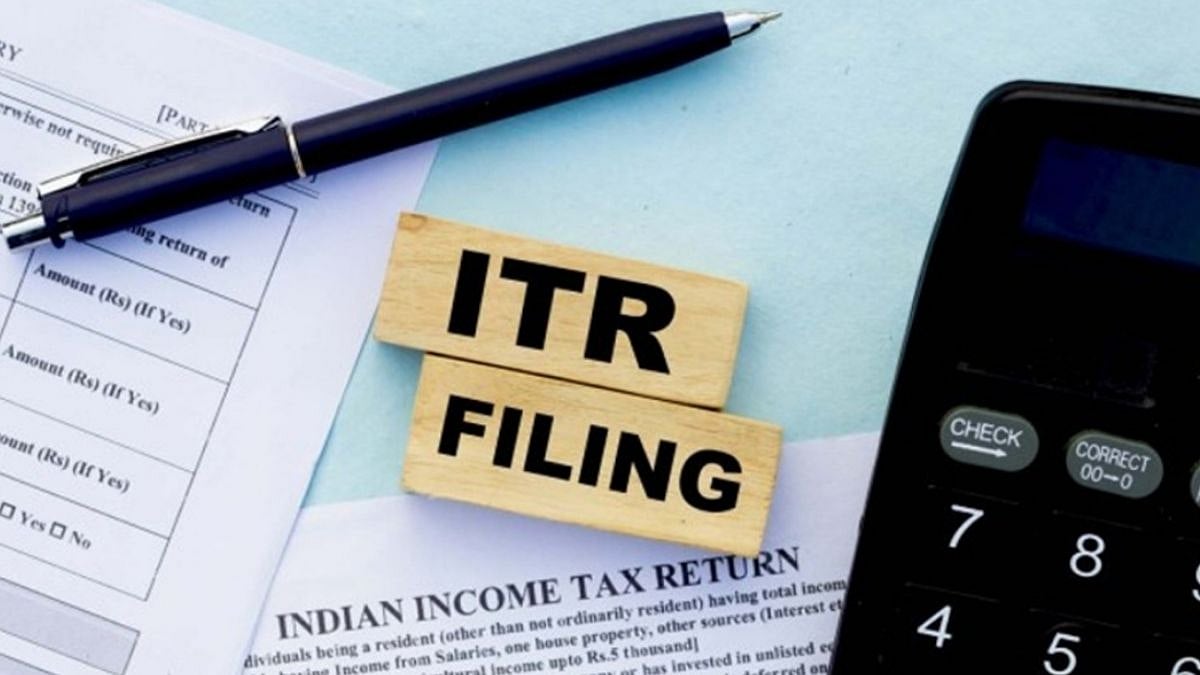
Representational Image
For many people in the lower- and middle-income groups, filing an Income-Tax Return (ITR) is often seen as necessary only when there is tax to be paid. If their final tax liability is nil, they tend to believe that filing a return serves little purpose.
This is largely because there is considerable confusion between the income threshold for filing a return and the income threshold at which tax becomes payable. The two are not necessarily the same.
Under the new tax regime, the basic exemption limit for individuals is ₹4 lakh. However, because of the rebate available under the new regime, an eligible individual can have nil tax liability on total income up to ₹12 lakh, subject to the applicable conditions.
Therefore, a person may have income above ₹4 lakh and yet have no tax to pay, while still being required to file an ITR. There are also important exceptions.
For instance, certain types of income, such as specified capital gains, may be taxable even when the taxpayer's overall income is otherwise within the rebate threshold.
Similarly, the conditions applicable to filing an ITR should be examined separately from the question of whether tax is ultimately payable.
Under the old tax regime, the basic exemption limit for an individual below 60 years of age continues to be ₹2.5 lakh. Therefore “No tax payable” does not necessarily mean “no return required.”
Filing an ITR is a responsibility—and a matter of pride
Income-tax return filing should not be viewed merely as a compliance burden. It is an important contribution to the formal economy and to nation-building.
Every honest taxpayer who reports his or her income correctly and files a return on time is participating in the country's tax system. Recent trends indicate that an increasing number of individuals are recognizing the importance of filing returns even when their tax liability is low or nil.
The growing use of digital systems, faster processing of returns and quicker issue of refunds has also made the process considerably easier.
How much is the risk of scrutiny?
One of the major reasons why some taxpayers hesitate to file returns is the fear that filing an ITR may invite scrutiny from the Income-Tax Department. The available data provides considerable reassurance.
During FY 2024-25, around 7 crore returns were filed, while approximately 2.5 lakh cases were selected for detailed scrutiny, representing less than 0.3 per cent of the returns filed.
It is important, however, not to interpret this figure as meaning that scrutiny is impossible or that every individual taxpayer has an identical probability of selection.
The Income-Tax Department increasingly uses risk-based selection and data analytics to identify cases requiring examination.
A significant proportion of scrutiny cases also relates to entities and taxpayers falling under ITR-5, ITR-6 and ITR-7, rather than ordinary salaried individuals. This should give genuine individual taxpayers considerable confidence.
Honest taxpayers have little reason to fear scrutiny
Having observed the functioning of the Income-Tax Department for more than three decades, I believe that an honest taxpayer who reports genuine income and maintains supporting documents has little reason to be apprehensive about scrutiny.
The introduction of the faceless assessment system has further transformed the interaction between taxpayers and the Department. In most cases, taxpayers do not have to physically visit an income-tax office.
Where additional information or supporting documents are required, these can generally be furnished electronically through the income-tax portal. Of course, this does not mean that taxpayers should file returns casually.
Every taxpayer should carefully verify income, deductions, investments, capital gains, bank interest, TDS and other relevant information before submitting the return.
The availability of information in the Annual Information Statement (AIS) and other digital systems makes such verification increasingly important.
The right approach, therefore, is not to fear the tax department but to maintain proper records, report genuine income and file an accurate return.
The digital tax system is changing taxpayer behavior
The remarkable growth in return filing in recent years reflects a broader change in taxpayer behavior. For AY 2026-27, more than 7.5 crore ITRs had reportedly been filed by the end of August 2026, demonstrating the increasing willingness of individuals to participate in the formal tax system.
Several factors have contributed to this trend. Faster processing of returns and quicker release of refunds have improved the taxpayer experience. At the same time, the Income-Tax Department has significantly increased its use of technology and data analytics.
Information received from banks, financial institutions, employers, registrars, stock exchanges and other reporting entities is increasingly consolidated and made available to taxpayers through systems such as the Annual Information Statement (AIS).
Taxpayers also receive communications where discrepancies or potential mismatches are identified. This has created a more transparent tax ecosystem in which the taxpayer and the Department increasingly have access to the same underlying financial information.
An ITR is more than a tax document
An Income-Tax Return is not merely a statement showing how much tax a person has paid. It is also an official financial record of the taxpayer's income and financial affairs for a particular year.
A regularly filed ITR can be useful when applying for loans, obtaining visas, demonstrating financial capacity, participating in certain financial transactions and establishing an individual's financial profile.
It also creates a documented history of compliance. For a taxpayer who has no tax liability because of rebates, deductions or other legitimate provisions, filing the return is therefore not a wasted exercise.
On the contrary, it demonstrates that the taxpayer is voluntarily participating in the formal tax system.
A win-win for taxpayers and the nation
The relationship between taxpayers and the government is gradually changing. The tax administration is becoming increasingly technology-driven, while taxpayers are becoming more aware of their rights and responsibilities.
If you are required to file, do so honestly and within the prescribed time. Keep your documents, verify the information available in AIS and other records, and report your actual income. There is no reason to feel anxious about being a taxpayer.
Filing an accurate Income-Tax Return is not merely a statutory compliance—it is a small but meaningful contribution towards building a stronger and more accountable nation.
An honest taxpayer should not feel burdened by filing an ITR. He or she should feel proud to be part of the country's growing community of taxpayers.
(Author: Venugopal Bhandary is a Senior Audit Officer in C&AG of India (Retd) and a senior tax consultant at Venu’s Income Tax Services, Andheri east, Mumbai. He has more than 35 years experience in audit of Income Tax. He can be contacted at venusincometaxservices@gmail.com)
RECENT STORIES
-
-
-
-
-