What If India And China Worked Together? Jamal Mecklai's Radical Theory
Currency expert Jamal Mecklai argues that economic policies should be judged by their impact on ordinary people. He warns that a weak rupee and inflation hurt the poor most, highlights rising inequality under modern capitalism, and suggests stronger India-China economic cooperation could unlock significant long-term growth opportunities.

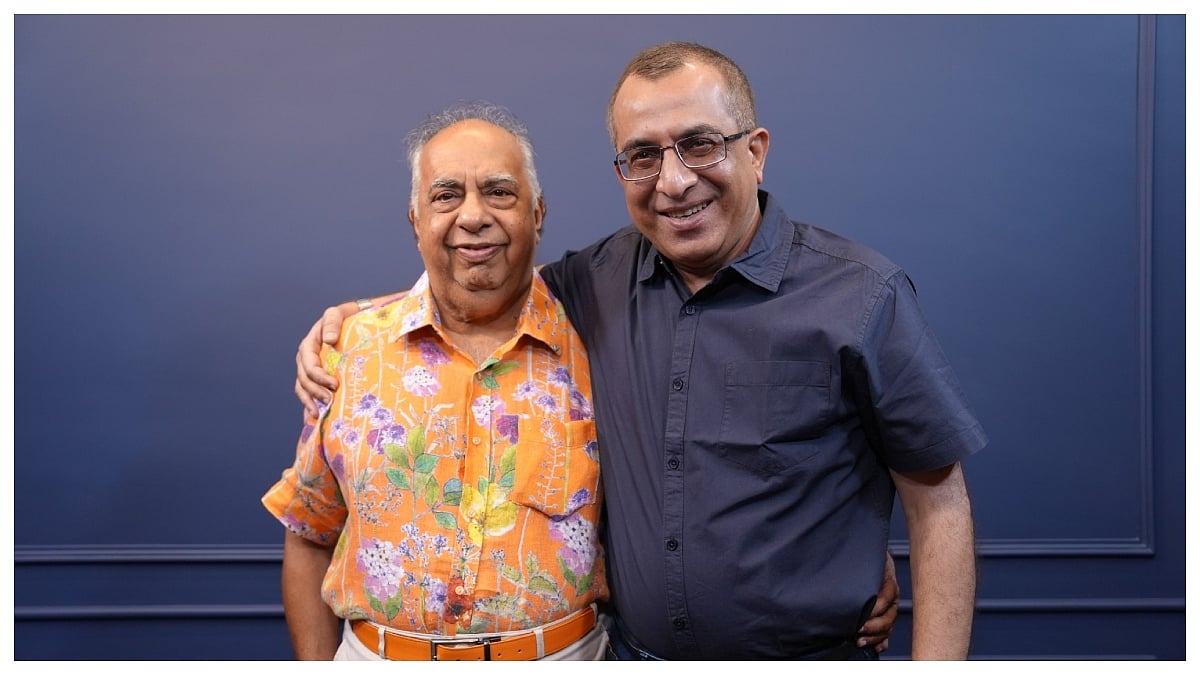
Currency expert Jamal Mecklai argues that economic policies should be judged by their impact on ordinary people. |
When most people talk about the Indian economy, the conversation usually revolves around familiar topics.
Will the rupee weaken further? Why are foreign investors pulling money out? Can India become the world's third-largest economy? Is China still ahead?
But according to Jamal Mecklai, Managing Director of Mecklai Financial Services, these discussions often overlook the questions that matter most.
In a recent episode of Simple Hai!, host Vivek Law sat down with the veteran currency market expert to discuss everything from the rupee and inflation to capitalism, inequality and India's long-term future. While the conversation covered multiple themes, one idea appeared repeatedly throughout the discussion: economic policies should ultimately be judged by how they affect ordinary people.
Why A Weak Rupee Hurts More Than Most People Think
Currency movements are often discussed through the lens of exports, trade deficits and foreign investment flows.
Mecklai believes the impact is much more personal.
According to him, a weakening rupee makes imported goods more expensive, particularly essentials like fuel, edible oils and energy-related products. While wealthier households may absorb those costs relatively easily, lower-income families feel the impact immediately.
"The rupee weakness is really affecting poor people the most," he said.
To explain the point, Mecklai shared the story of a driver who came to Mumbai as an eight-year-old with no formal education. Over decades of hard work, he built a stable life, raised a family and put his children through college.
To Mecklai, he represents the Indian dream.
Yet despite that progress, the driver recently told him that living costs had risen so much that it had become difficult to think about the future.
For Mecklai, this illustrates a larger problem. Economic growth can look impressive on paper, but rising costs can quietly erode the quality of life for millions of people.
Inflation Is Not Just A Number
The conversation also explored the relationship between interest rates and inflation.
Mecklai recalled a humorous story from the 1980s when he met two African students in Mumbai. Expecting a casual conversation, he was surprised when one of them immediately started talking about India's interest rate policies.
The observation stayed with him because it highlighted a basic economic reality.
If interest rates remain artificially low for too long, inflation often rises. And while inflation affects everyone, it tends to hurt lower-income households the most because a larger portion of their income is spent on necessities.
"Who does inflation affect more? The poor," he explained.
ALSO READ
For policymakers, this means inflation control is not merely a technical objective for economists and central bankers. It is a social issue that directly influences living standards.
Markets Are Built On Uncertainty
As someone who has spent decades in currency markets, Mecklai offered a surprisingly simple answer when asked about market predictions.
Nobody knows.
Whether it is the rupee, stocks or interest rates, he believes investors often overestimate the ability of experts to forecast short-term outcomes.
Markets move because millions of participants are constantly buying and selling based on changing information, expectations and emotions.
That uncertainty is exactly what makes markets function.
Instead of obsessing over predictions, Mecklai argues that investors and policymakers should focus on building better systems, improving incentives and creating stronger economic foundations.
Is Modern Capitalism Creating More Inequality?
One of the strongest themes in the conversation was Mecklai's concern about rising inequality.
He argued that many features of modern financial systems disproportionately benefit those who already possess wealth and market access.
Central bank communication, market transparency and sophisticated financial products are often celebrated as positive developments. But according to Mecklai, the people most capable of using these tools effectively are usually the people who are already financially privileged.
As a result, wealth tends to compound faster for those at the top while many others struggle to keep pace.
ALSO READ
"The rich are getting richer and richer," he observed.
While he acknowledges that capitalism has created enormous prosperity, he believes policymakers must pay greater attention to ensuring that growth benefits a broader section of society.
A Radical Thought Experiment About China
Perhaps the most unexpected part of the discussion came when Mecklai described a question he once posed to ChatGPT.
What would happen if India and China became one country?
The idea was obviously hypothetical, but what interested him were the economic implications.
China has world-class infrastructure, manufacturing capabilities and execution. India has a young population, entrepreneurial energy and a growing consumer market.
According to Mecklai, greater economic cooperation between the two countries could unlock enormous opportunities for both sides.
"If India and China were going out into the world separately but together, the world would have to bow down," he said.
While geopolitical realities make such cooperation complicated, his broader point was that India should remain pragmatic when evaluating economic opportunities rather than allowing national pride to limit strategic thinking.
India's Greatest Asset Is Its People
Throughout the conversation, Mecklai repeatedly returned to the same conclusion.
India's future will not be determined solely by stock market indices, GDP rankings or startup valuations.
It will be determined by whether millions of ordinary Indians can continue improving their lives.
The country's real strength lies in people who are working hard to move into the middle class, educate their children and create better opportunities for future generations.
Every policy decision, he argued, should ultimately be viewed through that lens.
Does it make life easier for people trying to move ahead?
Does it create opportunities?
Does it reduce barriers to growth?
These questions matter far more than short-term market movements.
As India moves closer to becoming one of the world's largest economies, Mecklai believes the country has an opportunity to think bigger about what success actually means.
A stronger currency, a booming stock market and rising GDP figures are all important.
But in the end, economic progress should be measured by something much simpler: whether ordinary people have a better chance of building a better life.
RECENT STORIES
-
-
-
-
-