South Korea Halts Trading as Kospi Plunges Over 8% Amid Global Tech Selloff
South Korea’s stock market suspended trading after the Kospi fell more than 8% in early Monday trade, driven by a global technology-led selloff. Semiconductor stocks bore the brunt as Wall Street losses, hawkish US interest rate concerns, rising oil prices, and geopolitical tensions fuelled panic selling across Asian markets

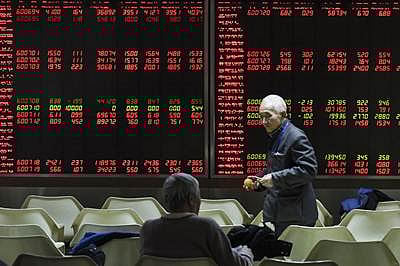
South Korea’s stock market halted trading on Monday after the benchmark Korea Composite Stock Price Index (KOSPI) dropped more than 8% in early trade, as a global technology-led selloff spread across Asian markets, triggering panic selling in semiconductor shares.
The Korea Exchange activated a circuit breaker shortly after opening, suspending KOSPI-listed stock trading for 20 minutes after the index breached the threshold for extreme volatility.
The sharp decline followed steep losses on Wall Street at the end of last week, where technology stocks suffered their worst rout in months amid renewed concerns that the US Federal Reserve could keep interest rates higher for longer.
The KOSPI’s drop was driven largely by heavy selling in South Korea’s technology and semiconductor sector, a key pillar of the country’s export-driven economy.
Market sentiment deteriorated after the Nasdaq fell 4.2% on Friday, with semiconductor stocks posting their biggest one-day percentage decline since March 2020.
Investors trimmed exposure to high-growth technology companies after stronger-than-expected US jobs data heightened fears of persistent inflation, potentially prompting a more hawkish stance from the Federal Reserve.
The selloff ended a nine-week rally in US equities that had been fuelled by optimism surrounding artificial intelligence and expectations of lower interest rates.
Market jitters were compounded by renewed geopolitical tensions in West Asia. Oil prices surged after Israel launched strikes on Beirut, prompting retaliatory missile attacks by Iran on Israeli targets.
Brent crude futures rose more than 2.5% to around $95 a barrel in early Asian trading, adding further uncertainty for investors already concerned about inflation and interest rates.
Indian benchmark indices Sensex and Nifty declined over 1% in early trade, taking cues from other Asian markets.
Meanwhile, OPEC+ agreed on Sunday to raise oil output targets for a fourth consecutive month, a move closely watched by energy markets.
RECENT STORIES
-
-
-
-
-