'Settle Claim After My Death?': Social Media Erupts as EPFO Post-Migration Glitches Delay Emergency Funds
EPFO's post-migration website glitches have triggered widespread complaints from subscribers facing login failures, account access issues and delays in claim processing. Many users have taken to social media, saying they are unable to withdraw provident fund savings during emergencies despite the migration being aimed at improving system performance

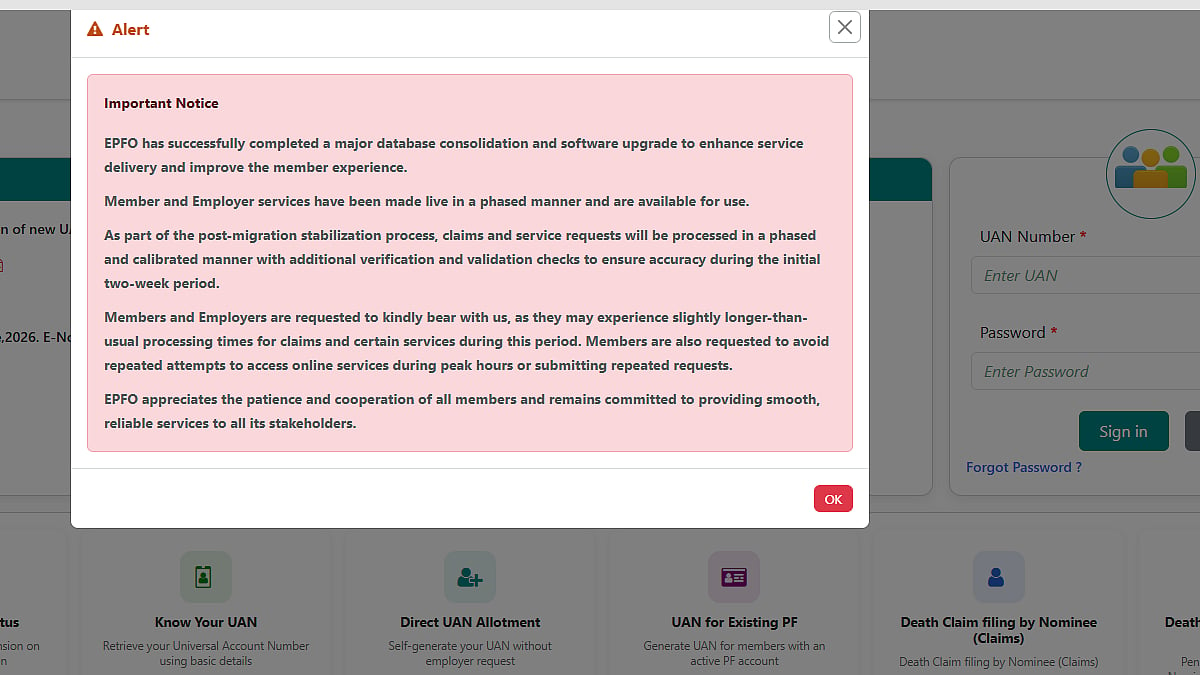
EPFO website post-migration glitches have left many subscribers in dire situations due to lack of funds | Screenshot from EPFO website
A major server and site migration aimed at streamlining the Employees’ Provident Fund Organisation (EPFO) has snowballed into a widespread digital crisis for many, triggering an avalanche of public fury across social media platforms. Over the last few days, many formal sector workers have reported being frozen out of their accounts, leaving those facing urgent medical and personal situations entirely stranded without access to emergency funds.
The paradox of the situation has left a bitter taste for subscribers. While the migration promised a sleek, faster interface and seamless backend operations, the real-world execution has resulted in broken login loops, database errors, and an unprecedented backlog in claim processing.
A close look at the public grievances mounting on platforms like X (formerly Twitter) reveals that the system failure is not uniform; rather, it is a multi-layered collapse affecting different stages of the user journey.
One EPFO accountholder, Sonu Kumar 09, even tagged Prime Minister Narendra Modi seeking quick redressal as he needed money to deal with an emergency. There are many individuals who successfully submitted their claims weeks ago, only to find them stuck in operational limbo.
There are many who are dealing with medical emergencies and desperately waiting for funds from their EPFO accounts but are unable to access them.
Users are pointing out that even emergency medical advance requests, which standard protocols dictate should be settled within 3 to 4 days, are lingering in "Under Process" status for 15 to 20 days without a single status update.
Perhaps the most damaging blow to public trust is the failure of EPFO’s official grievance redressal channels. Users who took to the dedicated EPFiGMS portal or the Central government's CPGRAMS system complain of receiving automated, copy-paste bureaucratic responses.
Left with no official recourse, desperate citizens are resorting to tweeting raw, unredacted screenshots of their Universal Account Numbers (UANs), member IDs, and personal phone numbers to official handles, inadvertently exposing sensitive personal data in a bid to catch human attention.
While technical teams view database migrations through the lens of downtime windows and server loads, the subscribers view it through the lens of survival.
The formal workforce is highlighting a glaring ethical gap. While the monthly statutory deductions from their salaries happen like clockwork with zero delays, withdrawing their own accumulated wealth during a time of acute vulnerability has become an exercise in digital futility.
As the backlash intensifies, regional PF offices are reportedly being overwhelmed by physical footfall from subscribers trying to bypass the broken website. However, without backend server stability, local desk officers are equally handcuffed.
Two full weeks have now bled into the calendar since the initial migration window closed, yet the promised transition to a sleeker, hyper-efficient workflow remains entirely on paper. Far from speeding up, backend processing speeds have noticeably slipped compared to the old infrastructure, locking claims into an even deeper state of bureaucratic gridlock. This systemic inertia is clashing brutally with the realities on the ground.
People in the throes of medical crises or acute financial distress operate on a clock measured in hours, not weeks, and they have zero luxury for patience. As the systemic delay stretches indefinitely, the technical narrative has completely evaporated, leaving behind an increasingly volatile crisis of trust between India’s formal workforce and the custodian of their life savings.
RECENT STORIES
-
-
-
-
-