Rice, Sugar & Pulses Turn Costlier Ahead Of Diwali, Global Supply Disruptions Raise Fresh Inflation Fears
Rice, sugar, pulses and edible oils turn costlier ahead of Diwali as global supply disruptions, adverse weather and rising freight costs fuel fresh inflation concerns across India.

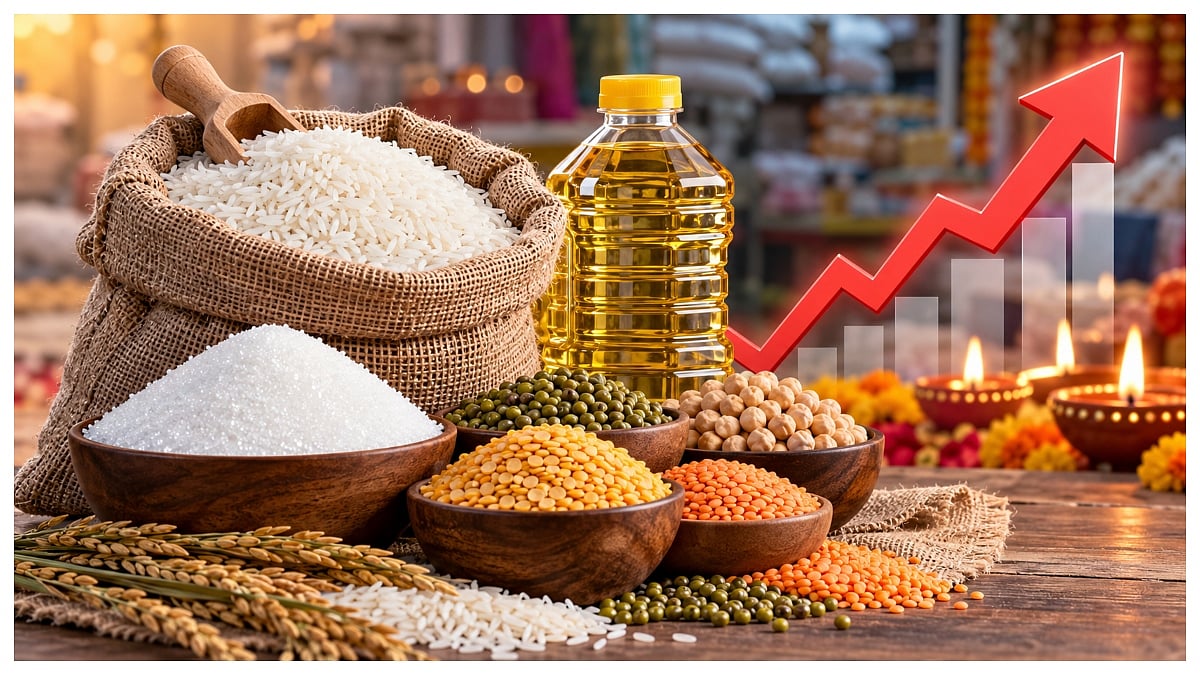
Mumbai: Rising prices of essential food items are putting pressure on household budgets ahead of Diwali. Rice, sugar, pulses and edible oils have become costlier, while global supply disruptions and unfavourable weather conditions are raising concerns about further food inflation.
According to the Food and Agriculture Organization (FAO), global food prices increased by 1.5 percent in September 2026 and were 5.8 percent higher than a year earlier.
Rice Prices Rise Amid Supply Concerns
Rice prices have increased as weather-related concerns and tighter supplies affect international markets.
FAO data showed that global rice prices rose 1.4 percent in September. Meanwhile, India's average retail rice price reached Rs 47.21 per kg on October 14, according to the Department of Consumer Affairs.
A year earlier, rice was selling at approximately Rs 43.14 per kg, indicating an increase of around 9.4 percent.
Sugar Prices Witness Sharp Increase
Sugar prices are also facing upward pressure due to concerns over production in major sugar-producing countries.
FAO's Sugar Price Index increased 6.1 percent in September and was 14.7 percent higher year-on-year.
Lower production expectations in Thailand, unfavourable weather in Brazil and concerns over India's sugarcane crop have contributed to the increase.
ALSO READ
In India, the average retail sugar price stood at Rs 57.21 per kg on October 14.
Edible Oils Become More Expensive
International edible oil prices have also increased, driven by strong demand and weather-related supply concerns.
FAO reported that its Vegetable Oil Price Index increased 0.9 percent in September and 18.3 percent annually.
In India, mustard oil averaged Rs 204.94 per kg, while packed sunflower oil stood at Rs 191.45 per kg on October 14.
Pulses Add To Household Expenses
Pulses are creating additional pressure on grocery budgets.
Recent reports from Mumbai indicated that retail dal prices increased by Rs 20–30 per kg amid supply shortages, higher transportation costs and festive demand.
Government data showed average retail prices of Rs 124.54 per kg for urad dal and Rs 129.96 for tur dal on October 14.
Will Inflation Rise Further?
India's retail inflation increased to 5.54 percent in September from 4.83 percent in August. Food inflation climbed to 7.74 percent from 5.97 percent.
ALSO READ
Meanwhile, wholesale inflation reached 11.39 percent, reflecting broader price pressures.
Continued geopolitical tensions, expensive transportation and weaker crop production could keep food prices elevated, adding to festive spending pressures.
RECENT STORIES
-
-
-
-
-