Reform Momentum: India Widens Export Base To Blunt Global Shocks, Pursues New Trade Pacts, FTA Negotiations Continue Despite Mounting External Risks
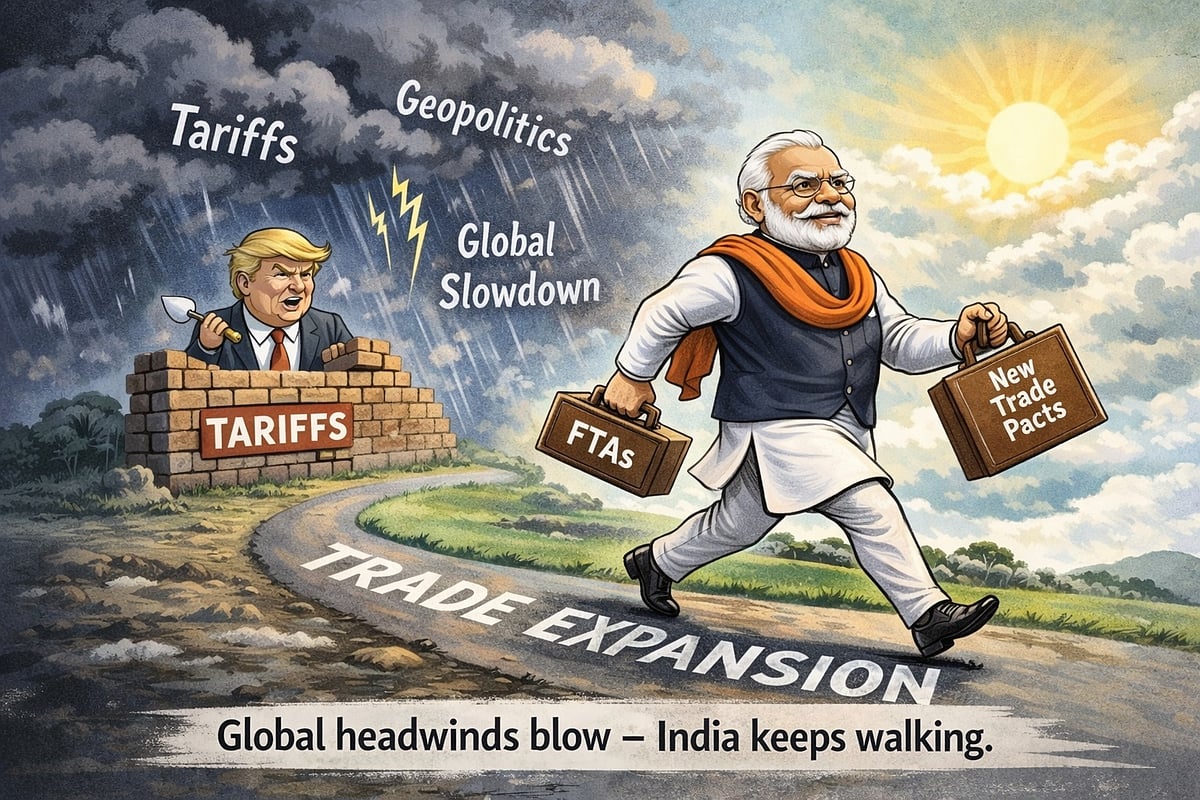
In an unsettled world, India is betting that diversification, fiscal discipline and diplomacy can keep its growth story intact. The nation goes ahead with trade expansion as the RBI highlights resilience amid volatile geopolitics and slowing global growth.

File Image |
Mumbai: India has stepped up efforts to diversify and strengthen its export base to cushion the economy against mounting global risks, the Reserve Bank of India said on Wednesday, striking an upbeat note on the country’s medium-term growth prospects.
In its latest bulletin, the central bank said India is currently engaged in trade negotiations with 14 countries or regional groupings, covering nearly 50 nations. These include talks with the European Union, the Gulf Cooperation Council and the United States. During December, India concluded trade negotiations with New Zealand and Oman, reinforcing its push towards broader market access and reduced dependence on a narrow set of export destinations.
The RBI cautioned, however, that the global backdrop remains fraught. The year 2026 opened amid an escalation of geopolitical tensions, including renewed uncertainty in the Middle East, ambiguity around a potential Russia–Ukraine peace deal, US intervention in Venezuela and a simmering dispute over Greenland. Together, these developments point to elevated geo-economic risks and persistent policy uncertainty.
Even so, the central bank said the domestic economy offers “grounds for optimism”. Growth projections for FY25-26 suggest India will remain the world’s fastest-growing major economy, supported by reform momentum and improving macro fundamentals. The year 2025 saw a series of structural reforms, including tax rationalisation, the rollout of labour codes and further deregulation of the financial sector. These measures, the RBI said, are expected to lift productivity, improve labour market flexibility and strengthen the economy’s long-term growth potential.
On the external front, the rupee came under pressure in December amid foreign portfolio outflows and uncertainty surrounding the India–US trade relationship. This month, up to 19, the currency depreciated by 1.2% from end-December levels. Despite this, the RBI noted that rupee volatility remains lower than that of most major currencies, reflecting relative macro stability.
The central bank also highlighted the resilience of India’s banking system. Strong capital buffers, improved asset quality and robust profitability have enhanced the sector’s ability to withstand shocks. Stress tests from the latest Financial Stability Report indicate that banks and NBFCs would remain well capitalised even under adverse scenarios.
Globally, growth held up better than expected in 2025, aided by technology-led investment and supportive financial conditions. While the IMF has revised up its 2026 growth forecast, it warned that risks remain tilted to the downside, with momentum varying sharply across countries and sectors. Against this uncertain global landscape, the RBI said India’s balanced policy approach—combining innovation, stability and consumer protection—should help sustain growth and mitigate external surprises.
RECENT STORIES
-
-
-
-
-