RBI’s Rate Pause Hits A Wall, Is Another Interest Rate Hike Now Inevitable?
RBI's rate pause faces pressure as Brent tops USD 100, inflation rises and global yields climb, while India's USD 800 billion forex reserves provide a crucial near-term policy cushion.

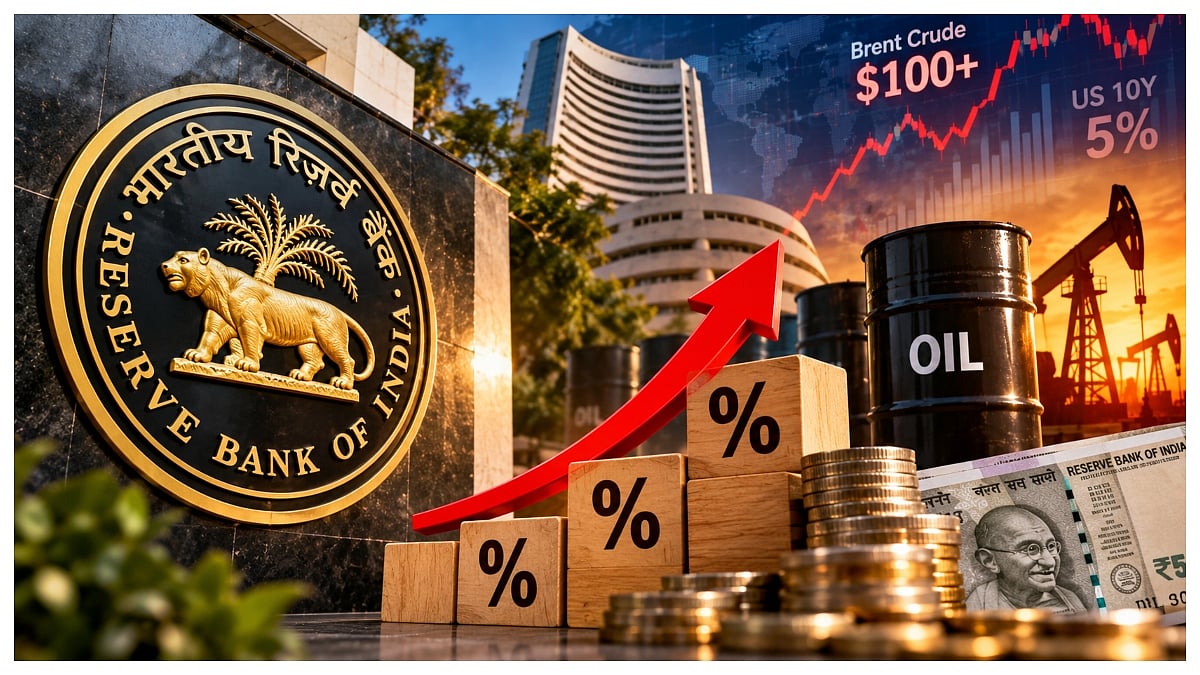
RBI's rate pause faces pressure as Brent tops USD 100, inflation rises and global yields climb. |
Mumbai: The Reserve Bank of India (RBI) may have less room to keep interest rates unchanged as surging crude oil prices, persistent inflation and elevated global bond yields increase pressure on India’s macroeconomic outlook, according to a BNP Paribas India report.
The report said conditions have deteriorated in recent weeks, with Brent crude climbing above USD 100 per barrel and the US 10-year Treasury yield moving towards 5 percent.
Oil Complicates RBI’s Call
Rising oil and commodity prices remain a key near-term challenge for India, given the country’s dependence on imported crude.
BNP Paribas noted that the Indian rupee has already depreciated by nearly 1 percent over the past two weeks, while India’s 10-year government bond yield has breached 7 percent.
Against this backdrop, the report believes the RBI now has less flexibility to continue holding interest rates unchanged.
Global Rate Heat Rises
The challenge is being amplified by tighter global monetary conditions.
The European Central Bank and Bank of Japan have raised interest rates by 25 basis points, according to the report, increasing the risk of capital moving towards developed markets.
ALSO READ
Foreign institutional investor selling in India has also resumed.
Kunal Vora, Head of India Equity Research at BNP Paribas, said India’s macroeconomic outlook remains sensitive to oil prices and that the latest Middle East escalation is a negative.
USD 800 Billion Reserve Cushion
India, however, has stronger buffers to absorb external shocks.
Foreign exchange reserves have risen to around USD 800 billion, supported by approximately USD 127 billion of foreign currency non-resident, or FCNR, flows.
BNP Paribas cautioned that while these flows provide near-term support, they could reverse over the next three to five years.
Warning Signs Emerge
The report said India’s macro indicators remain resilient, supported by strong credit growth, automobile sales, improving employment data and sizeable food-grain stocks.
However, consumption indicators have started showing moderation amid weaker urban wages, higher inflation and deteriorating business confidence.
Rural conditions also face pressure from a monsoon deficit, elevated food inflation and lower crop sowing.
With crude, inflation and global yields all moving higher, the RBI’s upcoming policy decisions could become increasingly difficult.
RECENT STORIES
-
-
-
-
-