Oil Prices Fall Over $1 As Demand Forecasts Cut Even As US-Iran Deadlock Keeps Supply Risks Elevated
Oil prices declined on Thursday after analysts lowered global demand forecasts for 2026 due to disruptions from the US-Israel conflict with Iran. Brent and WTI crude fell over 1%, though concerns over Middle East supply disruptions limited losses. Uncertainty over Strait of Hormuz reopening and stalled negotiations kept markets cautious

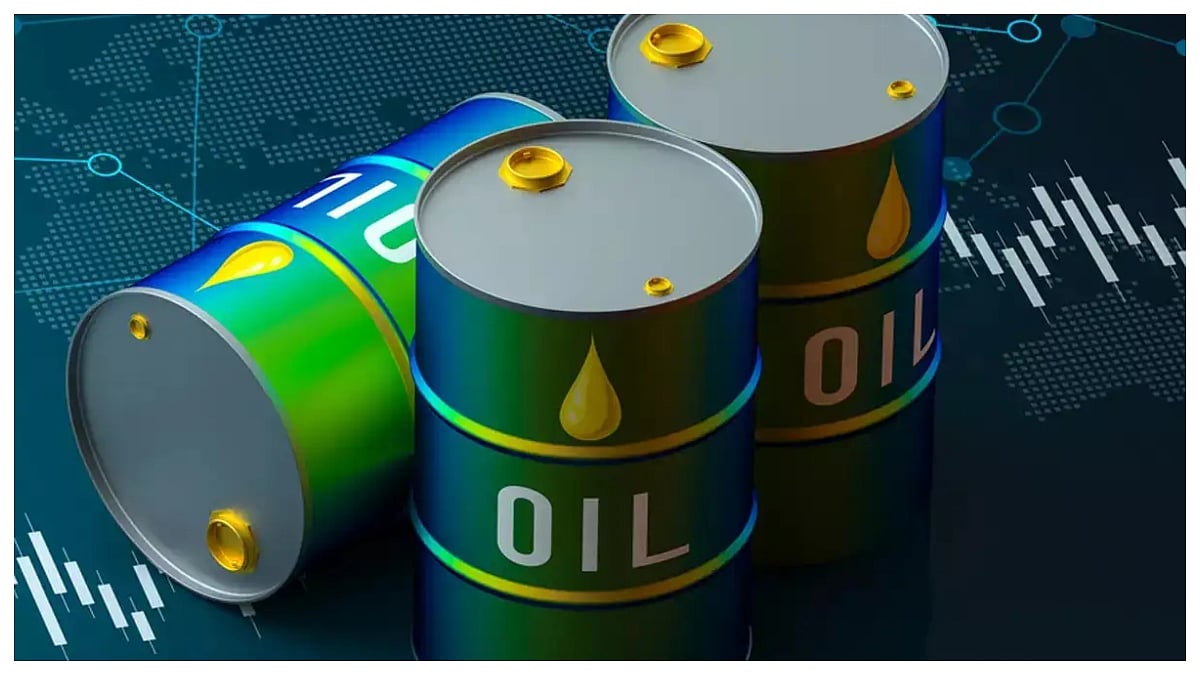
Oil prices fell by more than $1 a barrel on Thursday after analysts revised down their global demand outlook for 2026, citing the impact of geopolitical disruptions linked to the US-Israel conflict with Iran.
However, concerns over possible supply disruptions from the Middle East prevented a sharper decline. Brent crude futures declined $1.29, or 1.5%, to $87.69 a barrel, while US West Texas Intermediate (WTI) crude dropped $1.30, or 1.6%, to $81.97 a barrel.
ALSO READ
Supply concerns alive
Despite the fall in prices, traders remained focused on developments around the Strait of Hormuz, a crucial route for global oil shipments. There were limited signs of progress in efforts to reopen the waterway, with US President Donald Trump saying Washington had “total control” over the strategic passage.
Talks between the US and Iran have reportedly reached a standstill, with both countries maintaining their positions. Washington continues restrictions on Iranian ports as part of its efforts to increase pressure on Tehran.
Pakistan, which has been involved in diplomatic efforts, said broader negotiations had slowed, although discussions around extending the deadline for a US-Iran memorandum of understanding remain possible.
Oil markets have experienced significant volatility due to multiple geopolitical events, including the Middle East conflict, the Russia-Ukraine war and repeated attacks on energy infrastructure such as ports and refineries.
Supply-demand imbalance
The International Energy Agency (IEA) has warned that the global oil market could face a supply deficit of 1.8 million barrels per day during the current quarter as the US-Iran conflict continues. The agency said the projected shortage is more than double its previous estimate.
For 2026 as a whole, the IEA expects the market to witness its largest supply shortfall in five years.
An Iranian official was quoted as saying that negotiations to revive an interim agreement reached in June had made little progress, with both sides yet to agree on a timeline for implementation.
RECENT STORIES
-
-
-
-
-