Nirmala Sitharaman Says India’s Economic Fundamentals Strengthened Amid Global Turbulence
Finance Minister Nirmala Sitharaman said India has emerged from global economic turbulence with stronger fundamentals, despite rising public debt worldwide. She highlighted banking reforms, infrastructure expansion, GST and insolvency reforms, and measures to control inflation. Sitharaman also stressed efficient implementation and last-mile delivery of government schemes

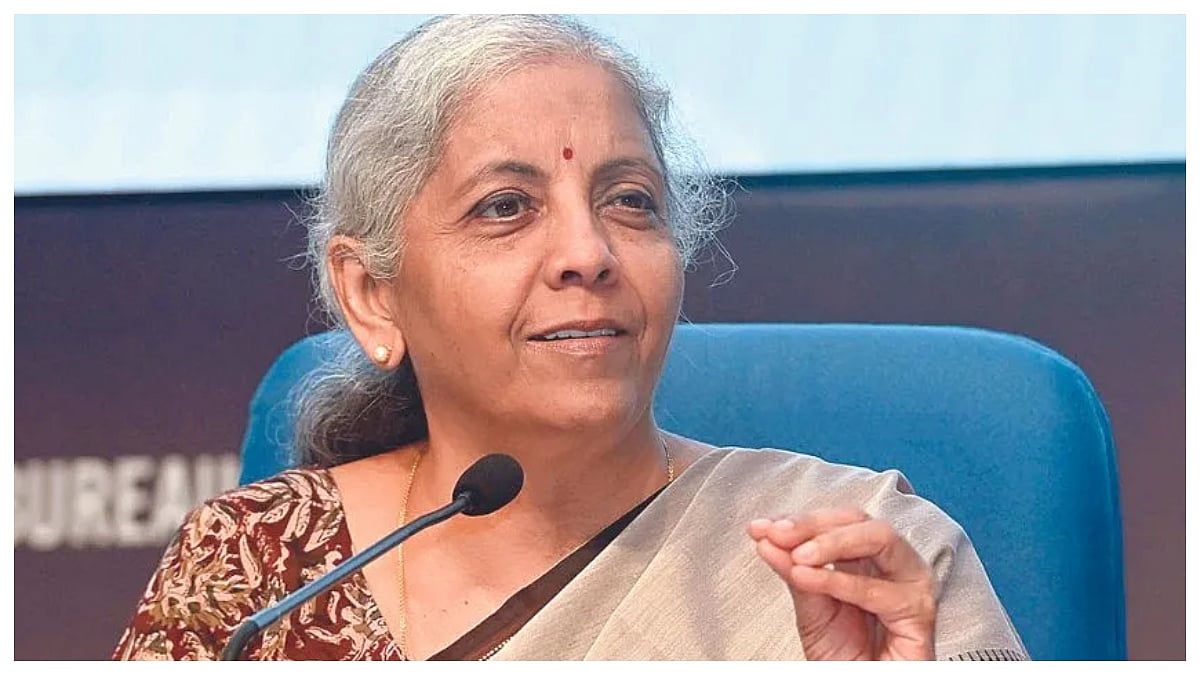
Union Finance Minister Nirmala Sitharaman | File Pic
Finance Minister Nirmala Sitharaman said India has navigated a period of global economic uncertainty while maintaining and strengthening its underlying economic fundamentals.
She noted that the global economy is facing reduced policy buffers and increasing public debt.
Sitharaman said global public debt had climbed to nearly 94% of GDP in 2025 and could reach 100% by 2029, a level last witnessed in the period following the Second World War.
ALSO READ
Banking and infrastructure support growth
Sitharaman highlighted reforms undertaken in the banking sector, including recapitalisation, resolution of stressed assets and improvements in governance and risk-management systems.
These measures have helped banks support businesses as they deal with external uncertainty, although she said working capital availability and access to financial markets remain important.
She also pointed to emergency credit line schemes that helped businesses manage liquidity pressures during periods of disruption.
The Finance Minister highlighted infrastructure development as another area where sustained public investment has produced visible results.
Since 2014, the national highway network has expanded by about 60%, while Indian Railways commissioned 36,429 kilometres of new track between 2014 and 2026.
The number of operational airports has more than doubled during the period, while cargo-handling capacity at major ports increased by nearly 60%.
Reforms and inflation management
Sitharaman also cited reforms such as the Goods and Services Tax (GST), the Insolvency and Bankruptcy Code (IBC), labour codes and Jan Vishwas measures. She said the broader objective had been to simplify economic activity, improve predictability and raise productivity.
She stressed that effective implementation remains essential, including completing public infrastructure projects on schedule.
The delivery of government programmes at the last mile is also important to ensure that intended beneficiaries receive the benefits, she said.
On inflation, Sitharaman highlighted the flexible inflation-targeting framework introduced in 2016 as an anchor for inflation expectations.
She said the government continuously monitors prices, market arrivals, stocks and crop conditions to identify emerging pressures. Price stabilisation funds and food buffers, she added, provide resources for timely intervention when required.
Sitharaman said these measures, together with economic reforms and infrastructure investment, have helped India navigate a period of heightened global uncertainty.
RECENT STORIES
-
-
-
-
-