German Green Steel And Power IPO, Can Lower Energy Costs Forge A Stronger Growth Story?
German Green Steel and Power’s management explains its Rs 290-crore IPO, green energy strategy, capacity expansion and plan to control costs amid steel volatility.

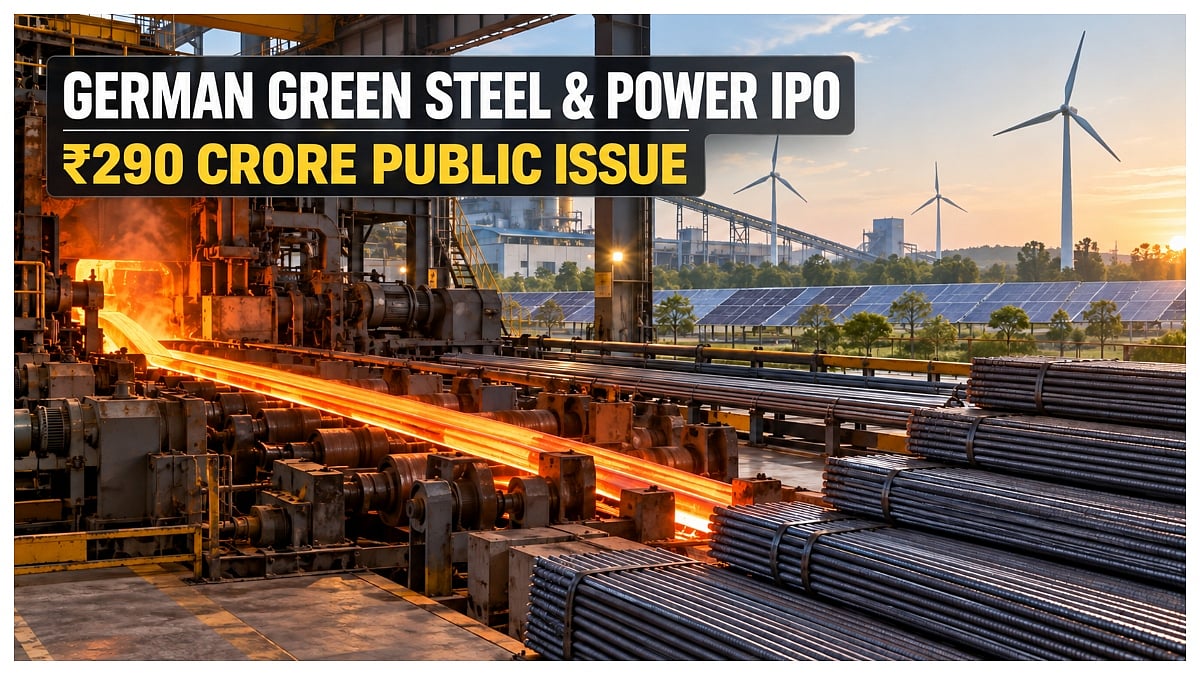
German Green Steel and Power’s management explains its Rs 290-crore IPO. |
Ahead of German Green Steel and Power Limited’s proposed IPO, Shipra Rana of The Free Press Journal speaks with the company’s senior management about its integrated manufacturing model, sustainability credentials and expansion strategy. The discussion also examines the revised fresh-issue size, energy-cost optimisation, capacity utilisation, inventory efficiency, customer concentration and management’s approach to navigating volatility across the cyclical steel industry.
What does German Green Steel and Power manufacture?
We manufacture TMT bars through an integrated process. Iron ore is converted into sponge iron, which is melted, cast into billets and hot-charged into TMT bars. We produce value-added products, including epoxy-coated TMT bars and corrosion-resistant steel. Our power portfolio totals 60 MW across thermal, waste-heat recovery and renewable sources.
What makes the business “green”?
Three factors support that positioning: 40 MW of renewable power, extensive recycling of scrap, and the conversion of waste heat into electricity. Even factory dust is used to manufacture fly-ash bricks.
Our objective is to minimise waste. The company has received a five-star green steel certificate from the Ministry of Steel.
Why was the proposed fresh issue reduced from Rs 450 crore to Rs 290 crore?
We did not wait for the IPO to begin capital expenditure. Since filing the draft papers, we have invested funds and raised debt to proceed with expansion. The offer-for-sale component comprises 10 lakh shares being sold by promoters.
How will you protect margins if steel prices decline?
Our strategy centres on becoming a low-cost producer. After raw materials, electricity is the largest expense. Captive generation has reduced our power cost to about Rs 5 per unit, compared with roughly Rs 9–Rs 9.50 from the grid. An additional 8 MW renewable project after the IPO should lower costs further.
Why did inventory turnover fall from 6.81 times in FY24 to 4.2 times in FY26?
We follow a hybrid sales model, divided broadly between institutional clients and dealers or distributors. Inventory decisions reflect prevailing market conditions and the mix between these two channels.
What are your utilisation levels?
Sponge iron capacity is 66,000 tonnes and operates at about 97–98%. Billet capacity is 3.5 lakh tonnes, against production of nearly 3 lakh tonnes. TMT capacity is about 3.01 lakh tonnes, with output near 2.8 lakh tonnes.
Does customer concentration create a risk?
Although the top ten customers contribute more than 61% of revenue, our mix of institutional buyers and a broad dealer-distributor network reduces dependence on any single customer.
Why should investors consider the IPO?
The promoters bring five decades of steel-industry experience. Management believes India’s infrastructure investment will sustain steel demand, while integration, renewable power and capacity expansion can strengthen competitiveness.
RECENT STORIES
-
-
-
-
-