From 3 Punjab Districts To ₹16,000 Crore Loan Target, Capital Small Finance Bank Eyes Universal Bank Leap
Capital Small Finance Bank targets a Rs 16,000 crore-plus loan book by FY29 as it expands branches, strengthens digital banking and eyes universal bank status.

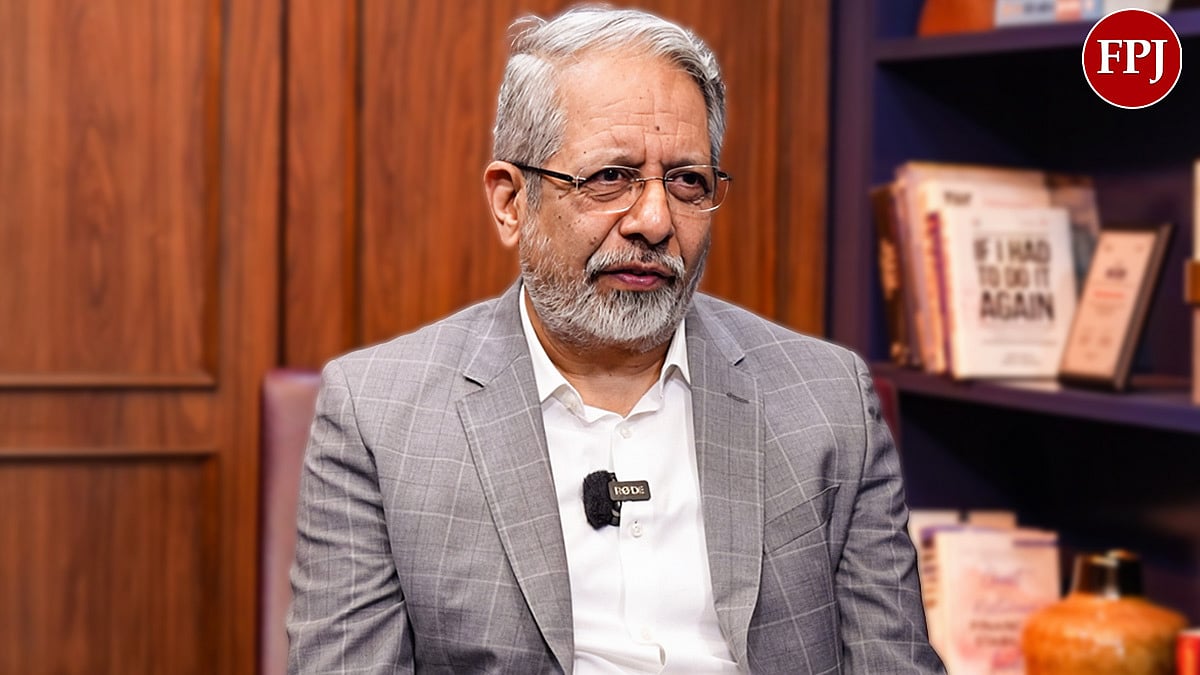
Sarupjit Singh Samra, MD and CEO of Capital Small Finance Bank. |
Capital Small Finance Bank has grown from a local area bank operating in three Punjab districts to a 219-branch lender with ambitions of becoming a universal bank. Sheryll D’Souza from The Free Press Journal talks with Sarupjit Singh Samra, MD and CEO of Capital Small Finance Bank, about its growth strategy, asset quality, digital push and FY29 targets.
How has Capital Small Finance Bank evolved from a local area bank?
We started as a local area bank in only three districts of Punjab and operated there for about 12 years. In 2013, two more districts were added. When we converted into a small finance bank in April 2016, we had 47 branches across five districts.
Today, we have 219 branches across five states and two Union Territories. Our business, comprising deposits and advances, has grown from around Rs 2,950 crore at the time of conversion to about Rs 19,700 crore.
What has remained unchanged despite this expansion?
Our focus on the middle-income group has remained unchanged. We broadly define this segment as families earning between Rs 5 lakh and Rs 50 lakh. Our aim is to become their primary banker and serve both their current and future financial requirements.
We have customers who have stayed with us for 26 years. Our deposit rollover ratio has historically remained above 90 percent, which demonstrates customer stickiness.
You are targeting a loan book of over Rs 16,000 crore by FY29. How achievable is this?
We are confident about achieving it. After becoming a small finance bank, we successfully replicated our business model outside our original markets.
Our expansion remains contiguous rather than scattered across the country. This helps our brand travel into neighbouring markets while maintaining our service model. We believe the Rs 16,000-crore-plus loan book target by March 2029 is achievable.
How do you manage risk while lending to MSMEs and other smaller borrowers?
We rely on formal documents for MSME lending and do not depend on surrogate assessments. Around 97 percent of our loan book is secured.
However, lending is not based merely on collateral. We assess the borrower’s intention, repayment capacity and end-use of funds. The money should be used for productive purposes that generate cash flows.
We have never sold bad loans to an asset reconstruction company, and write-offs have historically been negligible.
How do you compete with larger private and public sector banks?
Larger banks also serve the middle-income segment, but it is one among several segments for them. For us, it is our bread and butter.
Around 78 percent of our branches are in rural and semi-urban markets, while 74 percent of retail deposits come from these areas. We combine competitive pricing with personalised service. Our cost of deposits has also reduced to around 5.6 percent.
Does a branch-led model increase costs when banking is becoming increasingly digital?
Digitalisation is helping us bring costs down. We had set ourselves a target of having 90 percent of transactions conducted digitally, and we have now reached that level.
Branches also become more productive as they mature. Branches that are over five years old currently have average total business of more than Rs 100 crore. We plan to add around 35-40 branches annually and reach 300 branches by March 2029.
Do you see Capital Small Finance Bank eventually becoming a universal bank?
We aspire to become a universal bank one day. We meet most of the regulatory parameters and are progressing towards the required net NPA threshold.
Our net NPA was 1.14 percent in the last quarter, while the regulatory requirement for conversion is one percent or below. Our focus is to reach our targeted business scale by FY29 and naturally tick the remaining boxes along the way.
FY30 can be on the wish list, but it is not a fixed deadline.
Agriculture remains an important part of your business. How do you control the risks?
Agriculture and MSME loans each account for around 27 percent of our portfolio, while mortgage loans account for about 25 percent.
In agriculture, we primarily lend to progressive farmers cultivating at least two crops annually. We prefer at least one crop to be covered under the minimum support price mechanism. This helps reduce vulnerability if one crop faces difficulties.
What are your key financial targets for FY29?
We are targeting return on assets of over 1.6 percent and return on equity of more than 15 percent by FY29.
Our average credit-to-deposit ratio was around 83 percent in the last quarter, giving us room to move towards the mid-to-high 80s. We are also entering Uttar Pradesh and will continue adding contiguous markets while building a meaningful presence rather than simply expanding for the sake of geographical reach.
RECENT STORIES
-
-
-
-
-