Form 16 Says Zero Tax, But Missing ITR Filing Could Cost You Later
A zero-tax Form 16 does not always mean you can skip filing your Income Tax Return. Taxpayers may still need to file ITR due to income thresholds, foreign assets, or high-value transactions. Filing also helps with refunds, loans, and financial proof.

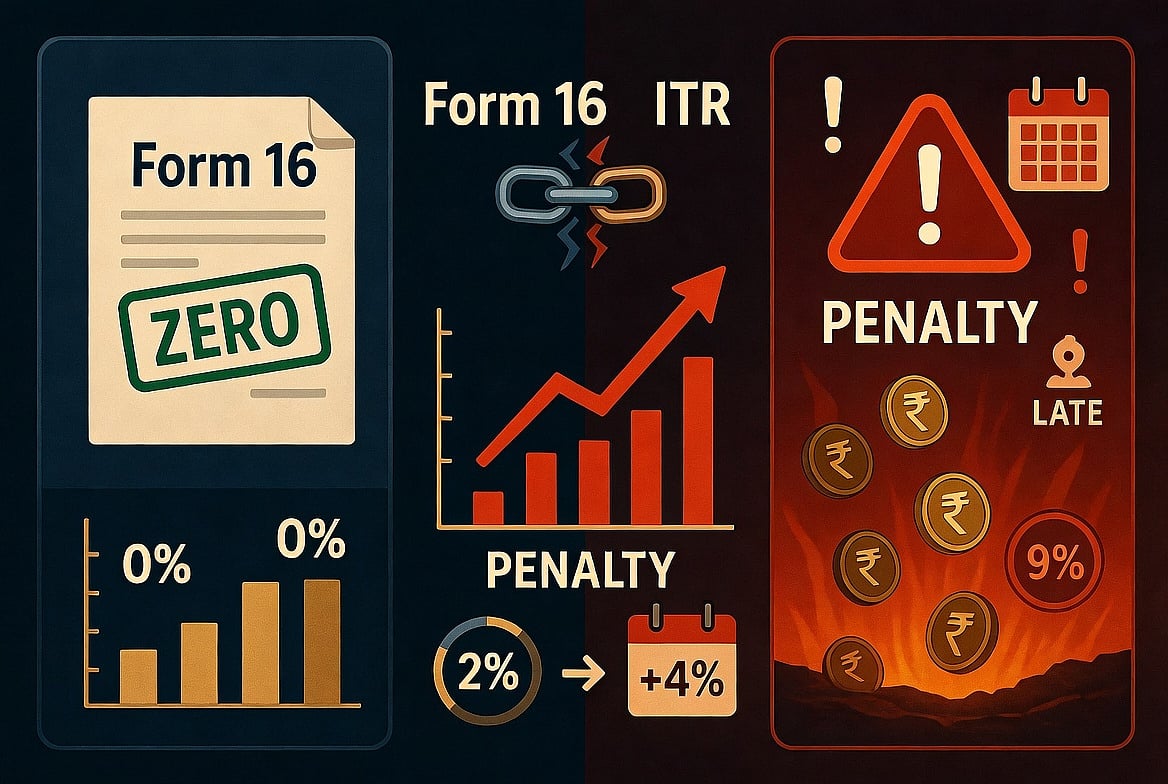
A zero-tax Form 16 does not always mean you can skip filing your Income Tax Return. |
New Delhi: Many salaried employees have now received their Form 16 from employers. If it shows zero tax payable, many assume there is no need to file an Income Tax Return (ITR). But this is not always true.
A zero tax amount only means your final tax liability became nil after deductions, exemptions, or rebates. It does not automatically exempt you from filing ITR.
ALSO READ
Understanding Section 87A Rebate
Section 87A gives a tax rebate to resident individual taxpayers whose income is within a specified limit.
Under current rules, eligible taxpayers may pay zero tax on income up to Rs 7 lakh under the old tax regime and Rs 12 lakh under the new tax regime. Salaried employees can effectively get relief up to Rs 12.75 lakh after considering the Rs 75,000 standard deduction.
This rebate reduces tax liability to zero, but filing rules remain separate.
ALSO READ
When Filing ITR Becomes Mandatory?
Even if your Form 16 shows no tax, ITR filing may still be compulsory in certain cases.
You may have to file ITR if your income crosses the basic exemption limit or if certain reporting conditions apply.
These include holding foreign assets, being a signing authority in a foreign bank account, making large overseas remittances, or certain high-value financial transactions.
ALSO READ
High-Value Transactions Matter
Many taxpayers ignore reporting requirements linked to large spending.
Foreign travel expenses, remittances, and other large financial transactions may appear in AIS (Annual Information Statement) or Form 26AS.
If such transactions do not match your declared income, filing ITR becomes important to avoid future notices.
Why Filing Still Helps?
Even when tax payable is zero, filing ITR offers major benefits.
It helps while applying for loans, visas, and credit approvals. It also helps claim refunds, carry forward losses, and maintain proper financial records.
Missing mandatory filing can attract penalties, late fees, and compliance issues later. So, before skipping ITR, check all filing conditions carefully.
RECENT STORIES
-
-
-
-
-