Every Handshake Hides A Price: No Free Favour, No Free Trade
Global markets face rising uncertainty as geopolitical tensions, climate disruptions, trade negotiations and AI-driven economic shifts reshape energy, inflation and employment. While India remains relatively resilient, long-term growth will depend on how effectively it creates jobs and builds economic resilience amid growing global volatility.

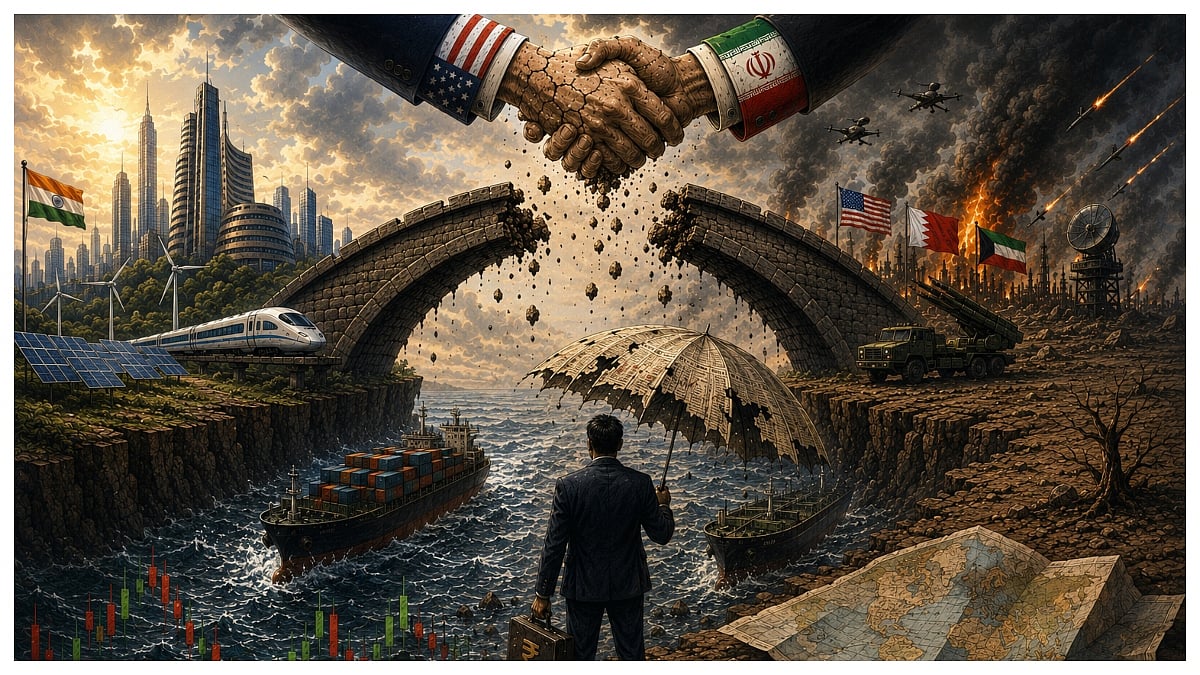
Global markets face rising uncertainty as geopolitical tensions. |
Mumbai: “Half knowledge masquerading as news sense is no longer harmless. It has become one of the world’s costliest commodities. Markets move on facts, but they panic on fragments.”
“You scratch my back, and I’ll scratch yours.” Once a simple proverb celebrating mutual help, it has quietly become the operating principle of twenty-first century geopolitics. Every summit, smiling photograph and carefully choreographed meeting between world leaders is followed by negotiations hidden from public view. Nations increasingly exchange market access for strategic influence, technology for rare minerals, tariffs for concessions, energy for security and investment for political support. Friendship may decorate the speeches, but national interest writes the agreements. In today’s fractured world, there is no free favour and no free trade. Every bargain carries a price, and someone eventually pays it.
Yet there is one negotiator that refuses every bargain.
Europe is enduring a punishing Omega Block heatwave. Parts of the United States continue battling climate extremes. Across Asia, erratic weather is disrupting agriculture and supply chains. Mumbai has swung between brief showers and oppressive humidity, while farmers across Maharashtra and several other states have delayed sowing because the monsoon remains uneven. Climate is no longer merely changing seasons. It is rewriting inflation, food security, insurance costs, migration, public finance and the economics of everyday life.
The Strait of Hormuz has delivered a harsher lesson. Shipping had partly resumed and fears of a prolonged closure had eased. Yet the ceasefire again came under severe strain after the United States said it had struck Iranian missile and drone storage sites and coastal radar facilities, accusing Tehran of violating the agreement. President Donald Trump warned that Washington could be forced to “complete the job” if further breaches continued. Iran’s Revolutionary Guards responded by claiming retaliatory attacks on U.S.-linked military facilities in Kuwait and Bahrain, warning of a “crushing response” to any further aggression. Nearly one-fifth of the world’s seaborne oil still passes through this narrow corridor, leaving global energy markets hostage to geopolitics. Markets may relax for a day, but strategists cannot. They understand that uncertainty itself now commands an economic premium.
The response has already begun. Saudi Arabia continues strengthening westbound pipeline capacity to the Red Sea. The United Arab Emirates is expanding exports through Fujairah beyond Hormuz. Iraq is examining additional routes towards the Mediterranean, while governments and global energy companies increasingly favour diversified pipeline and transport corridors. The world’s energy map is quietly being redrawn. Energy security is no longer about producing more oil; it is about ensuring there is always another road to market.
India now watches another strategic deadline. July 24 could determine the direction of trade negotiations with the United States as both sides work towards a tariff understanding before temporary arrangements expire. The outcome will influence exporters, manufacturers, investment flows and business confidence just as global supply chains continue to evolve.
Markets are therefore likely to begin Monday, June 29, with caution rather than celebration. Softer crude prices, resilient domestic liquidity and institutional buying may offer support. Yet Hormuz tensions, U.S.-Iran exchanges, tariff negotiations, climate uncertainty and global volatility leave little room for complacency.
India’s greatest strategic asset, however, is neither crude oil nor tariffs. It is its young population. Prime Minister Narendra Modi’s economic legacy will ultimately be judged not by summit declarations or diplomatic photographs, but by whether millions of young Indians secure productive employment in manufacturing, technology, clean energy, logistics and modern services.
Climate is redrawing weather maps. Pipelines are redrawing energy maps. Tariffs are redrawing trade maps. Artificial intelligence is redrawing employment. The strongest nations will not be those that escape every crisis, but those wise enough to build another bridge before the first one collapses.
History seldom remembers the smiles at the summit. It remembers who ultimately paid the price.
RECENT STORIES
-
-
-
-
-