Concrete Steps Towards ‘Walk to Work’ Zones
A look at the new geography of offices in the MMR and what it means for home buyers

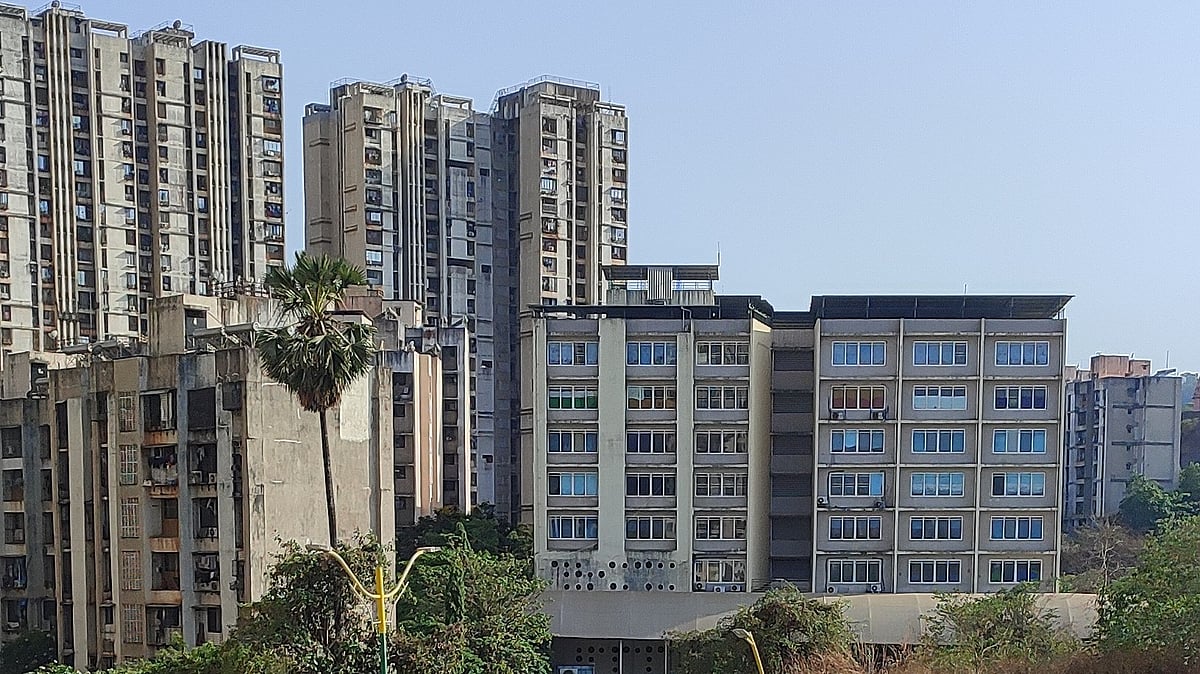
The Mumbai Metropolitan Region (MMR) is undergoing a quiet but profound transformation. The city’s office landscape—once tightly concentrated in Bandra-Kurla Complex (BKC), Lower Parel, and Nariman Point—is now expanding outward. Through 2025, robust office leasing, led by Global Capability Centres (GCCs) and large technology and consulting occupiers, is fuelling the rise of new business clusters across Navi Mumbai, Powai–Andheri (E), Goregaon–Malad, and Thane’s Wagle Estate. This dispersion is not only redrawing corporate geography—it’s also changing how and where people choose to live.
So, what’s driving the shift? India is in the midst of a record-breaking year for office leasing. Between Q1 and Q3 2025, national absorption has touched ~60 million sq. ft, with Mumbai contributing roughly 10.6 million sq. ft in just nine months. The city’s vacancy rate of around 10–11% signals sustained occupier interest, while rents are steadily inching upward. These metrics are classic precursors of residential spillover—where rising office activity generates fresh housing demand in surrounding areas.
Mumbai’s growth today isn’t confined to a few premium precincts. Instead, it reflects a more distributed urban economy, powered by new transport infrastructure, corporate decentralization, and policy emphasis on “jobs near homes.” Each emerging hub is building its own ecosystem of offices, mixed-use projects, and mid-to-high-income housing.
Corporate magnets
1. Navi Mumbai (Airoli–Ghansoli–Juinagar): This belt has become a powerhouse for corporate expansion. Premium office demand surged 40% in 2024, and momentum has carried into 2025. A defining example is Wipro’s ~3.87 lakh sq. ft lease in Airoli’s Mindspace SEZ, underscoring the area’s long-term potential. Such large, multi-year commitments by technology and consulting firms translate directly into steady housing demand within a 3–7 km radius—particularly from white-collar professionals seeking convenience and community amenities.
2. Powai–Andheri (E), MIDC/SEEPZ, Goregaon–Malad: These micro-markets remain well-established IT and creative corridors, now witnessing renewed absorption. Their appeal lies in mixed-use developments, where offices, retail, and residential coexist. The growing metro network and new interchanges are enhancing “walk-to-work” feasibility, a major draw for professionals prioritizing work-life balance.
3. Thane (Wagle Estate): Once an industrial cluster, Wagle Estate has evolved into a back-office and tech hub. Market reports highlight its expanding share in Mumbai’s office demand. As more corporates set up operations here, residential vacancy has tightened, pushing both rents and prices higher. The micro-market benefits from proximity to the Eastern Express Highway, improved connectivity, and a growing ecosystem of social infrastructure.
Here’s how different buyer profiles can play it.
End users
Entrepreneurs and professionals seeking “walk-to-work” homes: For end users, the equation is straightforward—proximity equals productivity. Living within 10–20 minutes of emerging business hubs reduces commute stress and enhances daily efficiency. The Maharashtra Housing Policy 2025 reinforces this trend by prioritizing housing development near major employment zones. Consequently, homes located within 1–2 km of Grade-A office campuses or metro interchanges are likely to command sustained premiums.
Returns generators
Investor-landlords targeting corporate and expat tenants: Corporate leasing cycles create longer tenures and lower vacancy risk, translating into stable rental returns. From H1 to Q3 2025, residential rents across Indian metros rose 7–10% year-on-year, with sharper gains in infrastructure-linked micro-markets near new office clusters and metro lines. These zones, particularly Navi Mumbai and Thane, offer expanding tenant pools as occupiers scale operations. Even as citywide rent growth moderates, such pockets deliver stronger effective yields backed by credible demand.
Rental earners
HNI and second-home buyers hedging: For high-net-worth buyers, managed or fully furnished apartments near employment hubs such as Powai, Airoli–Ghansoli, or the BKC periphery offer a practical hedge. These homes cater to relocation traffic, project teams, and GCC executives. India’s leadership in APAC’s office leasing share during H1 2025 further strengthens the case for sustained rental demand in these strategically located assets.
Are these opportunities worth exploring? Yes, but selectively. The key lies in data-backed decisions, not anecdotal hype. Investors and end-users alike should focus on a few critical factors:
Proximity to Grade-A Offices (≤2 km): Ensures enduring tenant demand and resale potential.
Last-Mile Metro Access: Enhances liveability and broadens the tenant base.
Project Quality: Look for strong facilities—WFH-friendly layouts, parking, and security.
Developer Credibility: On-time delivery and execution track records are non-negotiable.
Timeline horizons
On a three-to-five-year horizon, diversified office growth in Airoli–Ghansoli–Juinagar, Powai–Andheri (E)/SEEPZ, Goregaon–Malad, and Thane’s Wagle Estate offers the most balanced mix of employer demand, tenant depth, and policy support. These corridors align with Mumbai’s evolving “polycentric” urban model—where multiple business hubs coexist, distributing jobs and housing more evenly across the region.
As corporate footprints widen, the real estate playbook is shifting. The next phase of Mumbai’s housing growth will belong to locations that marry connectivity, employment access, and quality living. For both “walk-to-work” end-users and yield-focused investors, these emerging corridors represent the city’s most compelling convergence of livelihood and lifestyle.
The writer is Partner at Palladian Partners Advisory Ltd.
RECENT STORIES
-
-
-
-
-