Budget 2026 In Focus For Long-Term Signals, Industry Seeks Policy Continuity, Clarity & Better Execution
Industry expectations from Budget 2026 focus on policy stability, clear direction and effective execution. Businesses want predictable tax, trade and infrastructure frameworks to support long-term investment, growth and innovation amid global uncertainty and fiscal consolidation.

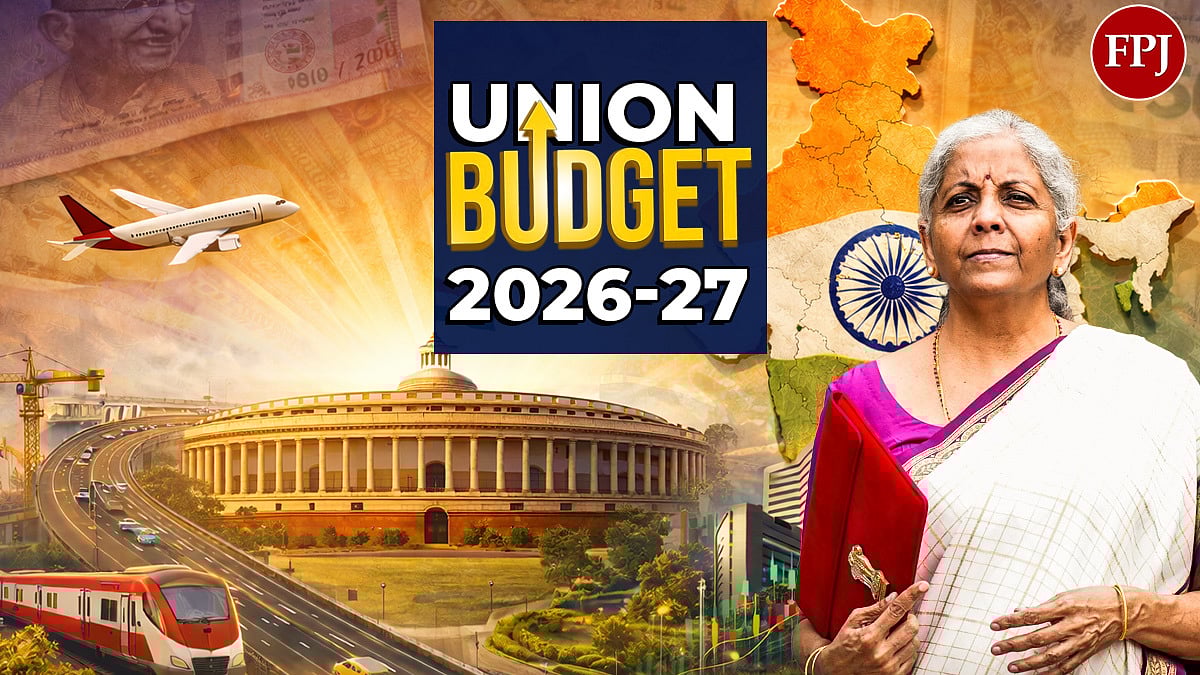
Industry looks beyond big announcements. |
New Delhi: As India heads towards Union Budget 2026–27, industry expectations are shifting away from big headline announcements to policy continuity, credibility and smooth execution, according to a Grant Thornton Bharat Pre-Budget Survey 2026.
With global uncertainty and India following a calibrated path towards a fiscal deficit of around 4.4 percent of GDP, the Budget is being seen as a signal of the government’s medium-term economic direction.
ALSO READ
Stable growth and capex shape expectations
India’s economy is expected to grow at 6.5–7 percent in FY26, while central government capital expenditure is now more than three times its FY20 level. Against this backdrop, businesses making long-term decisions on capacity expansion, supply chains and decarbonisation want stable policies and practical incentives, not short-term reliefs.
Certainty, rather than frequent changes, is emerging as the key demand.
Fiscal strategy: balance over extremes
On fiscal policy, survey responses show a balanced view. About 35 percent of respondents feel growth and job creation should be prioritised even if fiscal consolidation slows slightly.
Another 28 percent support balancing deficit control with growth-focused spending, while 26 percent stress strong fiscal discipline to maintain investor confidence. Overall, industry supports prudence without hurting growth momentum.
Trade and tax transition concerns
For trade, the top demand is a simple and predictable export incentive system (40 percent), followed by faster conclusion of free trade agreements (31 percent).
Businesses are also focused on a smooth shift to the new Income Tax Act. Key expectations include longer transition timelines with relaxed penalties, dedicated support systems and regular government–industry consultations.
Expectations from personal tax reforms
For salaried taxpayers, lower tax rates or wider slabs are seen as the most effective reform, supported by 44 percent of respondents. Limited deductions within the new regime are the next preferred option.
Innovation, infrastructure and clean energy
To promote innovation, firms favour sector-specific innovation funds and weighted tax deductions for R&D. For infrastructure, policy certainty matters more than incentives.
ALSO READ
A stable tax regime for InvITs, REITs and infrastructure bonds is seen as the biggest trigger for long-term capital. Renewable energy and storage remain the top infrastructure priority.
Ease of doing business remains key
On ease of doing business, companies want simpler compliance, faster approvals and predictable regulations, especially in tax, customs and licensing.
RECENT STORIES
-
-
-
-
-