Tome & Plume: Masters Who Bade Adieu To the World of Words, Stage, Twinges
Vinod Kumar Shukla was born in Rajnandangaon, now in Chhattisgarh, on January 1, 1937. His first poetry collection, Lagbhag Jaihind, was published in 1971. Trained in agriculture in Jabalpur, Shukla spent much of his life in central India. So humble was he that his colleagues called him a writer who was always accessible to his readers.

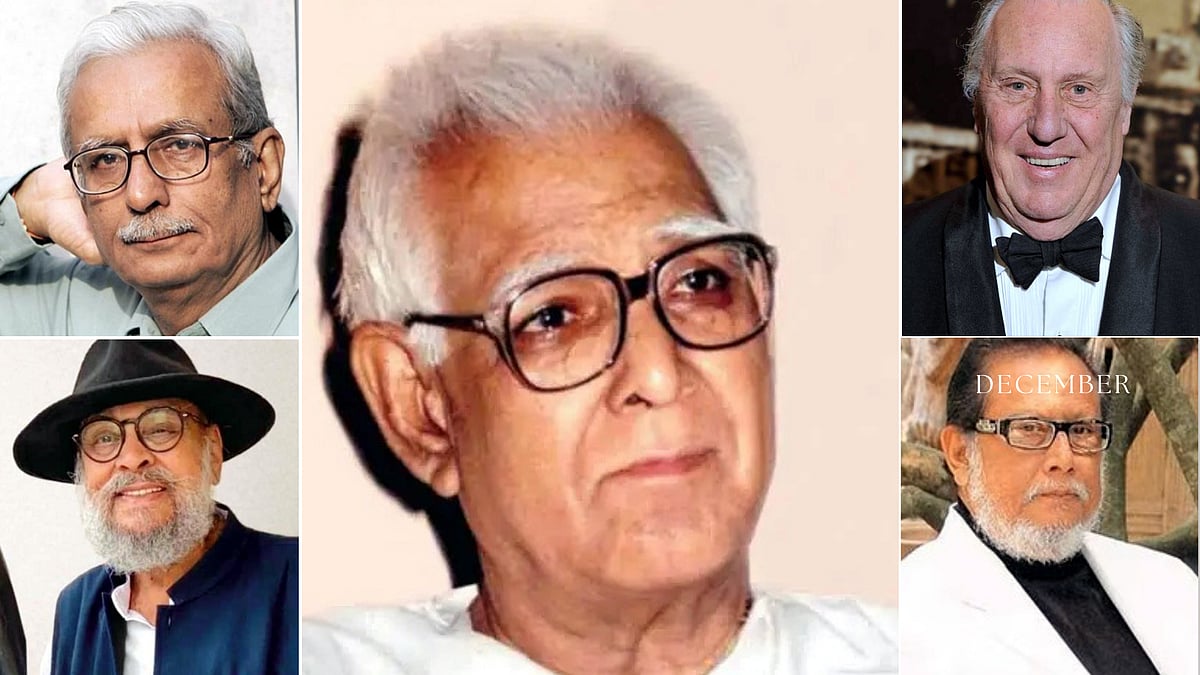
Tome & Plume: Masters Who Bade Adieu To the World of Words, Stage, Twinges | FP Photo
Banaya hai maine ye ghar dhire dhire, Khule mere Khwabon ke par dhire dhire, Kisi ko na giraya na khud ko uchhala Kata zindagi ka safar dhire dhire
Ramdarsh Mishra, Hindi poet and novelist
The passing year has seen many eminent figures bid adieu to the world. Among them are two doyens of Hindi literature, Ramdarsh Mishra and Vinod Kumar Shukla, and English thriller writer, Frederick Forsyth. Shukla, the first Indian author to have been conferred with the Poets, Essayists, and Novelists (PEN)/Nabokov Award. The world also lost a painter, Himmat Shah, and a theatre genius, Ratan Thiyam.
Shukla loved to live in isolation
Vinod Kumar Shukla was born in Rajnandangaon, now in Chhattisgarh, on January 1, 1937. His first poetry collection, Lagbhag Jaihind, was published in 1971. Trained in agriculture in Jabalpur, Shukla spent much of his life in central India. So humble was he that his colleagues called him a writer who was always accessible to his readers. His works never raised a controversy. Yet, he changed the narrative of Hindi literature with his philosophical vision and a modern view. Impressed by one of his novels, Naukar Ki Kameez, director Mani Kaul turned the story into a film. His other novel, Deewar Mein Ek Khirkee Rahati Thi (A Window Lived in a Wall), brought him recognition across the world.
In Hatasha Se Ek Vyakti Baith Gaya Tha (A Man sat down in desperation), the poet writes:
Hatasha Se Ek Vyakti Baith Gaya Tha
Vyakti Ko Main Nahin Janta Tha
Isi Liye Us Vyakti Ke Paas Gaya
Maine Haath Badhaya…. (A man had sat down in desperation
I did not know the man. But I knew the desperation, So I went to him. And extended my hand).
The poem consists of a subtle sense of wonder and makes an ordinary man extraordinary. His works have been translated into English, Italian, and French.
Ramadarsh Mishra, satirist par excellence
Ramadarsh Mishra was born in Dumri village, Gorakhpur, UP, on August 15, 1924, and left the world on October 31, 2025.
Though he completed 101 years of his life, he remained active until his passing. He penned poetry, fiction, criticism, and essays. Mishra completed higher education at Banaras Hindu University and became a professor of Hindi at Delhi University. Mishra’s memoirs instantly strike an emotional chord with his readers, and his satires generate giggles.
ALSO READ
Once Mishra said, “Satires are appreciable only when they tear into evils instead of lampooning an individual.” One of his poems, Banaya Hain Maine Ghar Dhire Dhire (A home I have built bit by bit), is symbolic. The poem has the touch of reality and speaks about human experience.
Forsyth is inspiration To budding reporters
Frederick, who was born on August 25, 1938, passed away on June 9 this year. Those who have taken up journalism as a profession are acquainted with Forsyth. He worked for the Royal Air Force and as a BBC and Reuters correspondent, so he has fused his experiences into words. The Day of the Jackal and the Odessa File sold more than 75 million copies across the world. These novels were turned into movies in the early 1970s.
Sculptor Himmat Shah says goodbye, colours get dull
Sculptor and painter Himmat Shah, fond of vibrant tinges of life, said goodbye to the world on March 2 this year. He was born in Lothal, Gujarat, in 1933. Shah’s talent earned him a French government scholarship on the recommendations of none other than Nobel laureate Octavio Paz. In Paris, he learnt etching under S. W. Hayter and Krishna Reddy. As a sculptor he experimented in different mediums, especially in terracotta and bronze. Abstraction is the soul of his sculptures, which are a combination of modernism and traditions of a civilisation found in Lothal, where he was born.
Master of stage goes to his Master’s abode
The tale of master stage-man, playwright, and cultural beacon Ratan Thiyam would perhaps cure deafness. Thiyam, who was born in Nabadwip, West Bengal, on January 20, 1948, bade farewell to the stage on July 23 this year. He was raised in Manipur. Thiyam’s works went beyond all boundaries of languages and cultures. To call him just a theatre artist will be an underestimation of a genius. Thiyam blended modernity with antiquity, local traditions with universal conventions, and spiritualism with politics. He treated the stage as a test bed where he gleaned Manipuri traditions with global spirits. We are set to welcome another New Year in less than a week. So, we can bid adieu to the past, saying, “Let us not burthen our remembrance with a heaviness that’s gone,” William Shakespeare.
RECENT STORIES
-
-
-
-
-